Turnips, Swedes and Artichokes: Vegetables in the 1901 Kitchen
The surprising variety of historic vegetable dishes from stuffed turnips to artichokes with mushrooms.
Turnips, swedes, parsnips, artichokes and asparagus take up surprisingly varied positions in Elena Molokhovets' 1901 cookbook. Some have become less familiar on modern Russian dinner tables, while others may be associated with expensive restaurant food. The historical recipes complicate both images. Roots could be baked, stuffed with meat or semolina, dressed with sauces, put into soup or preserved for later. Artichokes might be filled with mushrooms or crayfish. This study follows these vegetables directly through the original Russian recipes rather than translating a previously published Russian essay.
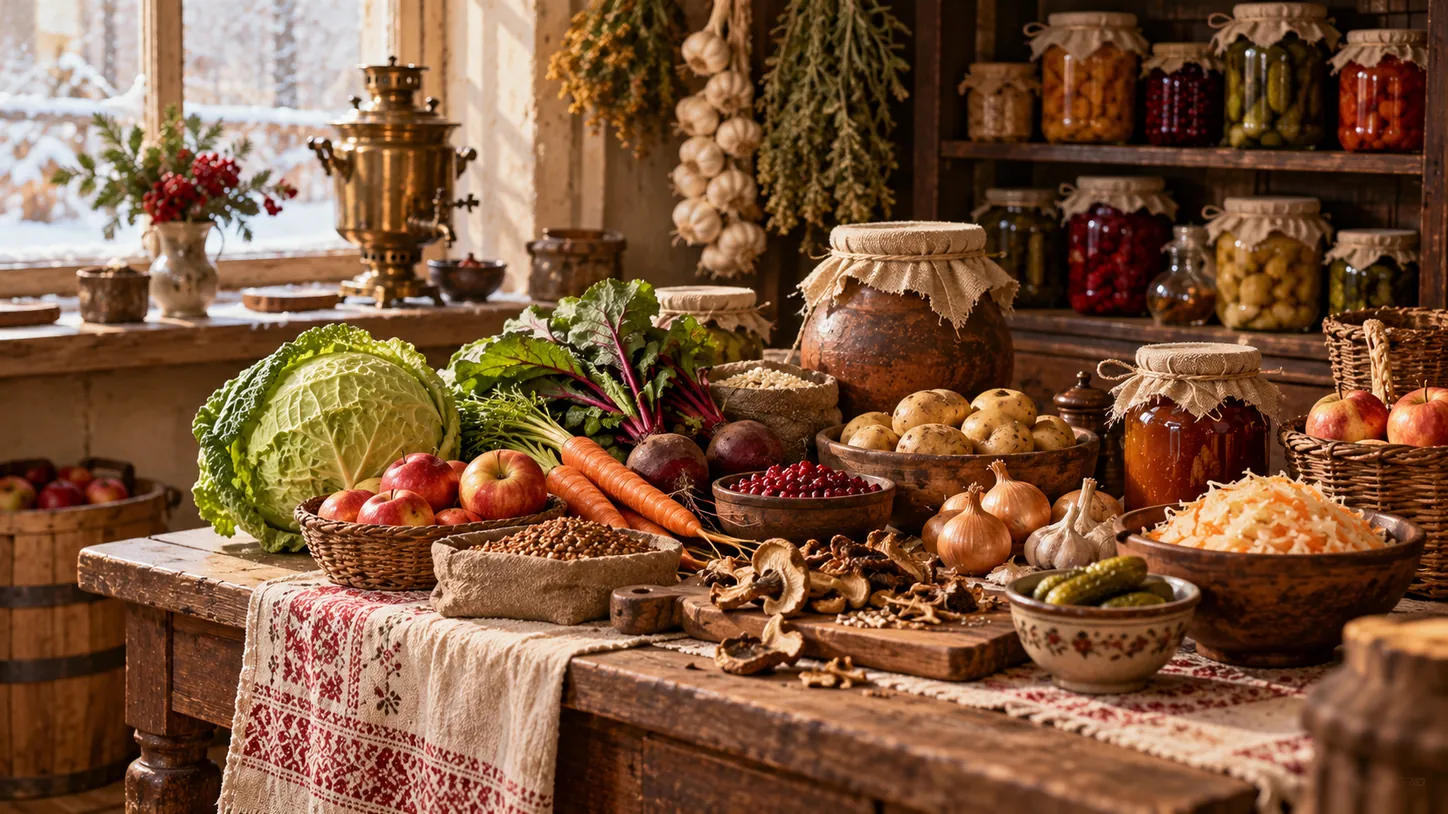
A vegetable chapter with much more than potatoes
Section VI, “Dishes from Vegetables and Greens, and Various Garnishes,” includes roots, cabbages, greens, artichokes, asparagus and other vegetables. The Lenten vegetable section and Section LI on vegetable stores offer additional variations. A recipe's presence shows it belonged to the author's culinary repertoire; it does not demonstrate how frequently any family ate it.
Swede was not only an ingredient for stock
The swede, also called rutabaga, appears in preparations both simple and elaborate. In No. 588, “Baked Swede,” it becomes a dish in its own right. No. 590 describes swede filled with breadcrumbs; No. 591 uses another stuffing, and No. 592 combines swede with boiled beef.
These variations matter because they reverse the modern idea of a humble root merely added to a pot of soup. The vegetable could also be hollowed out and made into a composed dish. No. 594 serves it with Polish-style browned butter sauce. The term “Polish” describes a historic sauce convention rather than evidence about where the swede was cultivated.
Turnip in savory—and sweet—forms
Turnip appears as an accompaniment to soup in No. 252 and as a vegetable for purée soup in No. 667. But the entries extend beyond these uses.
No. 669, “Turnip with Mutton and Veal Breast,” is a substantial meat-and-root preparation. No. 670 describes turnip with a meat stuffing, whereas No. 671 offers a sweet filling. No. 675 uses semolina porridge instead.
The possibility of a sweet stuffed turnip may surprise readers accustomed to thinking of roots only as savory vegetables. It reflects an approach in which stuffing, sauce and method of cooking could radically alter the role of the same ingredient.
In the meatless dishes, No. 2445 allows either turnip or swede with a sweet filling and sauce. The two roots are treated as alternatives for a particular preparation, but that does not make them botanically or nutritionally identical.
Parsnips with milk, cream or sour cream
Molokhovets gives a group of recipes for parsnip, a root that can be confused with pale carrot or parsley root. No. 659 serves parsnip with butter and breadcrumbs. No. 662 uses a cream or milk sauce; No. 664 uses sour cream.
The list demonstrates how familiar sauces transformed a vegetable into several differently flavored dishes. No. 663 also uses stock, and No. 661 bears the unusual pairing of parsnip and sabayon, a term normally associated today with a sweet sauce.
Even a supposedly forgotten vegetable could be incorporated into more complex culinary terminology. The recipes document the author's possibilities, not how much parsnip a particular household consumed.
A household plan could include keeping parsnips until spring
No. 4019, “A Method for Having Fresh Parsnips in Spring,” looks ahead to later months. This belongs to the book's substantial group of household storage notes. The author was concerned not only with cooking a root, but with maintaining access to it beyond harvest time.
That concern appears in our English study of seasonal stores. But historical claims that a root would remain fresh for a particular duration are not evidence of safety. Modern storage requires contemporary horticultural advice.
Artichokes were familiar enough to receive several recipes
No. 525, “Artichoke Bottoms with Various Sauces,” specifies the edible lower part of the artichoke head. No. 526 combines it with green peas and tomato sauce.
More elaborate is No. 527, “Whole Artichokes Filled with Champignons,” including Madeira. No. 528 uses fresh mushrooms with sour cream. No. 529 combines artichokes with crayfish and veal.
These recipes show a sophisticated preparation of a vegetable, but do not prove it was a common inexpensive item across the empire. Such dishes could require imported condiments, costly shellfish, specialized markets and kitchen labor.
The cookbook even discussed planting artichokes
In No. 4011 and No. 4027, the author turns to artichoke cultivation. Instructions for growing crops appear in the same large household guide that explains refined dinner dishes. The connection between garden and kitchen was practical, not merely decorative.
Yet the recipes cannot be taken as complete agronomic guidance for any modern region. Climate, soil, pest management and contemporary horticultural recommendations differ.
Asparagus: soup, sauces and preserved stores
Asparagus appears in No. 682 with yellow sauce, No. 683 with cream sauce and No. 684 with a white, sweet milk sauce. There is also asparagus purée soup No. 145.
No. 3991, “Salted Asparagus,” suggests trying to keep the ingredient beyond its immediate fresh season. As with historic pickles and salted foods, the text describes a period method, not contemporary validated preservation practice.
From root and field to city kitchen
The vegetable chapter does not identify exactly which stall supplied a given artichoke or turnip. The English investigation of Petersburg's vegetable trade explains how market gardeners, wholesale dealers and shops could connect growers with buyers.
Recipes in the cookbook document choices in serving, while market accounts describe another layer of the food system. Neither alone provides national rates of consumption. An artichoke served with crayfish and a baked swede with bread crumbs had very different economic implications even though both were vegetables.
Not a simple story of forgotten versus fashionable
It would be misleading to call every ingredient “forgotten” in the same sense. Turnips and swedes remained known in many regions, whereas artichokes and asparagus could have different social associations. The useful finding is that the 1901 vegetable repertoire was more varied than a short list of potatoes, cabbage and carrots.
Individual recipes are the strongest evidence: they preserve combinations and techniques. To reconstruct a family diet or the prices of these vegetables would require dated records of purchases and sales.
Read the original vegetable recipes
Further source chapters: vegetables and greens, Lenten vegetables, vegetable stores, parsnip No. 662 and asparagus No. 682. See also potatoes and vegetable trading.