Mushrooms in Traditional Russian Cooking
A 1901 cookbook guide to saffron milk caps, milk mushrooms, mushroom-filled kurnik and dried porcini sauce, with historical food-safety context.
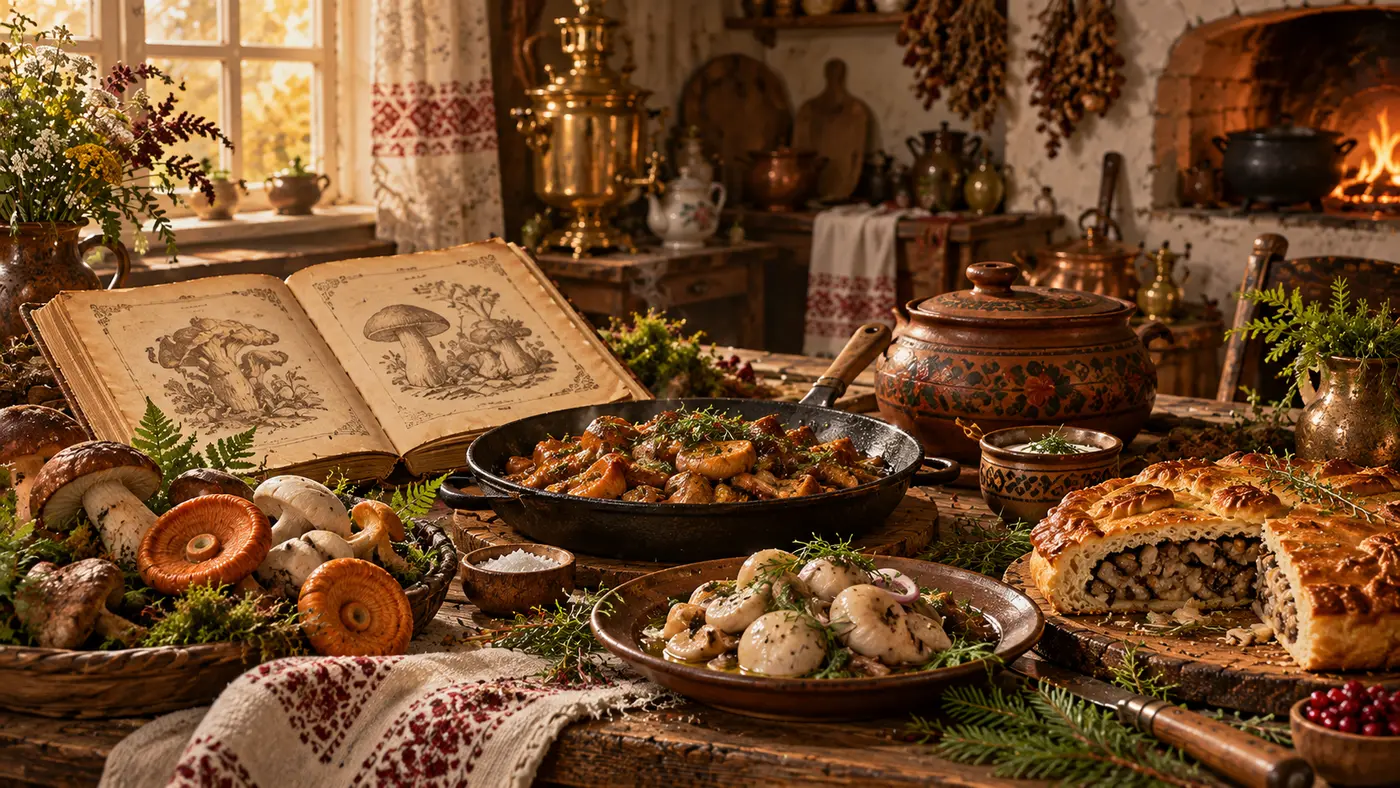
Mushrooms occupied a substantial place in historical household cooking. They could be served as a dish in their own right, but also added texture and flavor to elaborate pies, fillings and sauces.
Some recipes assume that a preparation step was already familiar to readers or had been described elsewhere. This matters especially with wild mushrooms, including milk mushrooms. Historical instructions must not be treated as modern safety guidance.
Follow the original recipes
No. 2474 — Fried Saffron Milk CapsThe book advises frying mushrooms in a single layer rather than crowding the pan.
No. 2470 — Fried Milk MushroomsThe historical text specifies mushrooms already prepared by soaking. That context must not be omitted.
No. 1390 — Kurnik with Mushroom FillingMushrooms form one layer of a substantial pie with chicken, rice and eggs.
No. 713 — Dried Porcini SauceDried mushrooms, strained broth and sour cream.
Food safety: never forage, identify or prepare mushrooms using a historical cookbook alone. Avoid mushrooms of uncertain identity, and use current expert guidance on safe identification and preparation.
Mushrooms beyond the recipe page
The Russian essays on preservation before refrigeration and seasonal food and winter stores place mushrooms within the wider household economy.