Forgotten Drinks and Ingredients of the Russian Kitchen
Acorn coffee, almond orgeat, clarified Russian butter and Sarepta mustard in Elena Molokhovets' 1901 historical recipes.
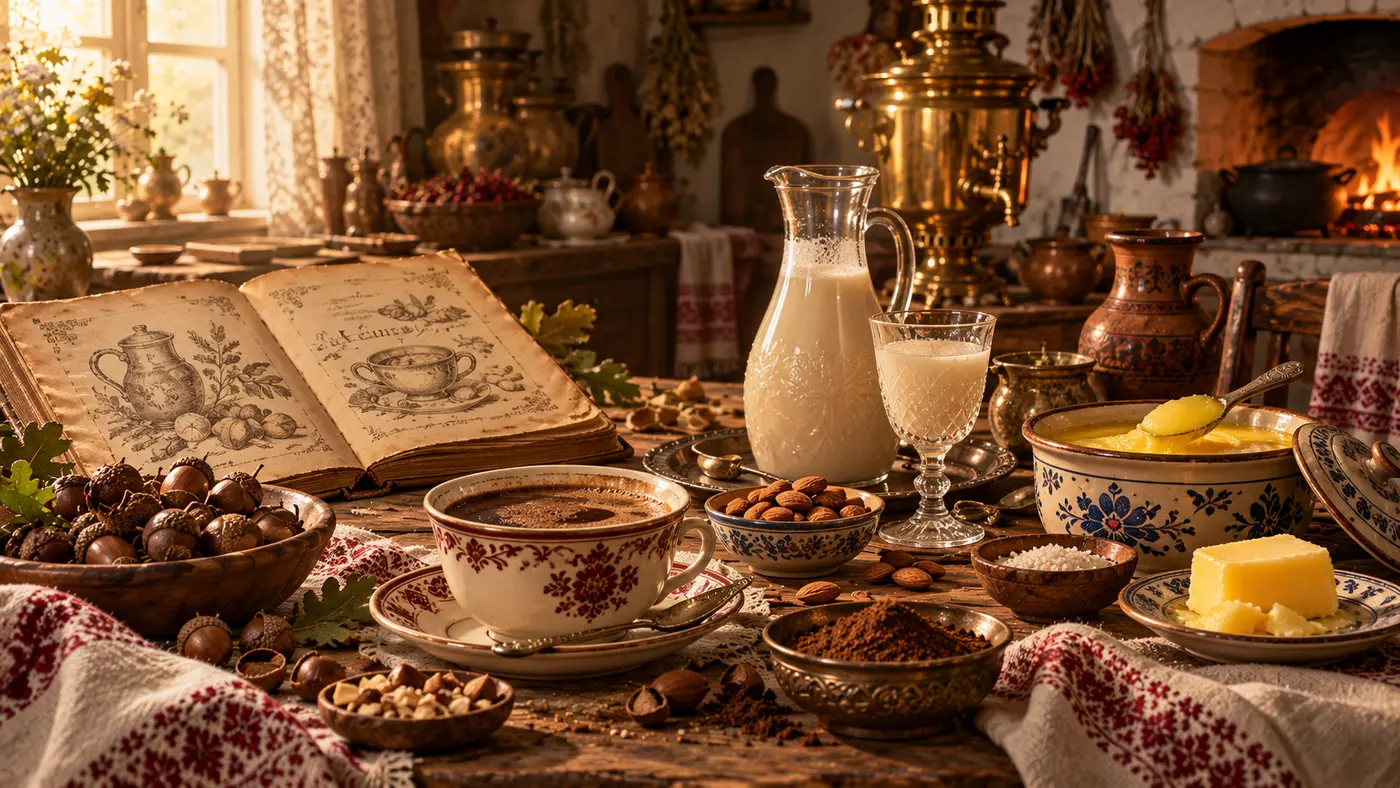
Molokhovets' cookbook contains more than finished dishes. It explains drinks, ways of preparing fats and ingredients used in other recipes. Some names no longer map neatly onto the products found in a modern store.
In the historical kitchen, a drink called “coffee” did not necessarily contain coffee beans: substitutes could be made from roasted plant materials. Orgeat was an almond drink, and recipes for butter or mustard could include techniques that must be interpreted with care today.
Recipes and explanations
Why names require explanation
Historical food language records a particular commercial and household world. A product might be named for its place of trade, perceived style, preparation, or use rather than for an ingredient list that would be familiar today.
The Russian archive also explores the double meaning of “sour shchi”, the early-twentieth-century tea table, and coffee substitutes.