Kvass Kissel and Rice Kissel: Molokhovets's Unusual Desserts
How bread kvass was turned into thick kissel and berry kissel was used to line a mould for a rice dessert.
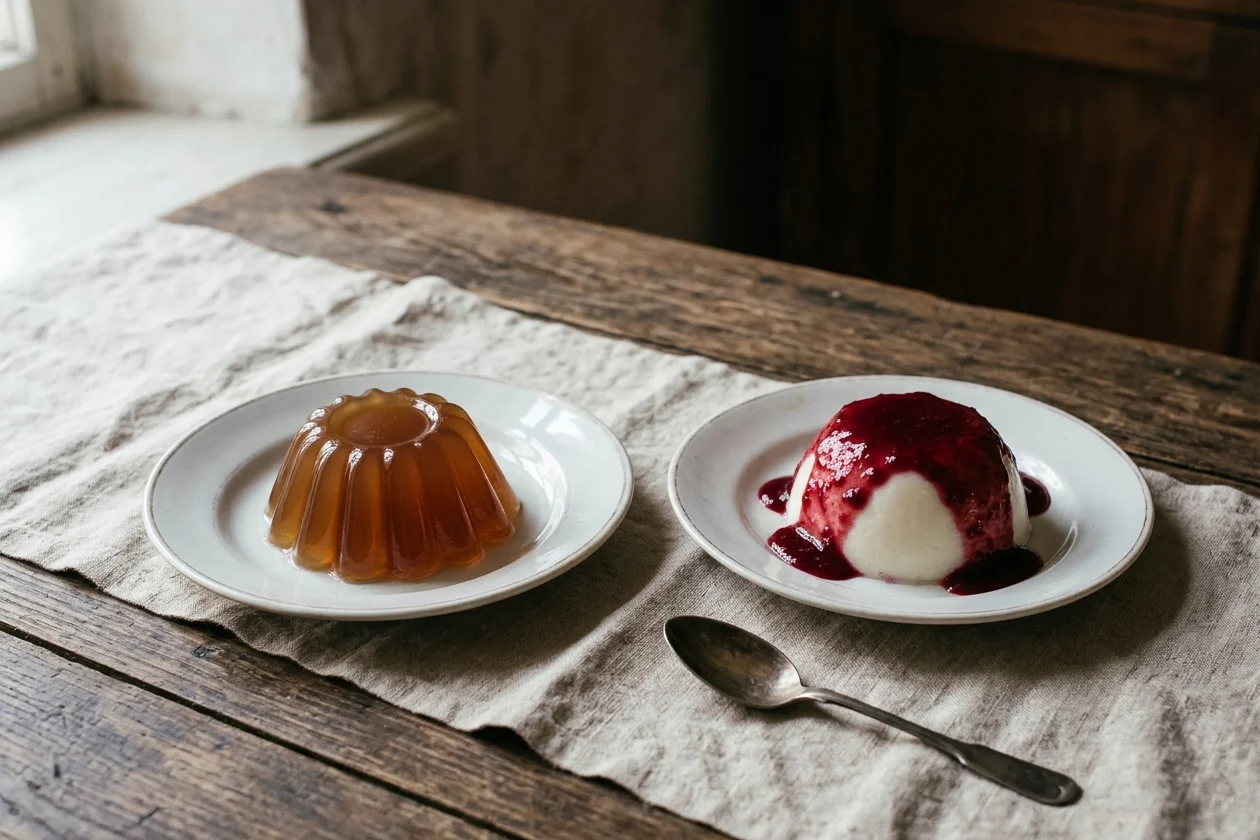
When kvass becomes a dessert
Recipes Nos. 2017 and 2749 in the 1901 edition have the same title: Kissel Made from Kvass. Molokhovets chooses homemade bread kvass as the liquid base, adding sugar, cinnamon and, if desired, lemon zest. Potato flour is specified as the thickener. Thus a familiar drink becomes a dish with an entirely different consistency. Neither entry contains berries. The name kissel in this book is not exclusively associated with fruit; in this instance it refers to a technique for thickening liquid.
Why the liquid was divided into six glasses
Five glasses of kvass are heated with the flavourings, while the sixth is used to disperse the potato flour before it is combined with the main mixture. This helps distribute the starch in the liquid before heating causes it to swell and thicken. The ingredient list specifies between half a glass and a whole glass of potato flour for six glasses of kvass. Such a range permits considerable variation in thickness. The historical volume measure does not establish an exact modern starch weight. Moreover, homemade kvass varies in acidity, sweetness and composition, so the text cannot establish one definitive modern proportion.
Why rice kissel had an unusual shape
In No. 2021 the author describes a much more elaborate dessert. A small amount of thick berry kissel is prepared first. It is distributed over the bottom and recesses of an enamelled mould, with each part cooled in turn. Once the outer layer has set, the remaining space is filled with the rice mixture. The kissel thus functions as a kind of shell rather than a liquid sauce for porridge. The author mentions the ridges of the mould but supplies neither an illustration nor dimensions. Its relief pattern in a reconstruction therefore remains conjectural.
The rice filling and two thickening mechanisms
For the filling, Molokhovets selects Carolina rice, which is cooked until done in milk. Vanilla or lemon zest with sugar provides flavour. Whipped cream and dissolved culinary glue are then added. In this context, historical culinary glue denotes a gelling product; the particular variety is not identified in this short entry. The outer berry shell contains potato flour, whereas the inner rice portion combines the properties of cooked grain, whipped cream and a gelling ingredient. In this dessert, the mould and assembly technique are as important as the ingredient list.
Maize flour and a discrepancy between two headings
In No. 2019, fruit kissel is made from cherries or raspberries with maize flour and chilled in a wetted mould. Yet No. 2751, which bears the same heading, describes milk, maize flour, salt and sugar in the available digital text, without mentioning fruit. We cannot automatically declare the two entries duplicates or insert berries into the second. Establishing the reason for this discrepancy requires checking the printed scan separately. The history of kissel illustrates why a heading must be read alongside the actual text rather than treated as the sole basis for classification.
How to understand historical kissel today
These entries encompass a kvass dessert, a thickened fruit mixture and an elaborate moulded dessert with rice filling. They are not three variants of the same drinkable kissel. Modern illustrations may show firm kvass kissel and a berry-and-rice dessert as separate compositions, identifying their appearance as conjectural. Sugar and heating do not guarantee complete removal of alcohol from kvass; the original drink may also vary in strength. Modern practice requires validated thickener proportions and safe cooling of dairy ingredients.
Original recipes and sources
Elena Molokhovets, A Gift to Young Housewives, 1901 edition. Links to scans are available on the original Russian recipe pages.