Vatrushki with Onion and Millet: Molokhovets's Unexpected Fillings
More than curd cheese pastries: onion, millet porridge cooked in milk, apples, fresh berries and preserves in the recipes of 1901.
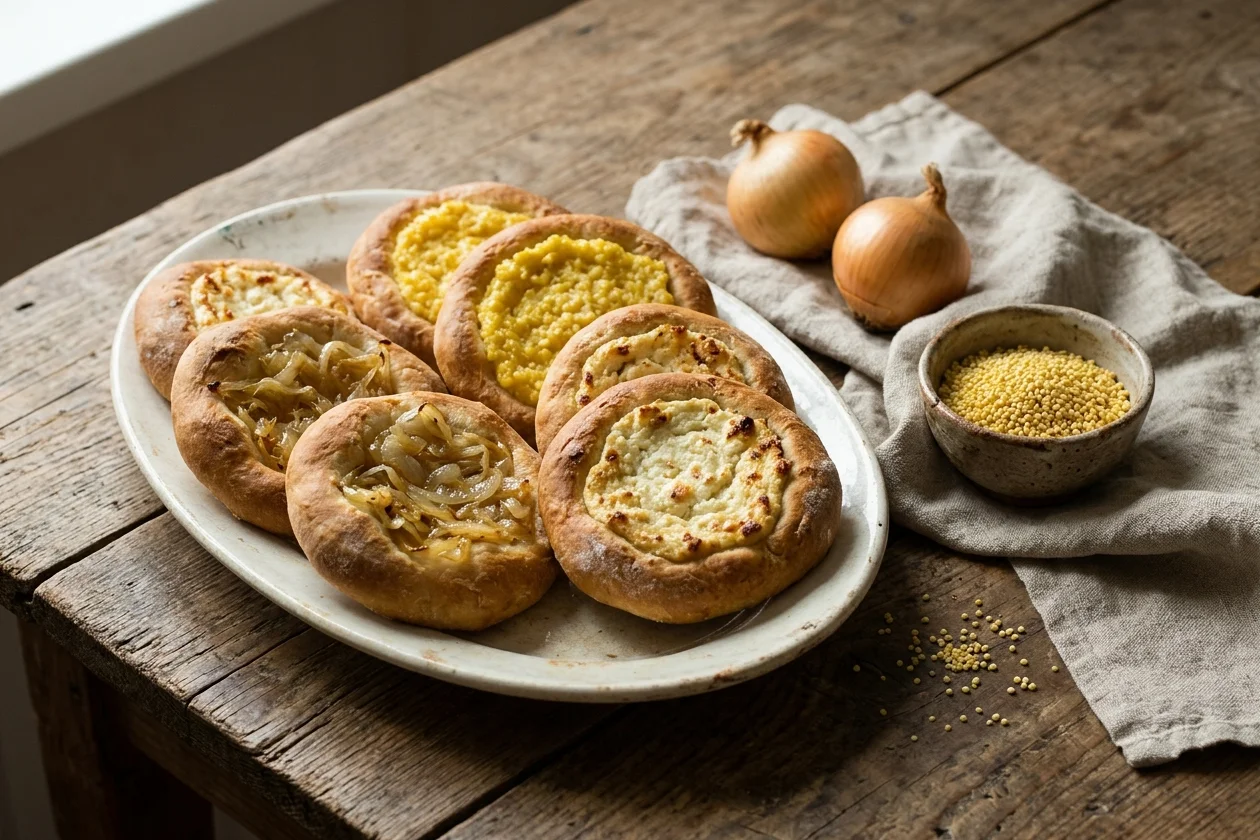
What distinguished vatrushki from their fillings
In the baking section, Molokhovets describes several vatrushki, open pastries based on rounds of dough topped with different ingredients. The author repeatedly suggests using one of the doughs described earlier rather than associating the name with a single composition. Curd cheese is important in this group but is not mandatory. Nearby are recipes with millet, onion, fresh berries and preserves. The expression onion vatrushki should therefore not be regarded as an accidental error in a heading: No. 1863 describes precisely such a savoury pastry in detail.
Onion as a filling in its own right
In No. 1863, yeast dough for pies is rolled out and covered with finely chopped onion previously fried in butter. The edges are pinched, the pastries are allowed to rise, brushed with egg and baked. The list for the entire batch specifies about twelve onions. Onion is therefore not intended merely to give the dough a little flavour but forms a substantial part of the filling. The sizes of individual onions and number of finished pastries are unspecified. The exact quantity of filling per pastry cannot consequently be calculated from this list.
Millet porridge as a topping
In No. 1862, the filling is made from millet cooked until soft in milk with butter and salt. Three eggs are incorporated after the porridge cools. Sugar is not named in this entry. The eggs help bind the grain mixture during subsequent heating, but the author gives neither precise moisture content nor the dimensions of the dough rounds. Unlike curd cheese vatrushki, this filling is based on cooked grain. A reconstruction should not automatically substitute modern sweet milk porridge, because salt and the absence of specified sugar are significant features of the entry.
Curd cheese vatrushki with coffee and shchi
In No. 1861, fresh pressed curd cheese is worked and rubbed through a sieve with butter, sour cream, sugar and yolks. Raisins may be added if desired. At the end, the author explicitly says that such vatrushki are served with both coffee and shchi, the cabbage soup. This pairing, unusual to a modern reader, shows that a sweetish pastry could occupy different places in the menu, but does not establish how common the practice was in every household. The filling differs markedly from the millet and onion versions; the three entries demonstrate the range of dishes bearing one name.
Apples, berries and thick preserves
No. 1857 specifies thick preserves made from raspberries, pitted cherries, cloudberries or blackcurrants. In No. 1858, apples are softened with sugar beforehand and flavoured with cardamom. No. 1860 suggests fresh bilberries or blueberries with sugar and specifically omits a sour cream topping. The author thus distinguishes prepared preserves, cooked fruit mixtures and fresh berries. The amount of free liquid in a filling matters for baking, yet the book supplies no measurements of viscosity or moisture. The result of a modern adaptation will depend on the fruit chosen.
Fasting-day versions and different oils
In No. 2686, vatrushki with onion or preserves use yeast or crumbly dough, and onion is fried in nut oil. Provençal oil and nut oil are named for brushing the pastries. No. 2779 gives a fasting-day version with preserves or apples and allows a simple dough made with vegetable oil. An alcoholic ingredient in one version means the pastry cannot automatically be considered alcohol-free after heating. An illustration of several open pastries with different fillings is a modern reconstruction; the historical entries do not prescribe a single standard diameter or exterior decoration.
Original recipes and sources
Elena Molokhovets, A Gift to Young Housewives, 1901 edition. Links to scans are available on the original Russian recipe pages.
- No. 1857 — Vatrushki with Jam Russian original
- No. 1858 — Vatrushki with Apple Filling Russian original
- No. 1860 — Vatrushki with Fresh Bilberries or Blueberries Russian original
- No. 1861 — Vatrushki with Tvorog Russian original
- No. 1862 — Vatrushki with Millet Porridge Russian original
- No. 1863 — Vatrushki with Onion Russian original
- No. 2686 — Small Open Pies with Onion or Fruit Preserves Russian original
- No. 2779 — Small Open Pies with Preserves or Apples (Vatrushki) Russian original