Poppy Seed Milk: A Plant-Based Milky Liquid in 1901
Two identical entries, Nos. 493 and 2440: pounding poppy seeds in a stone bowl and comparison with Molokhovets's almond milk.
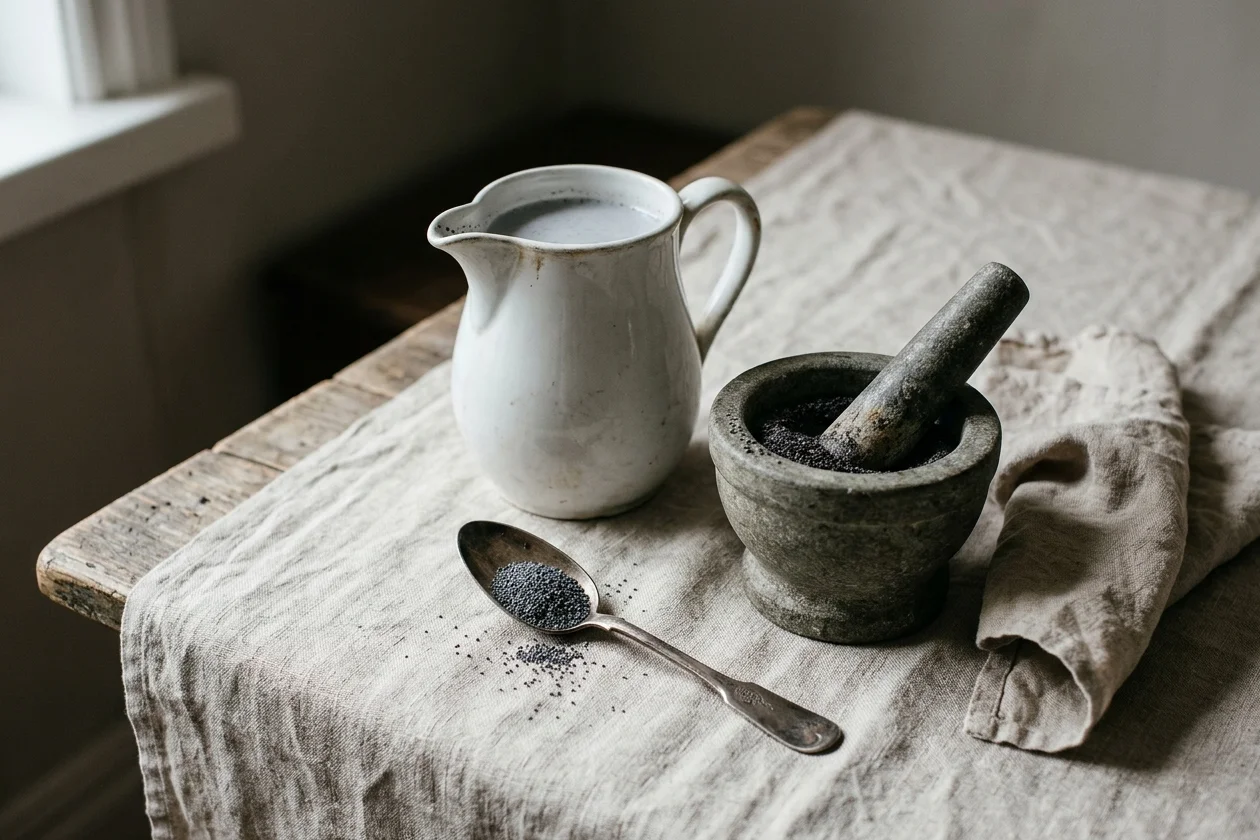
Milk as the name of a plant liquid
Nos. 493 and 2440 share the heading Poppy Seed Milk or Hemp Seed Milk. Yet the surviving text of both describes poppy seeds, white or, as the author prefers, grey. Animal milk is not listed. A pale liquid results from grinding seeds and combining them with water. Here milk refers to the appearance and character of the product rather than animal origin. A separate hemp seed recipe cannot automatically be reconstructed from the heading because it is absent from the text.
A stone bowl and wooden pestle
The book specifies a stone bowl and wooden pestle for grinding. Washed seeds are placed in it and pounded until the grains break down. The author judges the change by their whitening, not by chemically bleaching the material. Mechanical disruption releases some fats and other substances that may pass into an aqueous suspension. The precise degree of grinding is unspecified, so a modern analogue may differ in consistency.
What was separated by straining
Boiled water is added to the ground mixture, which is stirred, strained and pressed. The liquid is separated from larger seed particles. It is not simply water in which intact poppy seeds lay: its character results from grinding and extracting components. The original mentions two to four pieces of sugar. Their size is unspecified; an exact conversion to grams would require more information about the sugar. The name does not imply that the liquid was unsweetened.
Why the recipe appears twice
No. 493 belongs to the sauce section, No. 2440 to another section. Their texts coincide, so two separate histories are unnecessary. Proximity to almond milk intended for kissel, porridge and puddings gives some culinary context. But No. 493 itself does not list specific dishes for poppy seed milk. It is more accurate to describe its possible use as a plant-based liquid accompaniment than to attribute a mandatory dessert pairing to the author.
How the poppy base differed from almond milk
No. 492 obtains almond milk from ground nuts diluted with hot water or ordinary milk, followed by heating and straining. The poppy entry uses water and names no dairy alternative. The almond recipe contains bitter almonds, unsuitable for modern home reconstruction because of the risk of hydrogen cyanide formation. Similar extraction techniques do not imply identical composition, taste or nutritional value. The historical interest is the use of ground seeds as a base.
Limits of modern reconstruction
Only food-grade poppy seeds from lawful retail sources should be used, without treating the old entry as validated preparation or storage guidance. Culinary poppy seeds may carry traces of opium alkaloids due to contamination during harvesting; the historical description cannot establish their level. Prepared plant liquids are also perishable. A pale drink in a porcelain jug and an ordinary kitchen mortar suffice for an illustration, conveying the concept without claiming to reproduce the historical serving arrangement exactly.
Original recipes and sources
Elena Molokhovets, A Gift to Young Housewives, 1901 edition. Links to scans are available on the original Russian recipe pages.