Molokhovets's Pumpkin Soup: Milk, White Bread and Sweet Almonds
How pumpkin soup was prepared in 1901, why it could be salted or sweetened, and how the almond version differed.
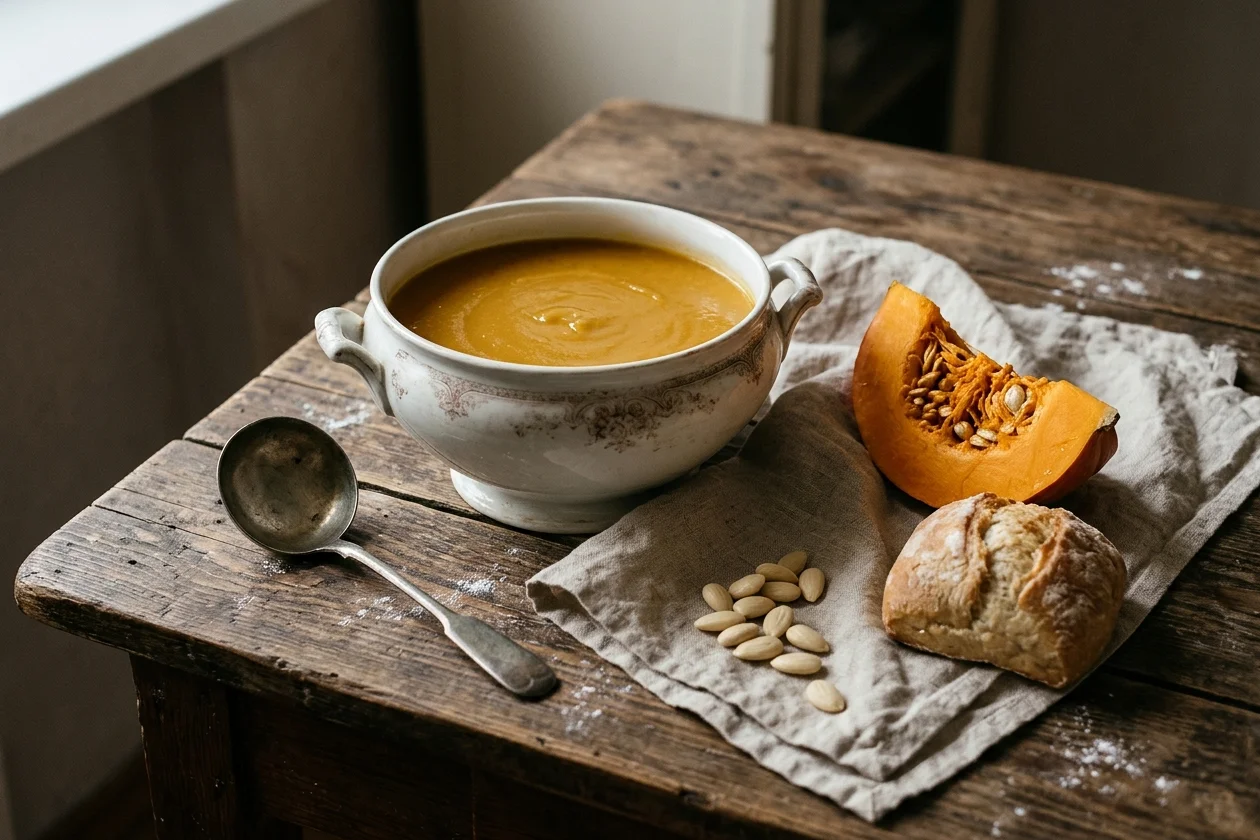
Pumpkin soup before electric blenders
No. 183 describes milk soup with pumpkin. Prepared pieces of pumpkin are boiled and then combined with water or milk and crustless French white bread. The softened mixture is rubbed through a colander and diluted with hot milk. Smoothness was obtained through cooking and mechanical sieving rather than a modern blender. Bread in the composition distinguishes the recipe from familiar modern soups thickened solely by vegetables or potatoes.
Why pumpkin was first treated separately
The source briefly heats pumpkin pieces in water and separates that liquid before continuing with fresh water or milk. The author does not explain why this order was necessary. It might have affected the moisture and taste of the pumpkin, but the exact effect cannot be established without an experiment. We should not attribute a modern scientific rationale to the old cookbook when none appears in the text. The sequence can be described reliably while its purpose remains conjectural.
White bread as part of the soup base
Half a crustless French loaf in No. 183 is cooked with the pumpkin until soft. Bread is neither a crouton nor a separate decoration: it is rubbed through as part of the mixture. It can bind liquid and affect thickness. The amount depends on the historical size of the loaf, which cannot be precisely determined from its name. Converting half a loaf into an exact modern gram weight would be conjectural without another source. Understanding the function of bread is sufficient here.
A savoury or sweet version
No. 183 ends with butter and a choice between salting the soup or adding sugar and finely pounded sweet almonds. This brief alternative reveals the flexibility of the old kitchen: a single vegetable-and-milk base accommodates different flavours. Sweetening is not mandatory for every Molokhovets pumpkin soup. Salt and sugar belong to alternative versions, and almonds accompany the sweet one. Precise amounts of salt and sugar are not specified.
Almond pumpkin soup in another section
No. 2339 refers to two recipes: almond milk is prepared according to No. 2334, pumpkin according to No. 183. Sugar and pounded sweet almonds are then used. The new entry is assembled from previously described components. Cow's milk from No. 183 should not automatically be carried into the almond version: the cross-reference concerns pumpkin preparation, and the liquid base is separately named. Bitter almonds from historical No. 2334 are unsuitable for safe modern reconstruction because of the risk of hydrogen cyanide formation.
How pumpkin soup differed from other milk soups
No. 181 uses sago, milk, cinnamon, butter and optional sweet additions. No. 182 includes chopped dough prepared separately and then cooked in milk. In pumpkin No. 183, thickness comes from sieved vegetables and bread. These represent different structural solutions: grain, small dough particles or a homogeneous vegetable-and-bread mixture. Milk alone does not make all these soups alike. Comparing techniques helps readers understand more than the section heading alone.
Picturing the dish in a modern reconstruction
A golden colour, deep porcelain bowl and pumpkin nearby can convey the dish's character. The exact shade depends on pumpkin variety and the ratio of liquid to vegetable. We do not know how smooth the soup was after passing through a particular colander. An image should not present a perfectly smooth modern texture as established fact. A safe adaptation should use fresh food ingredients, control heating and account for almond allergy if the sweet version is chosen.
Original recipes and sources
Elena Molokhovets, A Gift to Young Housewives, 1901 edition. Links to scans are available on the original Russian recipe pages.