Chocolate-Style Almond Soup: Why Molokhovets Toasted Flour
Sweet almond and milk soups from 1901: dark toasted flour, spices and rusks coated with chocolate.
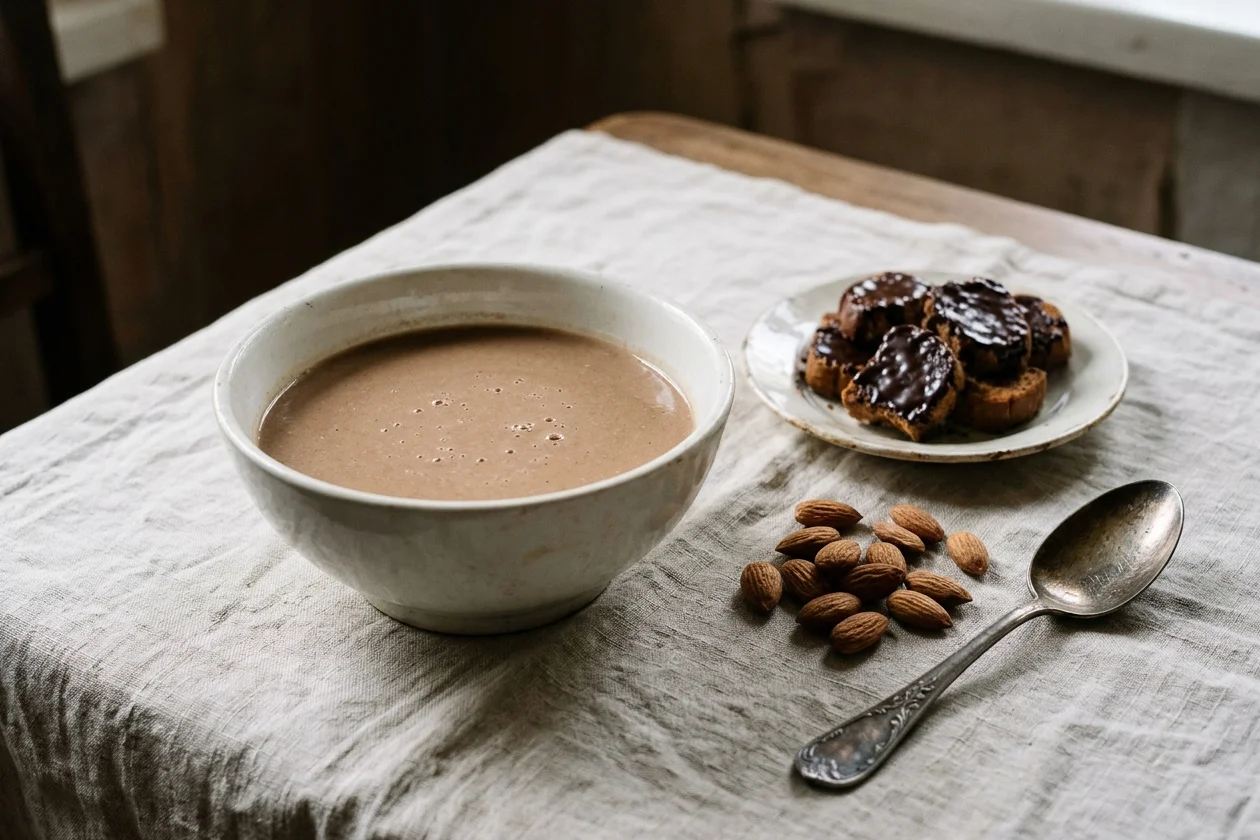
The puzzle of the name 'in the manner of chocolate soup'
No. 2340 proposes almond soup resembling chocolate soup. Its method reveals a surprise: the almond liquid itself is not prescribed to contain chocolate. The base is flavoured with cinnamon or vanilla, thickened with previously toasted flour and sweetened. Chocolate appears in the coating for small sweet rusks served with the soup. Preserving this distinction between the base and its accompaniment matters, otherwise the historical dish can easily become an ordinary modern cocoa drink.
What happened to the krupchatka flour
The author calls for drying the flour and toasting it in a clean pan until dark, stirring continuously without burning. Heating changes flour's colour, aroma and properties when subsequently combined with liquid. Toasted flour could therefore affect the soup's shade, taste and thickness at once. The book measures neither pan temperature nor degree of toasting, and we cannot be sure the finished base was as dark as hot chocolate. A moderate beige-brown shade is more appropriate for an illustration.
Almond milk in the recipe system
No. 2340 refers to No. 2334, which describes a liquid made from ground almonds and water. No. 2334 is served with rice or sago, and its almond base is used in other entries. This is an example of a reusable component: one recipe provides instructions for several dishes. Bitter almonds appear in the historical text. They must not be used in a modern reconstruction, since they may contain compounds that release toxic hydrogen cyanide. A safe adaptation should use edible sweet almonds and account for nut allergies.
Milk version No. 184
The hot sweet soups section contains milk soup in the manner of chocolate soup. It likewise uses flour toasted until dark, but its liquid base is whole milk with vanilla and sugar. Yolks worked with sugar are also added. Sponge biscuits or sweet rusks are specified for serving. The two entries share flour treatment and similar titles but differ in ingredients and thickening. The milk version contains eggs; the principal composition of almond No. 2340 does not name them.
Where the chocolate actually appeared
No. 2340 calls for a thick chocolate mixture of chocolate, water, sugar and a gelling ingredient to coat small rusks. This is a separate operation, not part of the soup base. The description of the rusks as suitable for fasting also needs to be understood in its historical context: isinglass or gelatin need not meet modern vegan requirements. The role of each ingredient is more important for interpreting the recipe than assigning a modern dietary label.
How hot soup became kholodets
No. 2354 is exceptionally brief: prepare soup No. 2340 and serve it cold. It does not require adding gelatin to the whole base. Kholodets in this instance is a cold version of sweet almond soup, not necessarily a firm jelly. This complements our story on fruit kholodets. Here the main focus is flour treatment, chocolate rusks and comparison with the milk version, so the two articles answer different questions.
What we know about taste and what remains unknown
The source supplies ingredients and the purpose of operations but no precise flavour profile. Almonds, cinnamon, vanilla, toasted flour and chocolate coating could form a complex combination, whose intensity depends on ingredients and technique. We should not claim that Molokhovets invented the soup because chocolate was expensive: she gives no motive. A modern artistic reconstruction can show a bowl of sweet soup and separate chocolate rusks; it cannot establish the exact historical colour or consistency.
Original recipes and sources
Elena Molokhovets, A Gift to Young Housewives, 1901 edition. Links to scans are available on the original Russian recipe pages.