Blancmange, Oblatki and Puddings: Forgotten Desserts of 1901
A guide to forgotten Russian desserts, old confectionery vocabulary, historical molds and distinctive baking methods.
Blancmange, oblatki and pudding appear in Elena Molokhovets' 1901 cookbook alongside waffles, preserves and fruit jelly. Behind the unfamiliar names are different foods: a cold molded dessert, thin pastry for tea and a large family of dishes steamed or baked in the oven. The surviving recipes reveal exactly why these distinctions mattered.
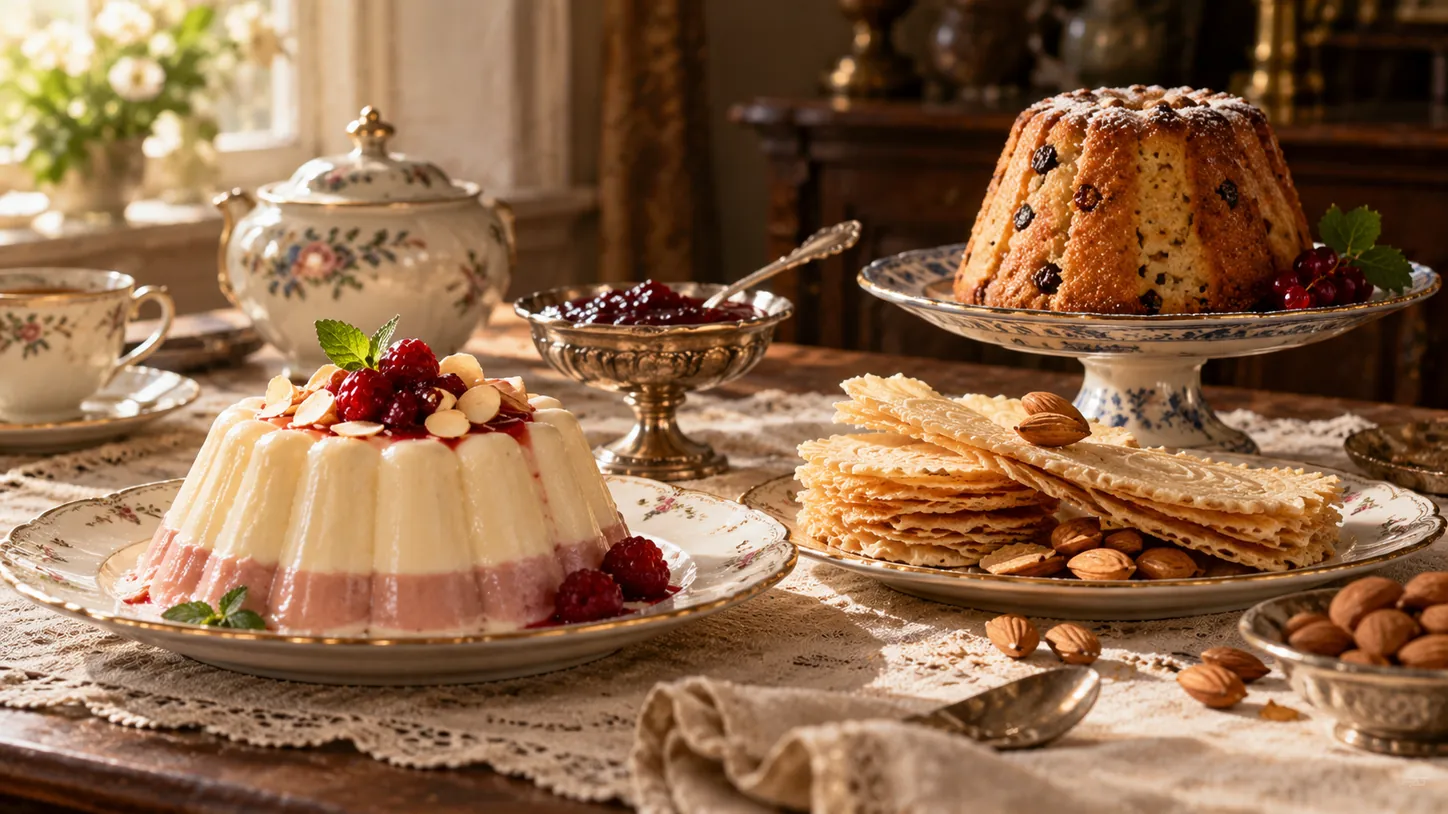
Three names and three different techniques
Blancmange is chilled in a mold until it sets. Oblatki are baked as flat, thin pieces rather than rolled into tubes while warm. Puddings can be based on grains, bread, fruit or chocolate and are prepared in different ways. These are distinctions established by the source, not an attempt to impose a single modern definition.
Why the names sound unfamiliar
The culinary vocabulary of the nineteenth century mixed older local words with borrowings from European languages. Blancmange comes from French blanc-manger, literally “white food.” The Russian etymological dictionary of Max Vasmer provides a starting point for tracing the word.
Its literal meaning, however, does not define every recipe. Cream Blancmange No. 2003 and Almond Blancmange No. 2005 have different bases. Likewise, “pudding” does not invariably mean the soft milk dessert familiar to modern English-speaking readers.
Blancmange: almonds, cream and a mold set on ice
In No. 2003, almonds, cream and sugar form the basis of a mixture intended to set in a mold. Molokhovets specifies placing the mold “on ice.” Before domestic electric refrigerators, cold supplies could be part of dessert-making as well as food storage.
No. 2005 has an almond base and includes options for pink coloring, raspberry syrup, contrasting jelly and differently colored layers. So even in one cookbook, blancmange did not always have to be plain white.
Related entries include Chocolate Blancmange No. 2004, Green Pistachio Blancmange No. 2006 and Coffee Blancmange No. 2007. These form a family of molded sweets differing in color, aroma and composition.
The curious word “glue” in a dessert
In the introduction to Section XX, Molokhovets discusses fish glue and gelatin as products used to set cold creams and jellies. In this culinary context “glue” does not mean an adhesive sold for household repairs.
Some recipes use the general historical word while ingredient lists give a more specific sheet-gelatin designation. The discrepancy should be preserved rather than silently replacing every old term with one modern equivalent. Our English history of fish glue and gelatin explains the different sources and commercial uses of these products.
Setting depended on the form, the cooling available to the cook and the properties of the ingredient. These records must not be read as a guarantee that any unlabeled historic substance is food grade.
Historic almond varieties are not interchangeable
Molokhovets sometimes mentions two kinds of almonds: sweet and bitter. The latter raises significant modern food-safety concerns and cannot be treated as a harmless flavor substitute. The old recipes are evidence of culinary tastes rather than instructions for reproducing those ingredient combinations today.
We preserve references to the originals without recommending their unmodified preparation. Even where a recipe contains familiar foods, historic quantities and processing methods require contemporary safety assessment.
Oblatki: thin pastries that were not rolled
Section XVIII, which covers waffles, tubes and oblatki, makes a useful distinction. A freshly baked thin pastry could be rolled into a tube while still flexible; an oblatka was left flat.
In No. 1807, “Cream Oblatki,” the author describes a thin, sweet pastry flavored with ingredients such as cinnamon and almonds. Its finished pieces could be paired and presented with tea or coffee. No. 1808 offers another variation, including a jam-filled serving option.
In this part of the cookbook, “oblatki” denotes sweet baked food. It should not be confused with unrelated ceremonial uses of a similar word.
Metal forms and the rhythm of baking
The introduction to waffles and tubes describes hinged metal baking forms used with a hot stove. The resulting thickness, shape and texture depended on the equipment and on what the cook did before the sheet cooled.
Modern readers are more likely to picture an electric waffle iron. The technology described in 1901 involved different working conditions and heat sources. We include it as an element of household history, not an invitation to use untested antique tools.
See our English study of kitchen utensils for other examples of specialized equipment and its connection with the dishes it produced.
Pudding was more than one soft dessert
Section XIII contains puddings, charlottes, soufflés and other sweets. Some contain apples or bread; others use grains or chocolate. No. 1507 turns Smolensk groats, apples and jam into a molded pudding. Chocolate Pudding No. 1538 uses oven baking instead.
In No. 1544, the author allows a choice among semolina, Smolensk buckwheat groats and millet. Similar forms can therefore be made from different cereals. Our English study of forgotten porridges explains how these grains were also used in soup accompaniments and savory dishes.
Such puddings might be turned out onto a plate, served with sauce and given a texture quite different from modern pudding in a cup. The name alone cannot reconstruct their appearance.
Sweet sauces, layers and new combinations
Molokhovets often adds syrup, sweet sauces or cream to a finished pudding. No. 1546, “Smolensk-Groat Pudding with Sabayon,” brings together cereal, dried fruit, candied ingredients and citrus flavor.
No. 1799, “Wafer Cake,” demonstrates another way to combine sweet foods: wafers, jam and whipped cream form a layered dessert. It is not oblatki or a pudding, yet it belongs to the same varied culinary world.
The recipes record possible combinations, not evidence of how often these elaborate sweets appeared in homes of differing means.
Forgotten names and the life of the sweet table
Blancmange points to cooling, molds and setting agents. Oblatki reveal the importance of thin baking and specialized metal utensils. Puddings illustrate the variety of cereal, bread, fruit and chocolate desserts. Together they show that sweet foods around 1901 cannot be reduced to a single cake or pastry tradition.
Still, a cookbook is a book of recommendations rather than a census of diets. To establish what a particular household served would require letters, accounts, diaries or comparable evidence. The source remains valuable for recording recipes, names and changing culinary vocabulary.
Explore the historical recipes
Other originals: cream blancmange No. 2003, chocolate blancmange No. 2004, pistachio blancmange No. 2006, oblatki No. 1808, chocolate pudding No. 1538, mixed-grain pudding No. 1544 and the English history of the tea table.