Fish Kettles, Sauté Pans and Waffle Irons in the 1901 Kitchen
A guide to kitchens and household utensils around 1901, preserving illustrations from the historical cookbook.
Elena Molokhovets' A Gift to Young Housewives describes much more than dishes. It introduces implements needed to prepare them: oven peels and pot lifters, cast-iron pots, sauté pans, sieves, a fish kettle with a removable rack, waffle irons and even small portable heaters. Some objects are illustrated and accompanied by measurements or prices. These passages make the material world of a city kitchen in 1901 unusually visible.
Every tool had a purpose
The book's “Kitchen Equipment and Utensils” section lists many pieces of equipment, sometimes adding dimensions and estimated prices. The list reveals what the author recommended to her intended readership; it does not prove that every household owned all of the tools.
A Russian stove or a cooking range?
In “Arranging the Kitchen,” Molokhovets begins with a small apartment and the need to economize on fuel. She discusses a Russian stove and a cooking range, a hood above the latter, proper draft and the organization of the workspace.
For a Russian stove she mentions a bread peel, a long-handled pot lifter and a poker; soups might be prepared in clay pots or cast iron, and pancakes in heavy cast-iron frying pans. For kitchens with ranges, she lists pottery, tin, enamel, copper and nickel-plated utensils.
These are not two sharply separated historical ages. They are different kitchen arrangements existing in one cookbook. It would be wrong to assume that a range had completely displaced the Russian stove by 1901, or that every apartment used exactly the same equipment.
Why Molokhovets warned against unlined copper
In the utensils section, the author advises against using unlined copper cookware and discusses regular tinning where copper vessels are used. She also warns about rusting iron, chipped enamel and containers with narrow necks that are hard to clean.
The historical text reflects contemporary ideas about hygiene and the actual difficulty of cleaning different surfaces. Today, old copper and alloy objects of uncertain composition or coating must not be used for food preparation without professional assessment. The identity and integrity of a lining matter.
Molokhovets recommends vessels with rounded interiors because they are easier to wash. That seemingly modest comment shows that she evaluated utensils by the daily work required to keep them clean, not solely by appearance or purchase price.
A fish kettle designed for cooking a whole fish
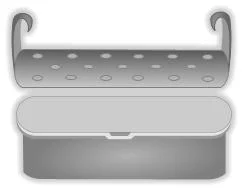
Item 26 in the equipment list is a tin or copper fish kettle, containing a removable inner rack. The fish lies on the rack while cooking. Afterward, the entire rack can be lifted, the liquid drained, and the fish transferred to a serving dish with minimal damage.
The need for such a device becomes clear when preparing large whole fish. In No. 1469, a cold preparation of whole pike, pike-perch or trout, Molokhovets refers to the fish kettle and describes cooling and carefully removing the cooked fish. In this case the form of the equipment directly shaped the method and the presentation.
The sauté pan: not necessarily today's long-handled skillet
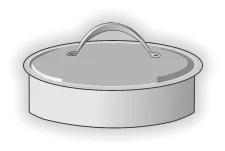
Item 12 describes sauté pans made of nickel-plated metal, tin or silver, about four and a quarter vershoks across, with lids but no long handles. They were intended for dishes such as forshmak, ragout, solyanka, tripe and kidney sauce. The stated starting price is one ruble and fifty kopecks.
A modern large skillet with a long handle is therefore not an exact image of the vessel in the text. It explains why certain hot appetizers could be prepared in separate small pans and sometimes served in them. A vershok was about 4.445 cm; our English guide to historic Russian measures gives the relevant conversions.
Waffle irons, molds and baking sheets
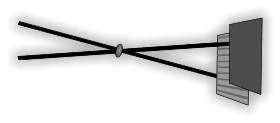
The kitchen list mentions a metal sheet for pies and cheesecakes, a waffle iron and a separate mold for thin rolled pastries. For the last two, Molokhovets gives a price range from one ruble and twenty-five kopecks to two rubles and fifty kopecks. These are distinct implements, reflecting different confectionery techniques.
In cream wafers No. 1807, the thin batter and the hot form are central to the preparation. Our Russian study of blancmange, wafers and puddings explains why the difference between flat wafers and rolled tubes was not just a matter of ingredients but of what was done after heating.
What can prices in kopecks tell us?
Molokhovets lists a cast-iron pancake pan at ten kopecks, a large frying pan at thirty, a deep lined copper tray at roughly six to seven rubles, and a spit at two to six rubles. The fish kettle is said to start at one ruble and thirty kopecks.
These are useful estimates within the author's equipment list. They do not necessarily represent average retail prices across the Russian Empire in 1901. The publication date alone does not guarantee that all figures were collected in exactly the same year or city. Reliable economic comparisons require independent dated price sources.
Portable spirit and kerosene heaters
In “Modern Dining and Tea Table Equipment,” Molokhovets lists burners fueled by spirits, gasoline or kerosene. Some were suggested for quickly heating water or individual dishes, while larger appliances could serve more substantial cooking tasks. A nickel-plated stand with a small flame for keeping dishes warm also appears.
These historic heaters used flammable liquids and naked flames. Their descriptions illustrate technological choices but must not be interpreted as recommendations to operate antique equipment today, especially without independent fire-safety testing. The same book's discussion of traditional ovens is a reminder that different methods coexisted.
Making a small apartment kitchen work
“Arranging the Kitchen” pays particular attention to limited spaces. Folding shelves, hooks for skimmers and spoons, and furniture serving more than one purpose all feature in the advice. Molokhovets even mentions provision for a worker's bed within the kitchen in some apartments.
This almost architectural discussion shows how the author conceived domestic organization. It is not a universal floor plan of a Russian home; the text addresses a particular kind of small city dwelling. Yet it makes clear that a cookbook could teach the arrangement of labor as well as boiling and frying.
Reading kitchen history through material objects
Recipe pages preserve dishes; equipment descriptions explain some of the material conditions behind them. A fish kettle helps us understand how an intact fish was served; a small sauté pan helps explain hot appetizers; a waffle iron helps reconstruct thin pastries.
The particularly valuable feature of Molokhovets' book is its combination of written recipes, object descriptions and illustrations. The task is not to recreate a myth of a “typical Russian kitchen,” but to ask what equipment the author proposed, who might have needed it and which dishes its design made possible.
Original equipment sections and recipes
Related original dishes: whole cold fish No. 1469 and cream wafers No. 1807. Continue with table setting in 1901 and the Russian study of baked appetizers in shells.