Tolokno and Oat Kissel: How Molokhovets Processed Oats in the Oven
Homemade tolokno, groats for Haber soup and oat kissel with almond pressings: different ways of processing the same grain.
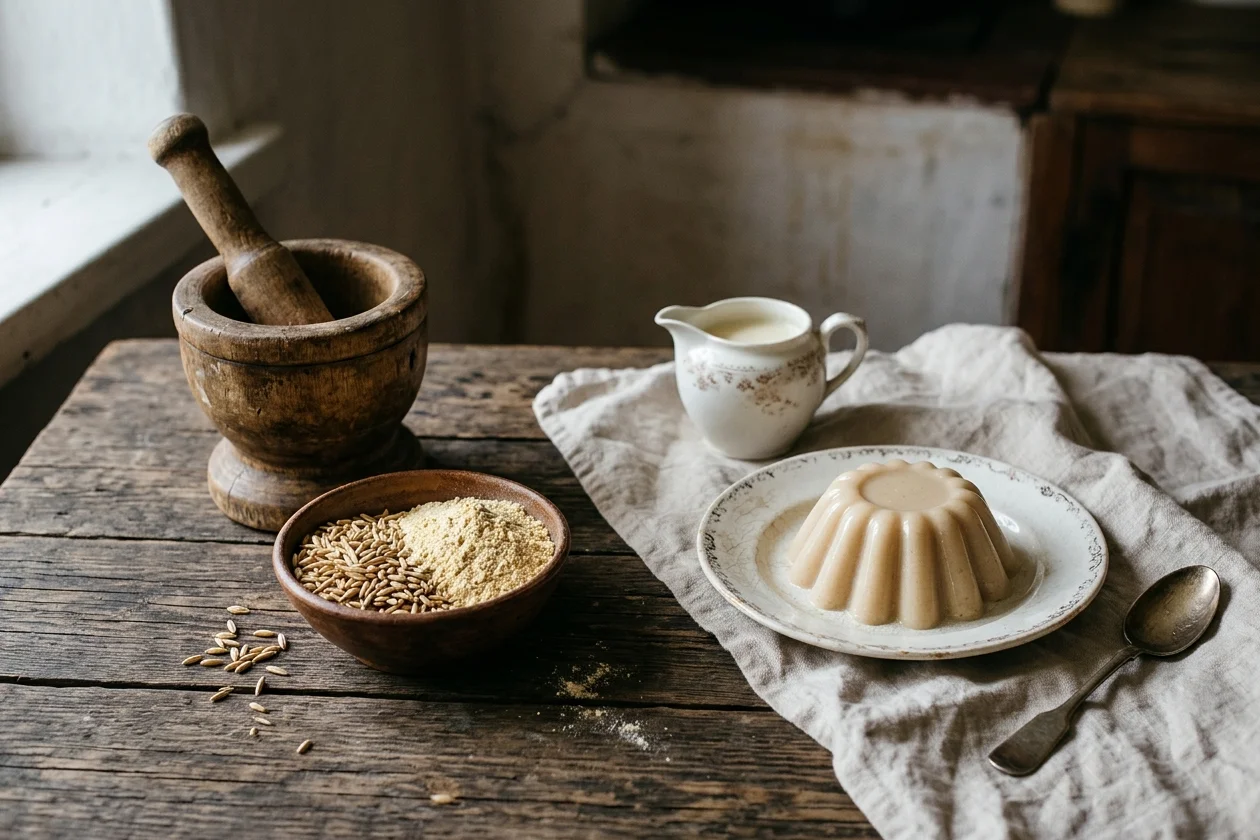
Tolokno did not begin with ordinary milling
In No. 3611, Molokhovets describes homemade tolokno in detail. Oats are first sifted and treated with hot water in an earthenware or cast-iron pot. Only afterwards come prolonged oven drying, cooling, pounding and sifting. Tolokno in this entry is the result of successive operations rather than simply raw grain ground into flour. The oven is important not only for heating but also as a drying space. Its exact internal temperature is not measured in the book.
Why the oats were dried several times
After the water is drained, the grain is placed in an oven cleared of ash and coals and stirred for more even drying. The next stage takes place at a lower heat. The author emphasizes preventing burning. The technique demonstrates an effort to manage the oven's residual heat, but establishes neither modern moisture parameters nor safe storage conditions. For home use, commercially produced food-grade tolokno is a more appropriate choice; the historical entry is evidence of old grain-processing methods.
Pounding, sifting and final milling
The dried, cooled oats are pounded in a mortar and sifted, with the operations repeated. The author suggests milling the groats remaining on the sieve after moistening them with salted water; the resulting flour is called tolokno. Not every sifted fraction should automatically be considered the same product. The text describes successive particle separation and further processing of the coarse remainder. Sieve aperture size, mill characteristics and precise salt concentration are absent. These gaps must not be filled with arbitrary modern parameters.
Groats for Haber soup and the colour of processing
No. 3610 refers to the tolokno technique, but specifically states that groats for Haber soup should not be dried in so hot an oven: they should be almost white rather than as yellow as tolokno. This is the author's direct comparison of two products by degree of processing and intended colour. The qualitative description cannot establish an exact temperature difference. It does show that colour was a guide to the result. An illustration may depict pale oat groats beside warmer-coloured tolokno.
What tsezh meant in oat kissel
No. 3609 calls for groats rather than flour for white oat kissel. The watery mixture is strained through a sieve after processing. The author calls the resulting liquid tsezh, which is then thickened by heating. Nos. 2022 and 2750 add almond pressings left over from making almond milk. The moulded kissel is served with almond milk, sometimes with honey or patoka syrup. Historical holding of wet groats near a warm oven should not be regarded as a safe modern method: fermentation parameters and sanitary conditions are not defined.
Oat filtrate and potato flour are different bases
In No. 3612, potato flour is obtained from grated potatoes by separating and washing the sediment and then drying the product. This differs from processing oat groats and extracting tsezh. Molokhovets identifies potato flour as suitable for kissels, cakes, puddings and icing. Comparison shows that historical kissels could be based on fundamentally different preparations. An image of tolokno, groats and finished oat dessert is a modern reconstruction reflecting their differences rather than proving the exact appearance of the historical dish.
Original recipes and sources
Elena Molokhovets, A Gift to Young Housewives, 1901 edition. Links to scans are available on the original Russian recipe pages.
- No. 3609 — Oat Groats for Oat Kissel Russian original
- No. 3610 — Oat Groats for Haber Soup Russian original
- No. 3611 — Tolokno (Steamed, Roasted Oat Flour) Russian original
- No. 2022 — Oat Kissel with Almond Meal Russian original
- No. 2750 — Oat Kissel with Leftover Almond Pulp Russian original
- No. 3612 — Potato Flour (Starch) Russian original