Molokhovets's Marzipan: Rose Water, Almond Shapes and Patterned Icing
Three methods of making marzipan in the 1901 edition: heating the almond mixture, heart-shaped moulds and decorative borders.
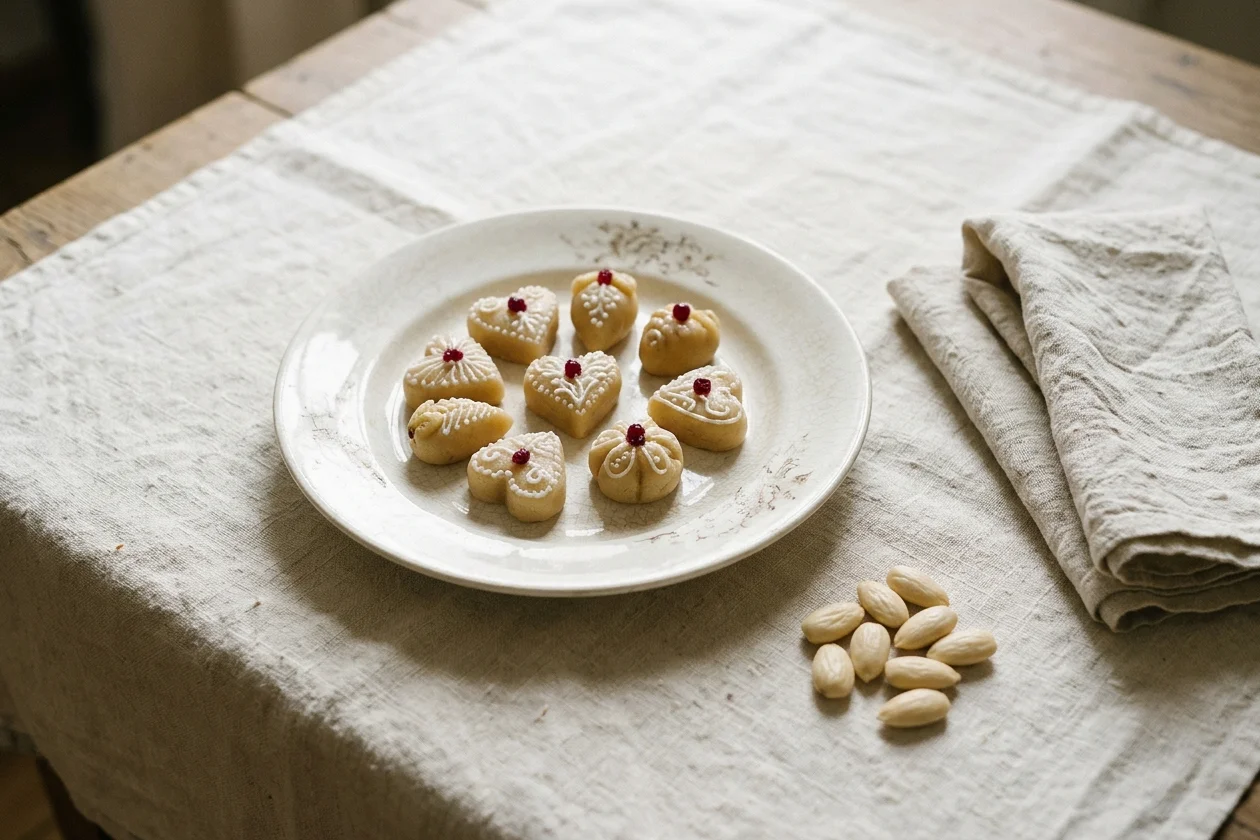
Three methods repeated in two sections
In the 1901 cookbook, marzipan is described in three versions under Nos. 2212–2214, repeated as Nos. 2786–2788. The matching texts allow these six entries to be treated as three principal techniques rather than six different dishes. In each, ground almonds with sugar are central, and rose water is the characteristic flavouring. Preliminary heating, shaping and surface treatment differ, however. These are not merely recipes for almond sweets but several methods of producing decorative pastries.
First method: a thick mixture from the saucepan
In Nos. 2212 and 2786, sweet almonds are worked with rose water, combined with sugar and heated until thick. The author warns against burning. The mixture is then cooled, rolled out and cut into shapes, which are covered with thin white icing. Almonds and sugar are used in equal weights, although their volumes differ. The source establishes neither heating temperature nor final moisture. Consistent pliability cannot therefore be expected without considering the properties of modern ingredients.
Second method: heart-shaped moulds
Nos. 2213 and 2787 specify working almonds and sugar with rose water and quickly filling moulds before the mixture dries. A heart shape is explicitly named. This explains why a historical illustration may depict such pieces rather than arbitrary round sweets. Bitter almonds appear in the old recipe. They are unsuitable for modern reconstruction because of the risk of toxic cyanogenic compounds; only edible sweet almonds should be used. The historical method of heating the sheet with hot coals is likewise not advice for a modern kitchen.
Third method: flat pastries with a raised border
In Nos. 2214 and 2788, the almond-and-sugar mixture is left covered and subsequently kneaded again. Flat pieces of various shapes are cut out, and a high rim made from the same mixture is formed around each one. The surface is glazed and then decorated with fruit and preserves. This construction resembles a small decorative pastry with a recess for embellishment. The author does not restrict the outline to one shape. The surface shade and height of the rim remain conjectural in a modern artistic reconstruction because no exact dimensions are specified.
How marzipan was patterned and decorated
In the second method, the author mentions applying white icing through a paper cone and filling the open areas with fruit and jelly. A decorative rim is another option, for which special implements existed; Molokhovets also describes shaping strips of the mixture by hand. This indicates the importance of surface pattern as well as flavour. Rose water in the icing and almond mixture connects their aromas. Only food-grade flavourings are appropriate for modern adaptation; historical pharmacy products must not be replaced with non-food oils.
Marzipan mazurek as a separate bake
No. 2139 shows another use of almonds and sugar: egg whites are incorporated, the mixture is heated, cooled and rolled into a flat cake, with a border made from trimmings. The mazurek is then baked, glazed and decorated. Unlike the three principal marzipan versions, whites are part of the main mixture here. A shared decorative principle connects different sections of the book without making the recipes identical. A modern illustration of shaped pastries can convey historically attested forms while remaining an artistic reconstruction.
Original recipes and sources
Elena Molokhovets, A Gift to Young Housewives, 1901 edition. Links to scans are available on the original Russian recipe pages.
- No. 2212 — Cooked Almond Marzipan Russian original
- No. 2213 — Marzipan, Another Method Russian original
- No. 2214 — Marzipans, Third Method Russian original
- No. 2786 — Marzipan Figures Russian original
- No. 2787 — Marzipan, Another Method Russian original
- No. 2788 — Marzipan, a Third Method Russian original
- No. 2139 — Marzipan Mazurek Russian original