Molokhovets's Chocolate Bun: Almonds, Rye Rusks and Chocolate Glaze
Unusual yeast baking in recipe No. 3085 compared with neighboring entries: chocolate, almonds, spices and beaten egg whites.
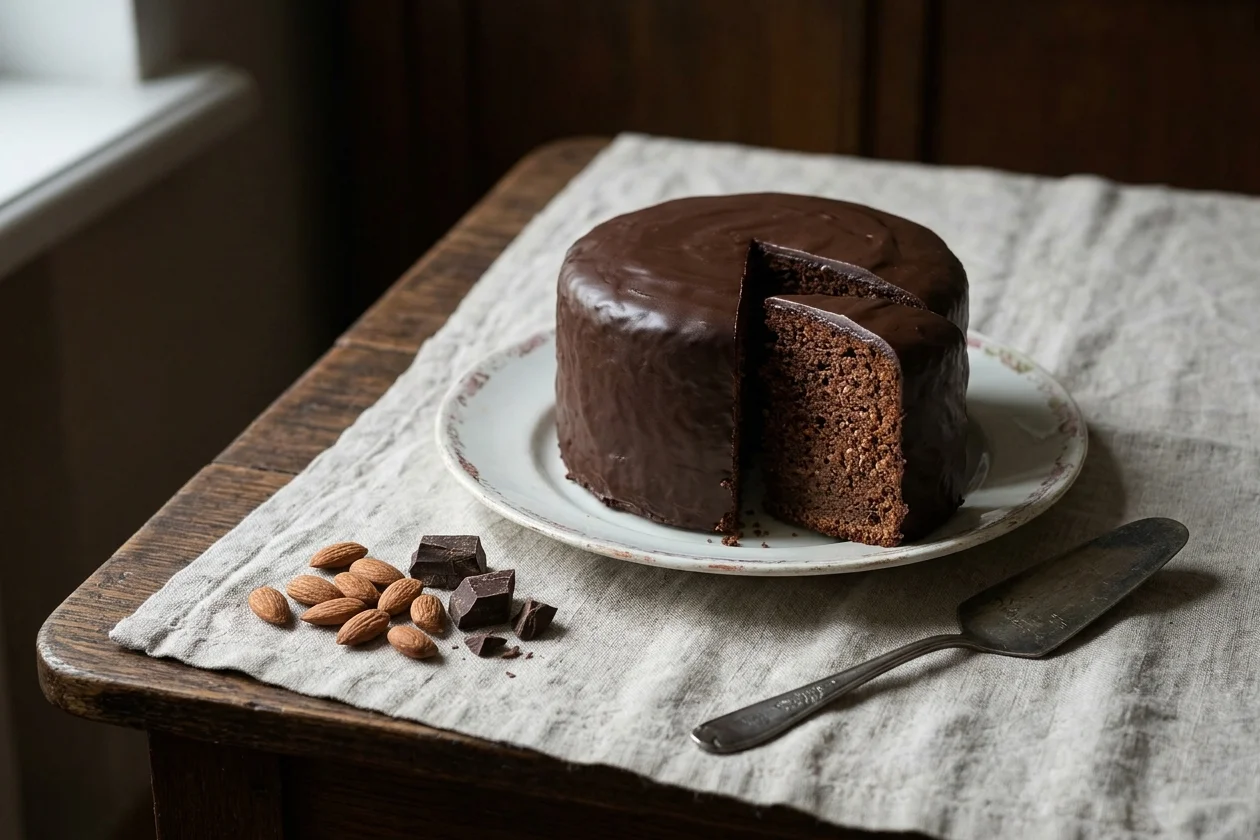
An unusual chocolate bake in the cookbook
In No. 3085, Molokhovets gives a recipe entitled Kulich or Chocolate Bun. The base begins with water, yeast and flour. A large quantity of yolks, sugar, ground almonds and chocolate is then incorporated. Rum, red wine, rye rusks, candied orange peel, cinnamon, cloves and lemon juice also appear in the list. This elaborate composition differs greatly from a simple bun with pieces of chocolate. The original double title should be retained rather than reducing the bake to a modern cake.
Yeast and an airy egg mixture
No. 3085 combines two ways of producing a porous structure. The author first lets the yeast base rise, then adds the remaining ingredients and allows it to rise again. Beaten whites and, if needed, additional flour are incorporated at the end. Yeast releases gas during fermentation, while beaten whites introduce air into the mixture. Their combined use does not make the resulting volume predictable: sugar, fat and dough density affect the rise. The book provides neither instrumental temperature control nor moisture measurements, so a modern formula would require separate testing.
Why so many almonds were used
The main proportion in No. 3085 specifies one Russian pound of peeled ground almonds, which the entry equates to three glasses. Initially, one and a half glasses of flour are used, although more may be added later. Almonds form a substantial part of the mixture rather than merely a surface decoration. Rye rusks are also incorporated into the dough and can affect its thickness, not just serve as a coating for the mould. Beaten eggs, sugar, almonds and chocolate create a more elaborate mixture than ordinary yeast buns made from wheat flour alone.
Spices and discrepancies in proportions
Chocolate is combined with candied orange peel, cinnamon, cloves and lemon juice. The list for six people does not entirely agree with the main text: the amount of red wine differs in the digital text, as do some volume proportions. These passages should not be silently corrected or converted into a single supposedly correct weight in grams. Clarification requires checking the printed scan. The historical inclusion of rum and wine also does not establish that all alcohol disappeared during baking.
How it differs from neighboring buns
No. 3084, tea buns, contains cream, melted butter, yolks, sugar, nutmeg, yeast and flour. The buns are shaped into elongated forms and baked after rising. Nos. 3086 and 3087 describe other enriched breads with milk, raisins, almonds and aromatic additions. No. 3087 emphasizes waiting for the thick dough to rise. Chocolate No. 3085 is distinguished in particular by the substantial amounts of almonds and chocolate, rye crumbs and two alcoholic ingredients. It cannot be regarded simply as ordinary enriched bread coated with chocolate.
The paper mould and glaze
No. 3085 suggests pouring the prepared mixture into a buttered paper mould sprinkled with rusks. After baking and cooling, the product is covered with chocolate glaze. Chocolate is therefore present both in the main mixture and the exterior decoration. The source does not specify the exact cross-sectional shape or colour of the crumb, so the image of a tall chocolate bun remains a reconstruction. Modern adaptation requires validated proportions, safe egg treatment, attention to nut allergies and a suitable baking mould.
Original recipes and sources
Elena Molokhovets, A Gift to Young Housewives, 1901 edition. Links to scans are available on the original Russian recipe pages.