Hot Forshmak: Herring, Meat and Potatoes in a Single Bake
Why forshmak in 1901 was not always a cold appetizer: five versions using bread, cream, potatoes and meat.
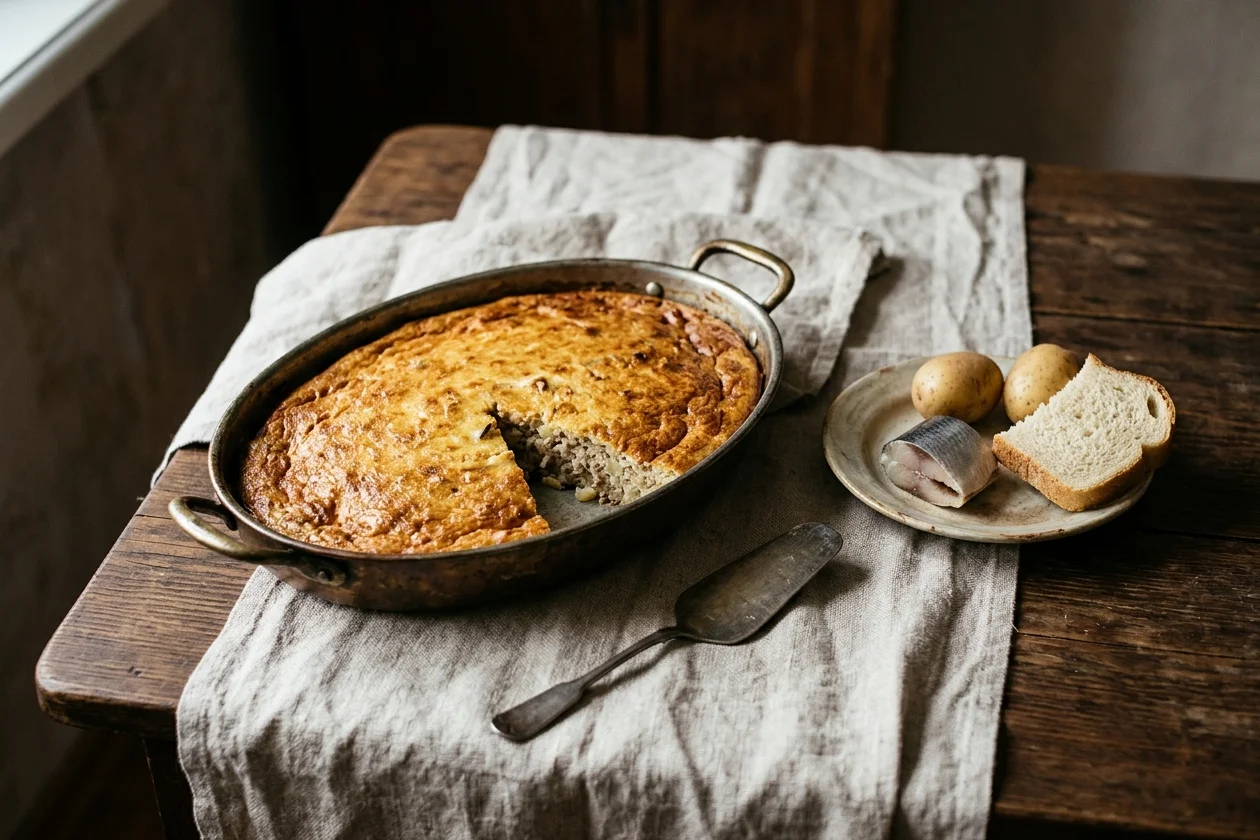
Not only cold chopped herring
Today forshmak is often imagined as a cold spread made from chopped herring. Under this name, Molokhovets also includes dishes that must be baked or heated. In No. 1226, herring is combined with cooked meat, bread, eggs and a dairy ingredient before the mixture goes into the oven. No. 638 uses a potato base with apple, and No. 1228 proposes baking herring with soaked bread and cream. A shared name does not require identical consistency, serving temperature or the obligatory presence of potatoes.
Why roast meat appeared in forshmak
No. 1226 allows roast veal, game or boiled beef from stock. They are finely chopped with cleaned herring and squeezed, soaked bread crumb. The recipe includes fried onion, pepper, nutmeg, butter, eggs and sour cream or cream. This produces a cohesive mixture for baking rather than a fish appetizer with a meat accompaniment. The ingredient list allows sardines instead of herring. The author also suggests increasing the amount of sour cream, in which case the dish is served directly in the baking pan rather than unmoulded.
Potatoes, apple and bread
In No. 638, herring is combined with mashed boiled potatoes, sour cream, eggs, fried onion and grated raw apple. Part of a French white loaf, previously soaked and squeezed, is also added. Potatoes and bread affect the firmness, while apple can contribute moisture and acidity. The author specifies neither an exact acidity nor an apple variety, so the reconstructed flavour depends on the ingredients chosen. The title Potato Forshmak does not mean that herring was optional: it is explicitly part of the composition.
Three different serving methods
No. 1227 describes herring, onion, bread crumb, butter and cream or milk, heated and served in a small salad bowl. No. 1228 calls for baking herring with soaked white bread and cream beneath a layer of rusks. In No. 1229, meat and herring are ground with bread and potatoes, sieved, combined with sour cream and baked in a pan. Even closely related entries differ in their processing and serving vessels. The salad bowl in one entry does not establish cold serving, because the author explicitly calls for heating the mixture immediately beforehand.
The rice version and the role of rusks
In No. 2558, fried onion is mixed with boiled rice, mashed potatoes and cleaned herring. The mixture is placed in a small tin saucepan, with butter and rusks added for browning. Unlike the meat-based No. 1226, this entry names neither eggs, sour cream nor cream. Rice is an additional structural component. Rusks may form part of the mixture or a surface layer in different recipes. Modern reconstruction should therefore begin by selecting a specific entry, not combining every listed ingredient into a universal forshmak.
What historical forshmak reveals
These entries demonstrate ways of reusing cooked meat and combining salted fish with bread or potato preparations. They help explain the logic of the dish without assumptions about its origin or prevalence in every household. Modern adaptation must observe safe preparation of fish, eggs and dairy products, and safe cooling of leftover meat. An illustration of a browned bake in a pan may show one hot version but is not a universal representation of forshmak in the book.
Original recipes and sources
Elena Molokhovets, A Gift to Young Housewives, 1901 edition. Links to scans are available on the original Russian recipe pages.
- No. 638 — Potato Forshmak Russian original
- No. 1226 — Meat and Herring Forshmak Russian original
- No. 1227 — Third Method for Herring Forshmak Russian original
- No. 1228 — Fourth Method for Herring Forshmak Russian original
- No. 1229 — Fifth Method for Herring Forshmak with Veal and Beef Russian original
- No. 2558 — Forshmak with Herring, Rice and Potatoes Russian original