One Ingredient, Several Dishes: Thrift in Molokhovets’ Cookbook
How one bird, a pot of broth, yesterday’s roast and even fish shells could feed several dishes in the historical Russian kitchen of 1901.
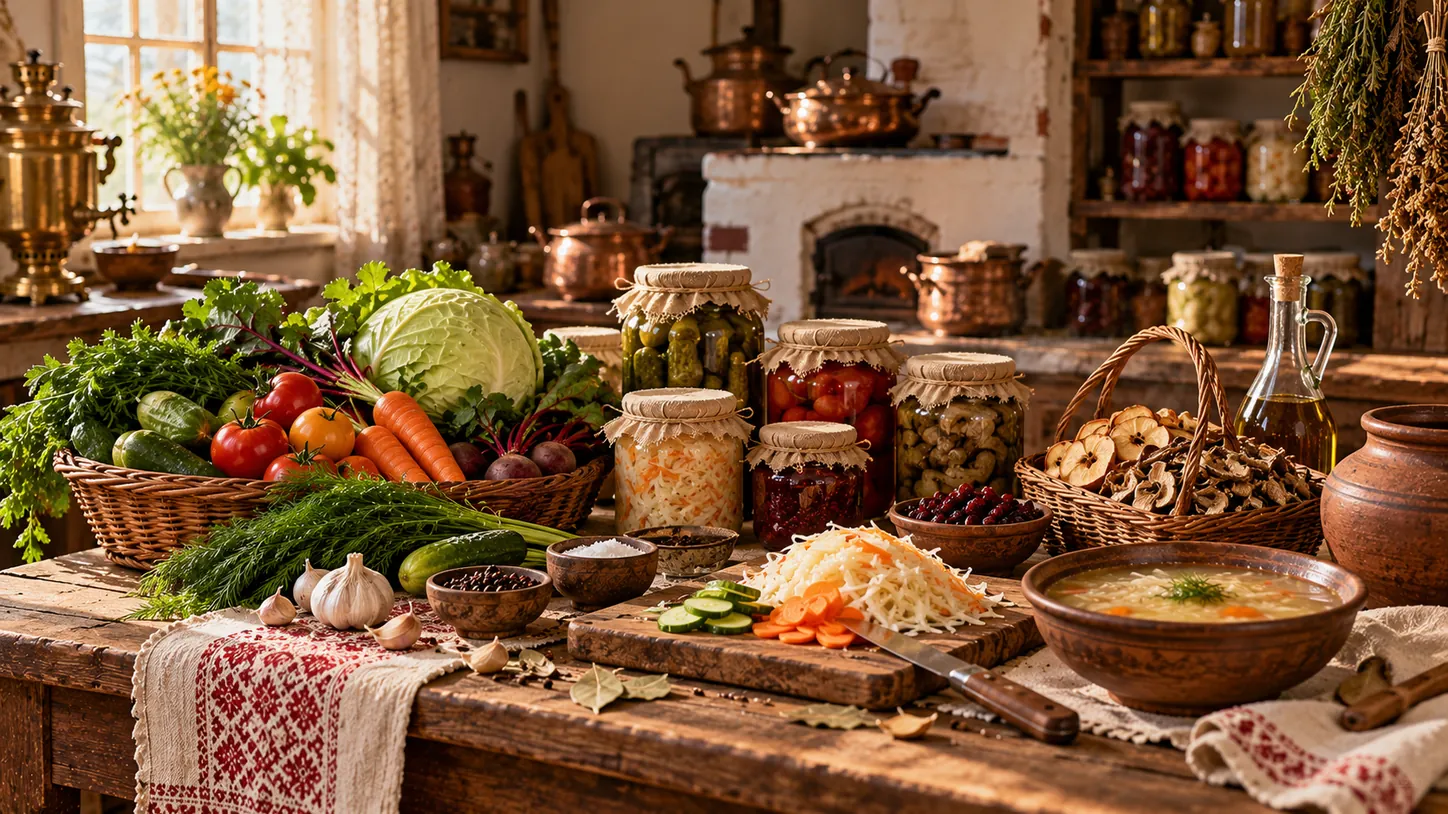
In Elena Molokhovets' 1901 cookbook, one bird could provide both broth and cutlets, boiled meat could become the filling of small pies, and yesterday's roast might return to the table in a different form. These techniques are scattered throughout recipes and monthly dinner menus rather than collected in a single chapter on thrift. They reveal how planning could connect several dishes within one meal or across successive days.
Recipe No. 849 gives several uses for leftover roasted veal, while No. 1028 divides chicken flesh from bones to make cutlets and broth. They are recommendations in a cookbook, not evidence that every family in Russia actually cooked this way.
Beef from the broth became a pie filling
The instructions for No. 333, Small Pies with Beef Filling, are unusually explicit: about two hours before the meal, the cook cuts a piece of beef from the broth and chops it finely. Onion, egg, dill and a little broth are mixed into the meat to make a moist filling for the pastry.
The important detail is the timing. Molokhovets does not tell the cook to wait and see whether anything happens to be left on the plate. Part of the simmering meat is deliberately reserved for a second dish. The pies accompanying a broth could thus be connected to the preparation of that very broth, rather than requiring a wholly separate quantity of meat.
Turkey: the meat and the broth were served separately
No. 23, Turkey Broth, presents an even clearer arrangement. Once the breast fillets have cooked, the author advises removing them before they become overdone, keeping them hot over a water bath and serving them separately with rice and sauce. The bones continue simmering to enrich the broth.
The same entry suggests different ways of serving that broth: plain, with little pies, with rice or with quenelles made from the turkey. The bird supplies several elements of a dinner instead of being used only to flavor the soup.
The December Class IV dinner register even places boiled turkey on one day and, in the following dinner, soup made from the previous day's turkey. The connection across days is stated by the cookbook itself.
Chicken cutlets and stock from the bones
For No. 1028, Minced Chicken Cutlets, the flesh is removed for cutlets, while the bones, wings and feet are used for broth. The recipe gives an approximate yield from a large chicken or two smaller birds: several cutlets as well as portions of soup.
This is not quite the same as turning leftover chicken soup into cutlets on the following day. Rather, different parts of the raw bird are allocated to different dishes from the outset. The distinction between using a whole ingredient efficiently and reusing an already cooked dish matters when interpreting these examples.
A Class IV December dinner also pairs chicken soup with cutlets from the same chicken. The intended connection is thus visible in both the individual recipe and the menu plan.
What to do with yesterday's roasted veal
The discussion of No. 849, Ordinary Roast Veal, goes beyond the basic roast. Molokhovets proposes serving it cold at breakfast the next day, preparing little open sandwiches, briefly frying slices with sour cream, or baking the meat again with breadcrumbs and butter.
A more elaborate version puts the remaining meat into a dish with béchamel sauce and cheese. The separate recipe No. 853, Roast Veal with Béchamel, gives additional context for that preparation. The author also mentions using the remaining bones for sauce or soup. Both cooked meat and the parts left after carving could be assigned a further purpose.
Little pies made from leftover roast
The name of No. 368, Little Pies from Leftover Roast, tells the story directly. Turkey, veal or another cooked meat is chopped finely and combined with soaked bread, onion, eggs and seasonings before being placed in pastry.
The recipe offers different forms: small metal molds, shells lined with pastry, or more familiar little pies. What reaches the table is not simply a reheated slice of meat with a new garnish, but a distinct dish in which the earlier roast becomes the filling.
Fish from the soup as a new hot appetizer
In No. 371, Fish Forcemeat in Shells, Molokhovets explicitly describes using fish already boiled for soup as an economy. The fish is finely chopped with onion, mushrooms, sour cream, egg yolks and breadcrumbs, then presented as small individual portions.
This is a particularly clear case because the suggestion to save resources is the author's own. It is still a recommendation rather than a record of what all cooks practiced. A related principle appears in No. 143, where roots used to flavor a broth may be served separately with butter and breadcrumbs.
Bones and shells were useful too
Molokhovets allows the use of roasted bones left from beef in No. 116, Potato Purée Soup. The December Class IV menu also includes potato soup made from veal bones remaining from an earlier dish.
In the June Class IV register, a crayfish soup is made from shells left after another preparation. Recipes such as No. 62, Crayfish Soup, and No. 167, Crayfish Purée Soup, show how shells as well as meat could contribute flavor and color to the finished soup.
None of this means that an old kitchen had no waste whatsoever; some parts were discarded. But these passages demonstrate a deliberate attempt to make more than one use of an ingredient within the techniques and tastes of the time.
Not only meat was prepared ahead
In No. 389, Butter and Flour Preparation for White Sauces, the author describes preparing a quantity intended for multiple later sauces — fifteen, in her own estimate. Economy meant saving time as well as ingredients: a basic component might be made in advance for several subsequent meals.
The historical word “preparation” should not be mistaken for assurance that any old mixture can safely be kept today by the same method or for the same length of time. The book does not always provide temperature, refrigeration and sanitary information required for modern food-safety assessment.
Thrift did not necessarily mean poverty
These recommendations do not establish that such practices belonged exclusively to the poorest households. The same cookbook brings together costly products, elaborate entertaining, advice on household thrift and plans for less expensive dinners.
Thrift in these examples often means planning. Before the meal begins, the cook may already know that part of the beef is intended for small pies, while different parts of a chicken will make cutlets and broth. In other cases yesterday's finished roast becomes breakfast or a new hot dish.
Recipes, dinner registers and sources
Start with beef-filled pies No. 333, turkey broth No. 23, chicken cutlets No. 1028, roast veal No. 849, pies from leftovers No. 368, fish forcemeat No. 371, potato soup No. 116, and a base for sauces No. 389. The December and June Class IV registers connect these techniques to a planned series of meals.
For more context, explore the English guide to Section II's dinner registers, the historical study of food preservation and the English food-history archive.