Black Bread Ice Cream: Rye Rusks and Lemon Instead of Cream
Two identical bread ice cream recipes in Molokhovets and a neighboring chilled dessert made from currant buds.
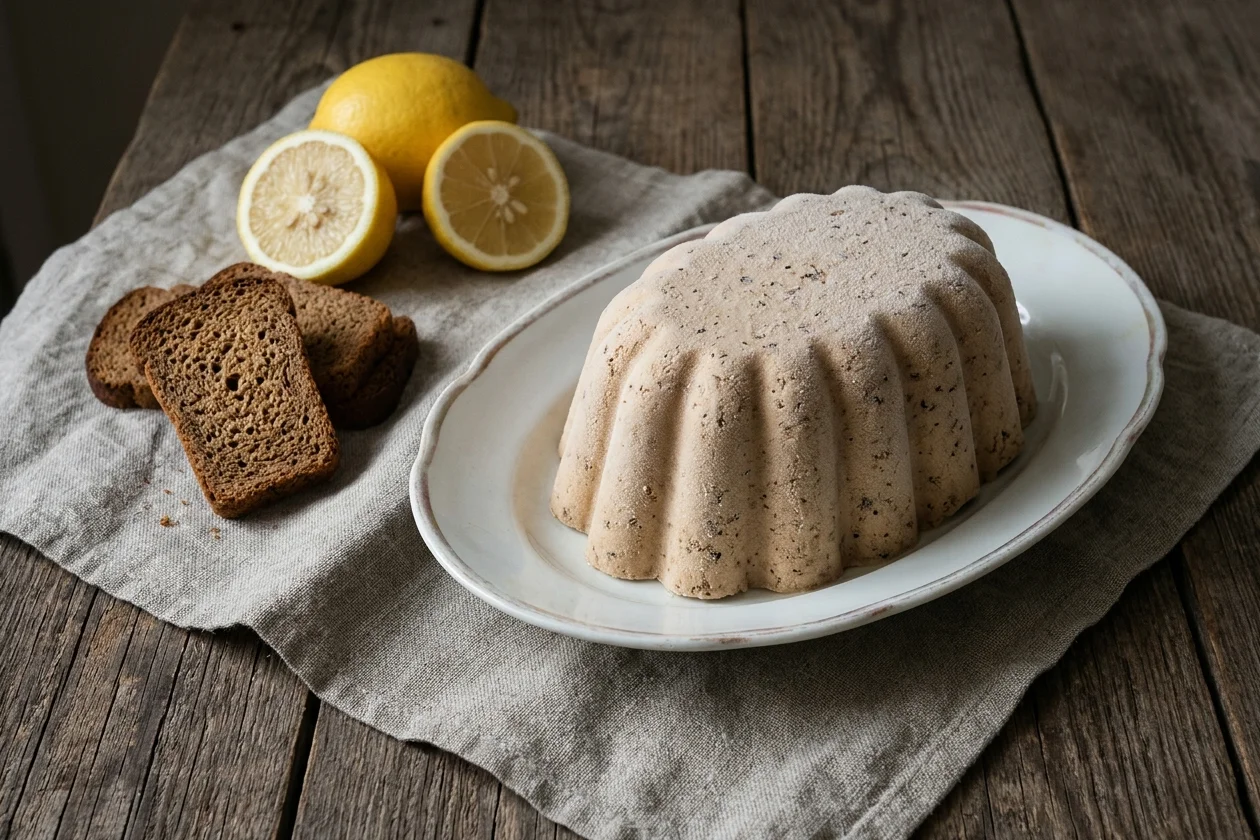
A dessert in which bread played two roles
In No. 1920, Molokhovets describes ice cream made from black bread. The ingredients are rye bread, sugar and lemon; milk, cream and eggs are not named. Bread is used twice: first to obtain a flavoured liquid, then as a component of the mixture being frozen. This distinguishes the recipe from ordinary cream ice cream sprinkled with rusks. Bread belongs to the dessert itself, not merely its decoration or serving container.
Why bread water was made first
The author proposes infusing toasted rye bread and then separating the solids. Some soluble substances, the aroma of toasted bread and possibly fine particles pass into the liquid. After separating the rusks, the bread water becomes the base for sweet syrup with lemon. Taste depends on the particular bread: degree of toasting, acidity and character of the rye loaf can substantially affect the result. The book does not describe the precise loaf variety or chemical composition of the infusion, so a modern analogue cannot be considered an exact copy.
Why soft bread was added after cooling
The second half of the rye bread in the historical entry is not made into an infusion. It is rubbed through a sieve and introduced into the mixture as it thickens during cooling. This produces a different structure: part of the bread remains in the dessert. Rusks and soft bread have different functions. The former supply the liquid, the latter contribute volume and texture. The source does not describe the finished mixture as completely smooth or grainy, so visible crumbs in an illustration remain conjectural.
Sugar, lemon and cooling
Sugar not only sweetens but affects the freezing point of an aqueous mixture. Lemon juice adds acidity and aroma. Combined with bread, these ingredients show that the absence of cream did not preclude a complex freezing technique. The salt listed is associated with external cooling of the mould by ice and salt, not an intention to make the ice cream very salty. The precise temperature distribution and quantity of unfrozen water are unknown and would require a controlled experiment.
Why the recipe was printed twice
No. 2699 contains virtually the same recipe as No. 1920 and appears among fasting-day desserts. This explains why one historical article is sufficient for both numbers. Separate original recipe pages preserve their respective positions in the book, whereas separate studies would duplicate the principal content. The absence of named dairy products and eggs helps explain inclusion in that section. Historical fasting categories cannot, however, be automatically equated with modern food certifications.
Ice cream made from currant buds
Neighboring No. 1921 describes a chilled dessert based on sugar syrup, lemon and currant buds. The plant material is strained out after processing. This is a different way of extracting flavour: the base is an aromatic liquid, without a subsequent addition of bread mixture. We do not recommend collecting or using buds from unidentified plants; the source does not establish botanical identification, safety or modern dosages. The entries show the breadth of the old ice cream category, beyond familiar dairy and fruit bases.
What distinguishes bread ice cream from plombir
Cream plombir No. 1956 uses yolks and two kinds of cream, while No. 1919 places finished ice cream in a mould lined with sponge biscuits. Bread ice cream No. 1920 follows neither method. It shows that bread can be an integral part of a frozen mixture rather than an outer casing. A modern reconstruction of a brownish moulded dessert with rye crumbs and lemon nearby conveys the concept, but not an established colour, taste or density.
Original recipes and sources
Elena Molokhovets, A Gift to Young Housewives, 1901 edition. Links to scans are available on the original Russian recipe pages.