Black Bread Charlotte: How Molokhovets Made Charlotte
Rye rusks, apples or cherries, spices and layers of bread instead of the familiar sponge batter: comparing charlottes from the 1901 edition.
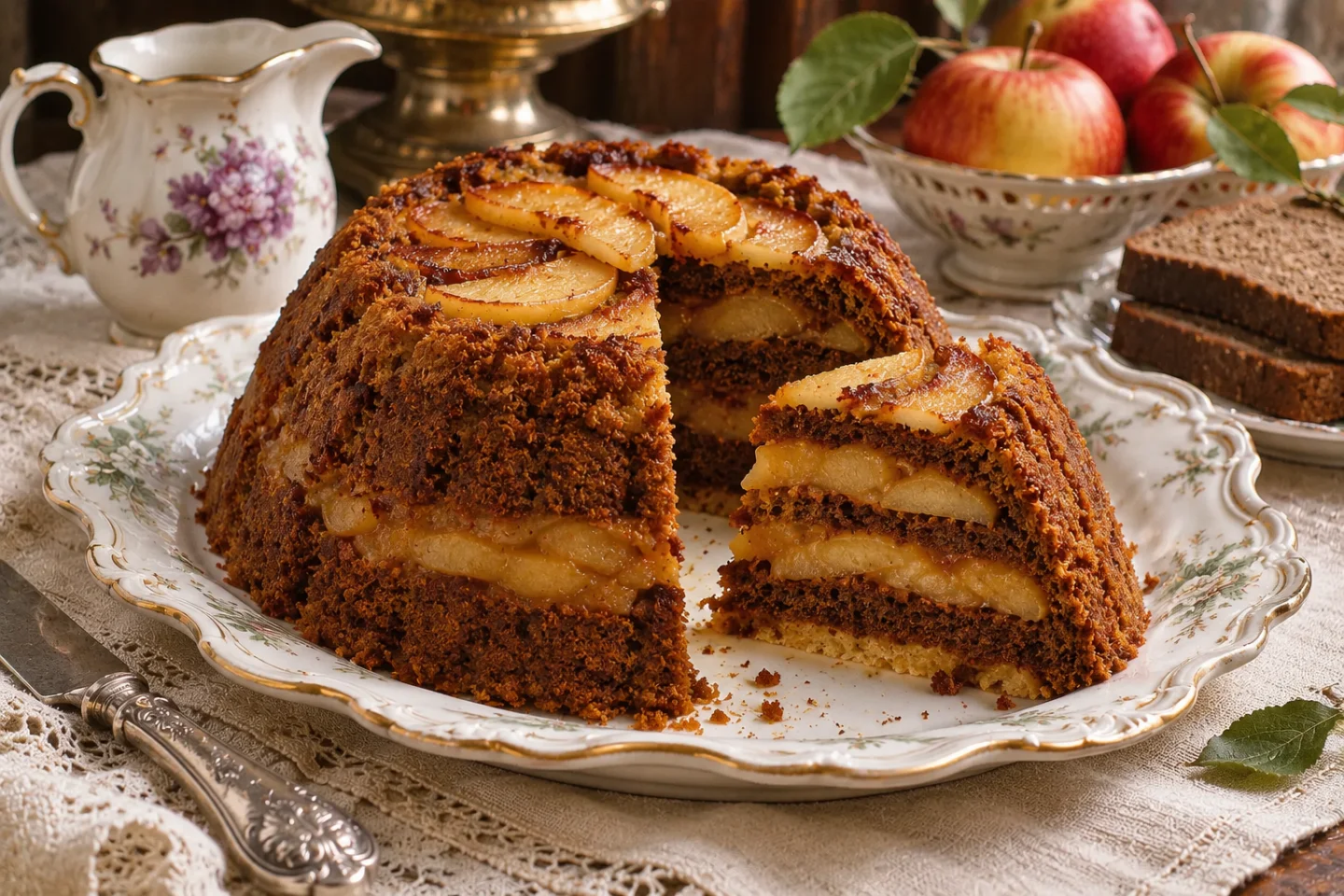
Why the old charlotte differs from the modern cake
For many readers today, charlotte means apples baked in a poured batter. Recipe No. 1566 of the 1901 edition is constructed differently. Molokhovets uses crushed rye rusks and grated stale black bread. Fruit and the prepared bread mixture form alternating layers. There is no separate sponge batter in this recipe. Here the word charlotte denotes not one fixed composition but a way of arranging a dessert in a vessel. This feature makes No. 1566 worth studying separately from other apple cakes.
Why stale bread was needed
For one glass of crushed rusks, the text specifies three glasses of grated stale bread. The mixture is first fried in butter. Dryness helps the bread retain its crumbly structure and absorb liquid from the fruit filling. Preliminary frying adds aroma and changes its texture. Cinnamon, cloves, lemon zest and candied orange peel give the bread mixture a flavour of its own. This is not merely an improvised replacement for flour using leftovers: the ratio of rusks to bread, spices and fat determines the character of the finished dish.
Cherries or apples: two versions in one entry
In No. 1566, the author allows either cherry or apple filling. Syrup is specified for the cherries, whereas apples are prepared in advance and stewed with butter. In both cases the fruit alternates with bread. The historical text also contains an instruction involving crushed cherry stones. It should not be reproduced: stone-fruit kernels may contain cyanogenic compounds. A modern interpretation must use only safe, pitted fruit flesh. The choice of fruit will affect acidity, moisture, the colour of the cut surface and the firmness of the filling.
The charlotte mould and its bread lining
Molokhovets proposes a greased mould dusted with sugar, with buttered paper laid on its bottom. Besides alternating layers, she allows the sides to be lined with thin slices of black bread. No. 1569 explains the technique in greater detail: the mould walls are lined with even slices of white bread, with an apple mixture and croutons inside. The mould determines more than appearance: it holds the filling while the bread casing browns. After cooking, the dessert can be turned onto a dish. The source establishes neither the precise shape nor dimensions of the historical product.
Charlottes with white bread, rusks and preserves
In No. 1570, Molokhovets describes apple charlotte with thin rusks soaked in milk or cream and an egg mixture between the layers. No. 1571 uses sweet rusks with redcurrant preserves. In No. 1567, cherries are added to a mixture of eggs, milk, butter and rusks. Even in neighboring recipes, then, bread could serve as a casing, a distinct layer or part of a mixed batter. The technique of one entry should not be imposed on every other. These are related desserts, not interchangeable instructions.
Charlotte in another section of the book
No. 2612 places apples inside a mould with croutons made from stale white bread, while No. 2613 describes a black-bread mixture with fruit, spices, wine and Provençal oil. The digital text of No. 2613 contains omissions and typographical errors; in particular, the sequence for filling the mould appears abbreviated. We preserve this limitation rather than reconstruct missing actions by guesswork. We do not recommend the bitter almonds mentioned in the text for a modern reconstruction. Differences in fats and bread preparation are as important as differences in filling.
How the dish can be pictured today
A round, dark bread charlotte with visible apple layers, on an old-fashioned dish with cream served separately, is a reasonable artistic reconstruction. It is one possibility, not an exact copy of a historical dessert. The recipe should be reproduced only in a safe, adapted form. The central discovery is that a familiar name can conceal a very different culinary construction: fruit filling assembled within a bread casing or alternating layers of bread.
Original recipes and sources
Elena Molokhovets, A Gift to Young Housewives, 1901 edition. Links to scans are available on the original Russian recipe pages.
- No. 1566 — Dark Bread Charlotte with Cherries or Apples Russian original
- No. 1567 — Cherry Charlotte Russian original
- No. 1569 — Apple Charlotte Lined with White-Bread Toast Russian original
- No. 1570 — Apple Charlotte with Small Thin Rusks Russian original
- No. 1571 — Sugar Rusk Charlotte with Redcurrant Jam Russian original
- No. 2612 — Apple Charlotte with Toasted Bread Russian original
- No. 2613 — Apple Charlotte with Rye Bread Russian original