Rice and Tea Plombir: Molokhovets's Unusual Frozen Desserts
How rice purée, green tea infusion and whipped cream became chilled desserts: comparing five plombir recipes from 1901.
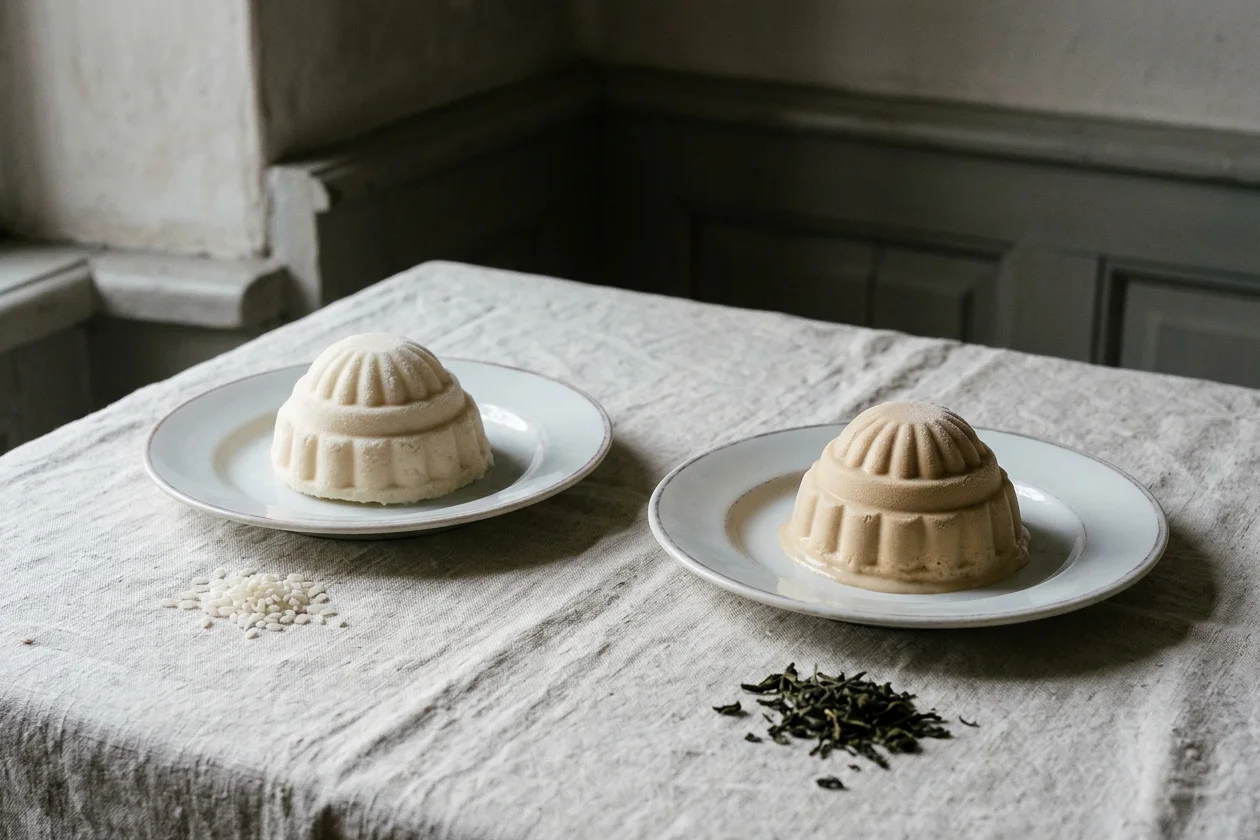
Which plombirs Molokhovets describes
In the chilled desserts section, cream plombir No. 1956 appears alongside rice No. 1959, apple No. 1961, tea No. 1962 and béchamel plombir No. 1964. Readers familiar with plombir as a modern commercial ice cream may find this surprising. The historical group comprises chilled products with different bases rather than one standardized composition. Whipped cream often plays a special role and is incorporated at a particular stage of cooling. Some recipes differ even in how the dessert is set.
Rice plombir: grain within the dessert
In No. 1959, rice is cooked in milk until soft and rubbed through a sieve. Sugar, yolks and vanilla are also present. The thickened base is cooled, partially frozen and combined with whipped cream. Rice is not a separate accompaniment or topping: its properties become part of the dessert's structure. During cooking, starch binds water, while sieving makes individual grains less noticeable. Exact density and smoothness depend on rice variety, cooking and processing; the historical text does not measure these characteristics.
Tea plombir: an infusion rather than powder
In No. 1962, liquid cream is flavoured with green tea, allowed to infuse and strained. Yolks and sugar are then used, the base is cooled and whipped thick cream incorporated. This differs fundamentally from mixing green tea powder directly into modern ice cream. The leaves are removed by straining, and the colour and flavour depend on substances transferred to the cream. The tea variety is not specified, so there is no basis for calling the dessert matcha plombir or promising a bright green shade. A reconstruction might be cream-coloured or lightly tea-tinted.
What cream, apple and tea versions share
In No. 1956, a cream mixture with yolks and sugar is heated until thickened, partially frozen, and combined with whipped cream. Apple No. 1961 adds purée of baked apples and allows the mould to be lined with sponge biscuits. Rice and tea versions likewise distinguish a base from whipped cream. In terms of texture, this combines a thickened mixture with an aerated component. But the author describes whipping and freezing in words rather than quantitative measurements, so the precise density cannot be established.
Why béchamel appears as a dessert
No. 1964 is called plombir of béchamel with whipped cream. Milk and sugar are thickened with potato flour, and the cooled mixture is combined with whipped cream and fruit or berries from preserves. Unlike the other cited recipes, this one specifically places the mould on ice without detailing partial freezing of the base. We cannot assign an identical serving temperature to every historical plombir. Béchamel here denotes a thickened milk base, not the familiar savoury sauce served with meat.
Moulds, sauces and serving
Rice plombir may be served with cold custard cream or raspberry or cherry syrup. The apple version may have a sponge biscuit casing. The béchamel dessert may be accompanied by preserves. Such details reveal plombir not only as a serving of ice cream but as a moulded product turned onto a dish and finished with another component. There are no photographs of the finished historical desserts in the source; mould geometry and decoration in a modern illustration remain artistic choices.
Historical recipes and modern products
Modern composition standards and industrial methods cannot be projected onto the author's classification of 1901. We use the word plombir in the sense supported by the entries themselves. Modern adaptations require validated treatment of the egg base, safe cream and controlled cooling. Ice and salt in the historical account belong to the external cooling medium, not a mandatory addition directly to the dessert mixture.
Original recipes and sources
Elena Molokhovets, A Gift to Young Housewives, 1901 edition. Links to scans are available on the original Russian recipe pages.