Sour Shchi: When One Name Meant Soup and Sparkling Kvass
A historical investigation of the unexpected double meaning of Russian sour shchi in 1901.
In the 1901 edition of Elena Molokhovets' cookbook, the Russian words kislye shchi, or “sour shchi,” refer to two quite different foods. One was a hot cabbage soup. The other was a fermented drink made from grain, prepared in barrels and bottled. The difference is more than an entertaining linguistic puzzle: it shows how recipes, ingredients, equipment and historical dictionaries must be read together before a familiar name is translated.
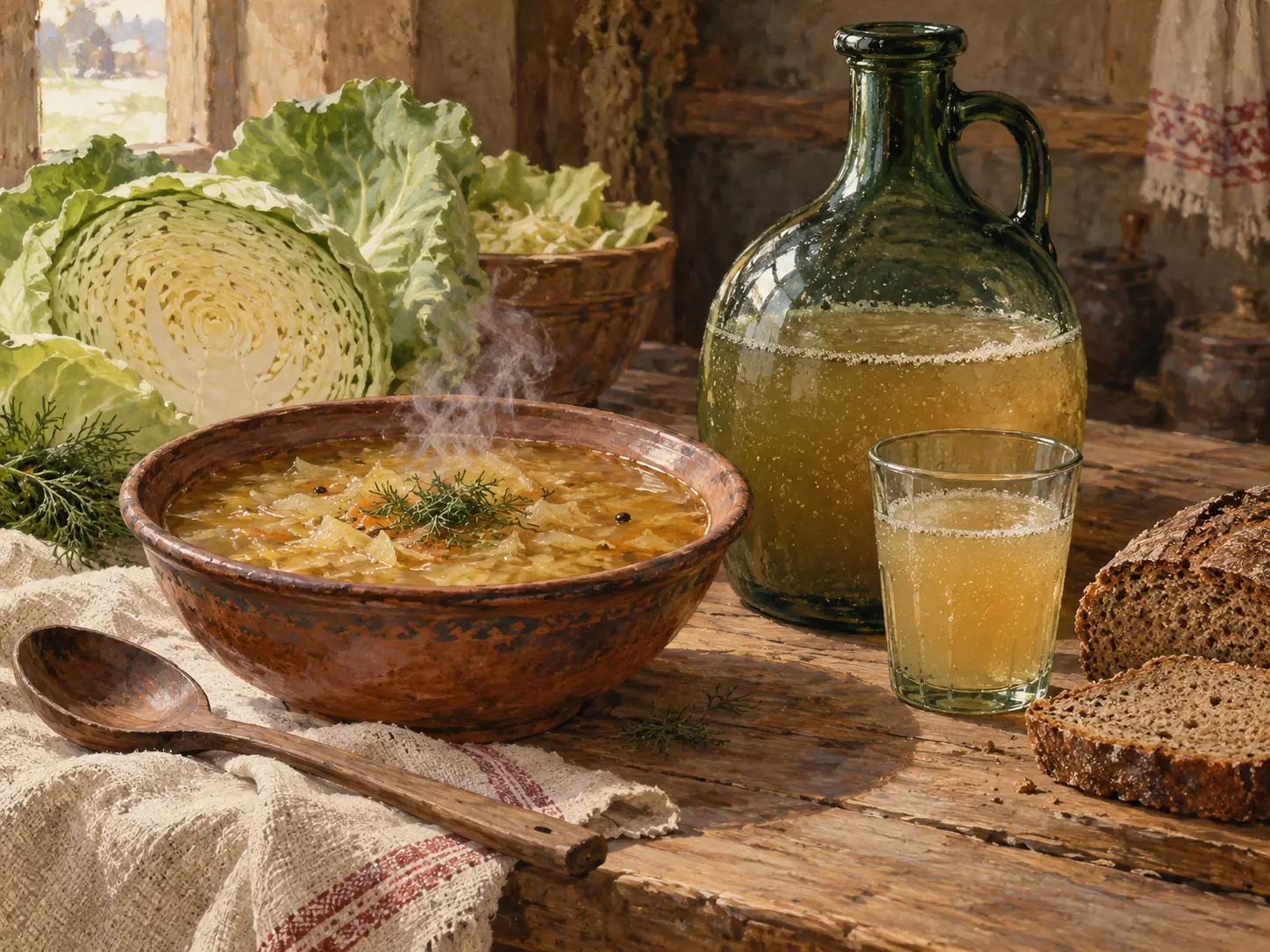
One name, two parts of the original book
The relevant sources are No. 44, “Sour Shchi,” in the soup section and No. 3528 plus No. 3529 in Section XLVI, “Kvass, Beer and Mead.” These are original texts from the 1901 edition, not modern reconstructions of an invented ancient recipe.
Sour shchi you could eat with a spoon
In No. 44, the ingredients identify a recognizably hot savory dish: beef stock, sauerkraut and onions, with mushroom liquid and flour added. Sour cream may finish the soup, and the serving can include beef, ham or buckwheat porridge.
Molokhovets pays particular attention to the acidity of the cabbage. If it is too sour, she allows it to be rinsed, but the liquid squeezed from the cabbage is kept so that the cook can adjust the final flavor later. “Sour” here describes the character of the cabbage and soup; it is not the name of a fermented bottled drink.
Nearby, No. 43, “Sour Shchi from Fresh Cabbage,” complicates an overly literal interpretation even further. A historic dish name did not invariably mean a fixed recipe made solely with fermented cabbage.
Sour shchi that went into bottles
Far later in the volume, No. 3528, also called “Sour Shchi,” contains no cabbage or meat stock. Instead, the ingredients include wheat and barley malt, flour, water, yeast and sediment from earlier kvass preparation.
Molokhovets describes preparing a grain mash, cooling the resulting liquid and allowing it to ferment using vats and barrels. The finished drink is to be filled into champagne bottles, and the expected output is about seventy bottles. Whatever its precise composition, this is a substantial household beverage preparation, not a bowl of soup.
No. 3529, “Excellent Kvass or Sour Shchi,” confirms the usage in its title. It records another method involving grain, pots left in a cooling bread oven, fermentation and sugar before bottling. The author explicitly treats kvass and sour shchi as overlapping terms in the beverage chapter.
Why could a drink have that name?
A linguistic clue appears in the 1882 edition of Vladimir Dahl's Russian dictionary, which defines kislye shchi as a kind of sparkling kvass. That entry concerns the drink and does not deny the existence of the cabbage soup.
From these sources we can conclude that the phrase denoted both a dish and a beverage around the turn of the twentieth century. We cannot confidently deduce the phrase's exact origin from three cookbook recipes and a dictionary entry. Explanations based on “people must have meant…” would be speculation rather than documented etymology.
The utensils reveal the difference
For the soup, the primary material is cabbage, prepared with broth, flour and accompaniments for service in bowls. For the drink, the main materials are malt and flour, while vats, barrels, yeast, bottles and a cellar become important parts of the process.
Those differences are practical. Equipment, ingredient sources, storage and quantities all indicate the intended food. The seventy-bottle quantity has little in common with preparing soup for one meal. The historical kitchen cannot be understood from dish names alone.
Other soups in the book were not identical either
Molokhovets' Section III, “Soups,” divides first courses into categories with different stocks and thickening methods. There are meat broths, flour-thickened white soups, puréed dishes, fish soups and cold soups. Soup was therefore not merely one method of boiling vegetables in water.
Our seasonal study shows that summer menus could use fresh sorrel or spinach while winter menus relied on pickled and dried materials. The existence of such choices reveals a broader repertoire of Russian and imported culinary influences.
The term shchi itself could occur in recipes made with sauerkraut or fresh cabbage. If one wants to compare them, the correct procedure is to follow the source's ingredient lists, cooking method and place within the dinner.
How kvass and soup were related without being the same thing
Some bread kvasses were themselves used to acidify savory dishes. In No. 3520, “White Bread Kvass,” Molokhovets describes a drink that could be used in borscht or shchi. That overlap may help readers understand the culinary connection between a sour beverage and sour dishes, but does not prove how the name kislye shchi first came into use.
Our English study of white, red and berry kvass demonstrates how many preparations the category covered. A drink made from malt, another from dried bread and a fruit infusion could carry related labels despite using different methods.
What this example teaches us about old recipes
Historical cookbooks preserve a vocabulary of everyday life in which meanings change, overlap or disappear. A reader who translates “sour shchi” as “sauerkraut soup” on every occurrence would give an impossible description of Nos. 3528–3529. Conversely, treating every occurrence as kvass would erase the cabbage soup in No. 44.
Context solves the immediate problem: cabbage, stock and sour cream indicate soup; malt, fermenting vats and bottles indicate a drink. The exact etymology remains a separate question that requires linguistic evidence beyond these recipes.
Follow the primary sources
Further sources: sour shchi with fresh cabbage No. 43, white kvass No. 3520 and Dahl's dictionary of 1882. Read with the Russian guide to historic soups.