Plum Soup with Wine or Sour Cream: A Sweet First Course in 1901
Why Molokhovets sieved plums, seasoned them with cinnamon and cloves, and served fruit soup with bread croutons.
Why fruit soup need not be cold
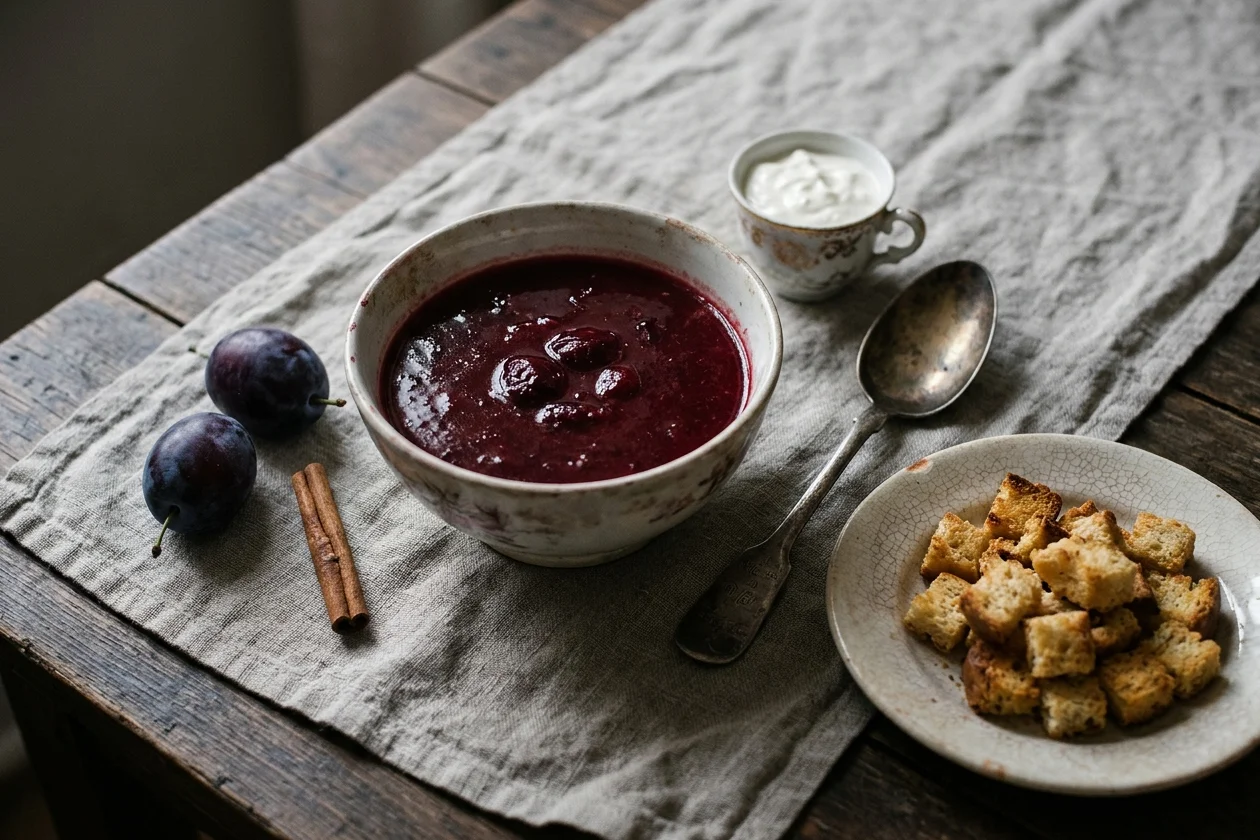
In the hot sweet soup section, No. 188 concerns plums with wine or sour cream. The same text appears as No. 2342 in another section. In both, ripe plums are cooked until soft, rubbed through a sieve, seasoned with sugar and spices, then combined with wine or, alternatively, sour cream. Croutons accompany the soup. It is neither a fruit compote with floating fruit nor a set jelly. Fruit forms the soup base and bread remains a separate component. Unlike apple and berry kholodets, there is no mandatory cooling instruction.
What Hungarian plums meant
Molokhovets specifies good ripe Hungarian plums. This identifies the kind of ingredient, not a verified country of cultivation for each batch. Modern terminology associates the Russian name vengerka with a group of plum varieties, but identifying the historical entry with a particular modern cultivar requires additional evidence. Ripeness matters because it affects sweetness, acidity and softening. Sugar and acid content are unspecified; a reconstruction's taste will depend on the fruit chosen.
Why the plums were rubbed through a sieve
The author adds only enough water to cover the fruit, then sieves it after softening. This produces a more uniform fruit base. Unlike a clear decoction, the soup contains fruit pulp, so its thickness depends on the fruit itself. Potato flour is not named in No. 188. A modern adaptation should remove stones beforehand and use only edible pulp: the old text is not an instruction for safe processing of stone fruit.
Cinnamon, cloves and two liquid additions
Cinnamon, sugar and crushed cloves are included. After sieving, a glass of table wine is specified, or alternatively one and a half glasses of fresh sour cream. The two versions should differ noticeably: wine contributes acidity and aroma, sour cream dairy fat and a milder creamy character. The book does not say to combine both. Boiling does not necessarily remove all alcohol, so the wine version cannot automatically be considered alcohol-free.
Why the soup was poured over bread croutons
Both entries direct the cook to pour the soup over croutons. A Polish-style white loaf appears in the ingredient list. Bread need not be boiled and sieved with the fruit: it retains its own structure until combined with the soup at serving, then absorbs liquid. Toasted or dried pieces may provide a textural contrast in a sweet dish. The author gives neither a precise degree of drying nor a decorative pattern; such details remain artistic conjecture.
Cherry soup and sago as other thickening methods
Neighboring No. 2343 describes soup from fresh or dried cherries with potato flour, while No. 2341 uses sago, spices, wine and optional berry juice. The plum version differs in that the sieved fruit supplies the main texture. Sweet soups in one section can thus use different principles: fruit purée, starch thickening or distinct translucent grains. The comparison demonstrates varied techniques without establishing a universal recipe for fruit soup.
Two entries, one historical article
Nos. 188 and 2342 are virtually identical, including the alternative of sour cream and serving with croutons. It makes sense to preserve both original entries in the digital library while explaining them together. The repetition does not prove popularity in every Russian home; independent historical evidence would be needed. An artistic reconstruction may depict a dark plum soup, croutons and plums nearby. Colour and thickness remain conjectural, and the sour-cream version may look different.
Original recipes and sources
Elena Molokhovets, A Gift to Young Housewives, 1901 edition. Links to scans are available on the original Russian recipe pages.