Beer Soup: Why Molokhovets Added Sour Cream, Sugar and Croutons
Four beer soups from the 1901 cookbook, from sour-cream enrichment to a fruit version with spices.
Why beer soup was more than a hot drink
In the section on hot sweet soups made with milk, beer, wine and berries, Elena Molokhovets includes two recipes based on beer. Another section has versions without an egg enrichment and with fruit. The name denotes a group of dishes rather than the incidental substitution of beer for water. Dairy products, bread, sugar, spices or fruit complement the liquid base, and the dish is served in a soup cup or bowl. When reading the old book, it is useful to distinguish such dishes from beer consumed separately.
The sour-cream enrichment in No. 199
The first version combines fresh sour cream, yolks, butter, sugar and a little salt with light beer. The author requires heating while stirring without bringing the mixture to the boil. This matters for texture: dairy fat and egg components produce a richer base than a simple drink. Excessive heating may cause separation or protein coagulation. However, the historical instruction specifies no safe cooking temperature and cannot replace a validated modern technique for handling eggs.
Beer soup with caraway and cheese
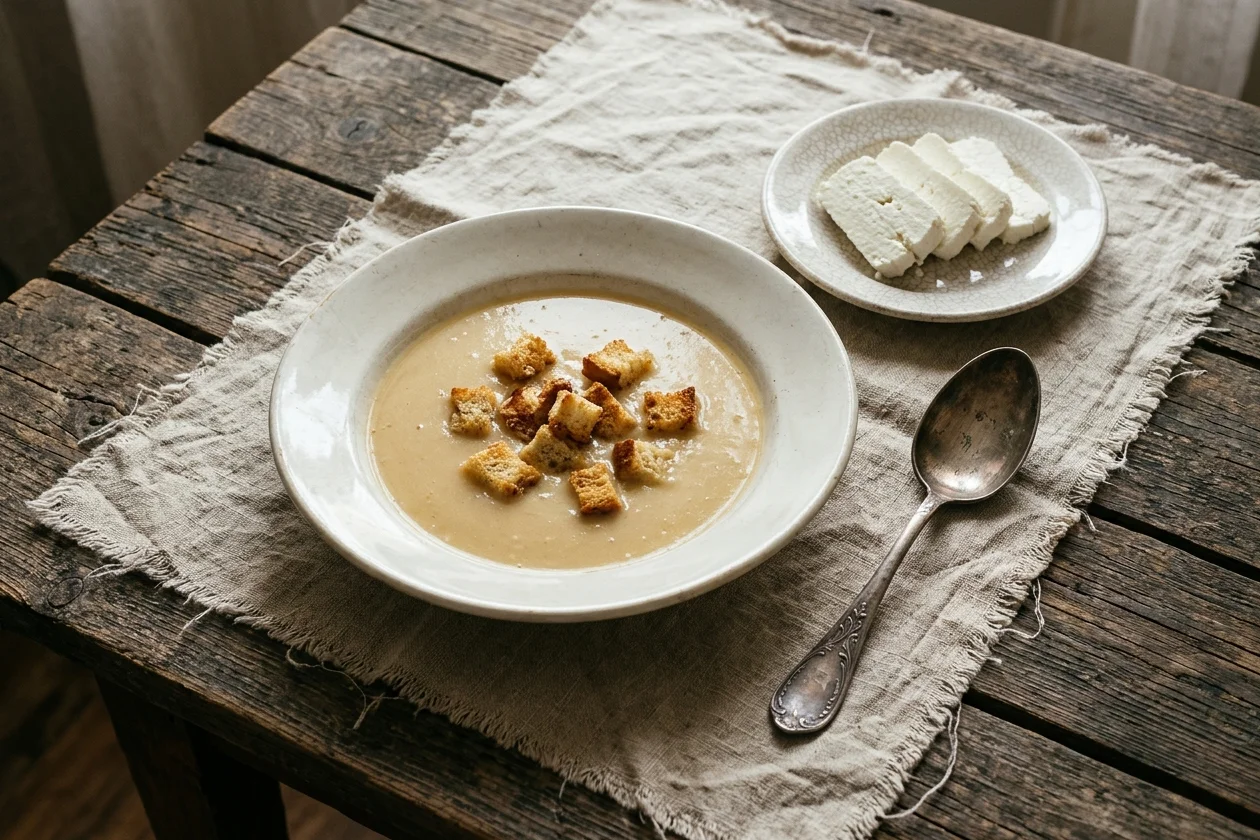
No. 200 flavours the base with caraway and sweetens it with sugar or patoka, a historical syrup. Yolks are worked separately before being combined with the liquid. Both entries emphasize serving with croutons and fresh cheese made from curds. The cheese need not be dissolved in the soup: No. 199 specifies small pieces served separately, and No. 200 refers to a homemade cheese recipe. Bread and cheese are distinct components of the dish, not incidental additions, bringing it closer to a soup than a sweet drink.
A version without sour cream or yolks
No. 2350 is simpler: beer, water, sugar or patoka, and caraway or lemon zest. It is accompanied by croutons of sweet-and-sour bread containing raisins and orange peel. No sour-cream or egg enrichment is specified. Not all Molokhovets beer soups should therefore be pictured as thick and creamy. Different ingredients lead to different consistency, taste and appearance. The entries show several approaches to the same liquid base.
French beer soup with fruit
No. 2355 uses citrus, raisins, dried figs, apples and pears. Beer is combined with cinnamon, cloves and sugar; rum or sherry is mentioned at the end. The soup may be served hot or cold. Fruit has a more prominent role here than in the sour-cream and cheese versions. We retain French as the title in the book: the word alone does not establish the recipe's origin or prevalence in France. Independent historical evidence would be needed.
Sweetness and alcohol
Every recipe examined includes sugar or another sweetener. None allows calculation of the finished alcohol content: the original beer's strength, the bottle sizes in each situation and the exact heating regime are unknown. Boiling does not guarantee complete removal of alcohol. Historical soups based on beer and wine should not automatically be regarded as alcohol-free or suitable for children. A modern interpretation may use an alcohol-free base while explicitly identifying the modification.
What this group of recipes reveals
Beer soup helps us see the boundary between a drink, a sweet dish and a first course in the language of old cookery. Some entries emphasize sour cream and fresh curd cheese, others fruit and spices, and still others croutons made from a particular bread. They are different combinations rather than one forgotten recipe. An illustration can reasonably choose one, such as the pale soup inspired by No. 199 with cheese served separately. It remains a modern artistic reconstruction rather than a documentary photograph.
Original recipes and sources
Elena Molokhovets, A Gift to Young Housewives, 1901 edition. Links to scans are available on the original Russian recipe pages.