How Chinese Tea Reached the Russian Table: Kyakhta, Merchants and Molokhovets
Trade routes, merchant names and preparing tea for many guests: interpreting recipe No. 3495 in the 1901 edition.
In No. 3495 Elena Molokhovets not only explains how to brew tea. She recommends trading names associated with Kyakhta and describes serving a large gathering using two samovars. Why did Chinese tea reach domestic tables, what did the name Kyakhta tea mean, and why was the old caravan route no longer the only one by the twentieth century? International commerce, merchant houses and transport developments provide context.
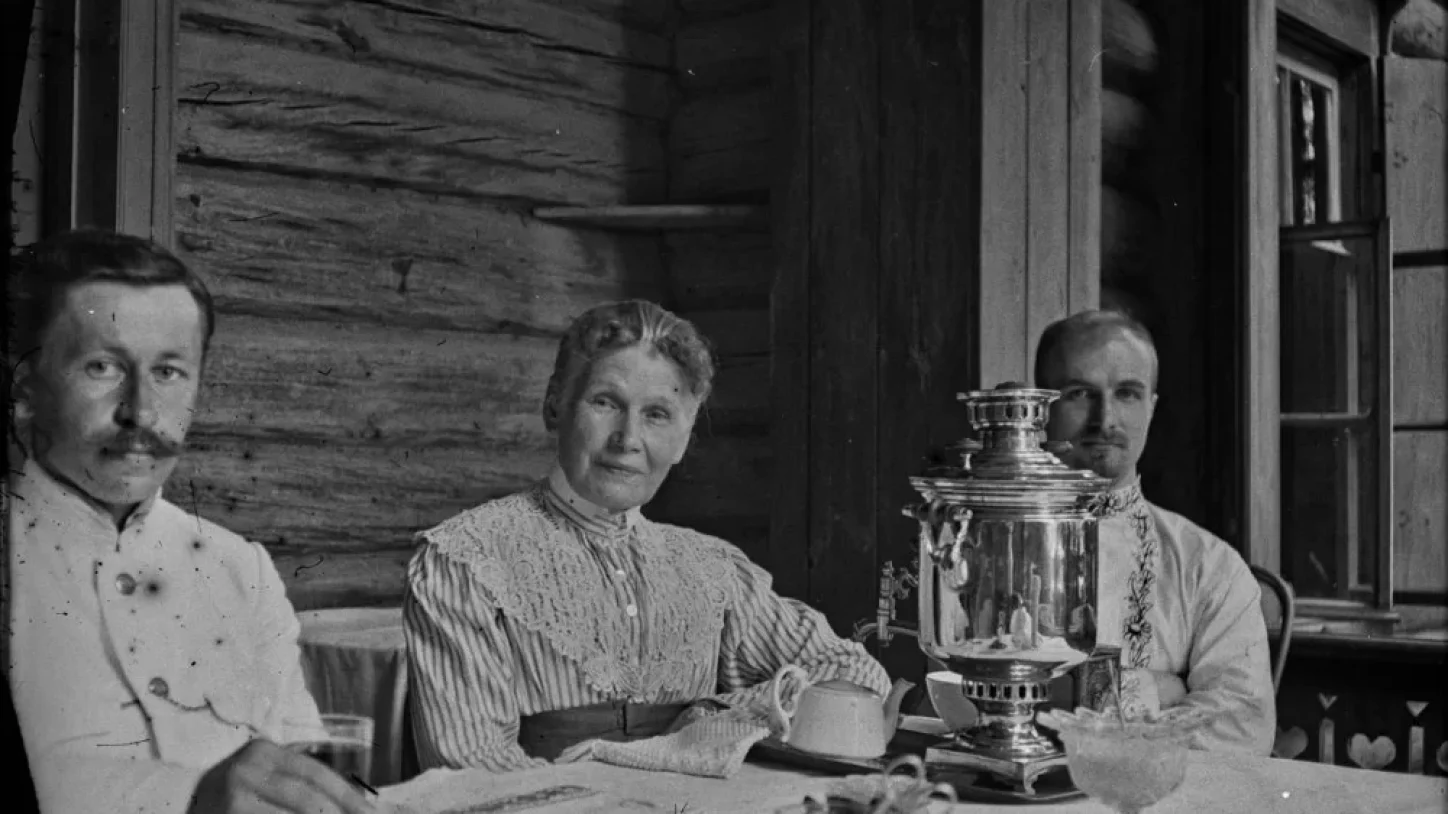
Kyakhta tea in the book is not evidence of the route taken by a particular purchase. No. 3495 names the Koreshchenko, Perlov and Botkin firms, but by 1901 tea was also imported by sea. A merchant name cannot establish that every packet travelled through Kyakhta by camel caravan. Trade reputation, routes and provenance must be distinguished.
Which tea names the householder encountered
Recipe No. 3495 offers no long botanical classification, but a short recommendation of suppliers the author considered popular: Koreshchenko, Perlov and Botkin, associated with Kyakhta trade. The cookbook acts as a consumer guide.
This list is not an independent quality ranking for the Russian Empire. It cannot establish sales volumes, shop prices or prove that all families preferred these products. It records the author's choices and ideas of a good purchase.
Section XLV, Drinks, also includes coffee, cocoa, chocolate and other preparations. Tea is both a purchased product and an element of organizing tea service.
Kyakhta: a border trading centre between Russia and China
Historian Irina Popova examines the role of Kyakhta and neighboring Maimachen in relations between the two states. Tea was the principal product coming from China through border trading points, while Russian merchants supplied furs, fabrics and other goods.
This long historical process predates the 1901 cookbook. In the first half of the nineteenth century Kyakhta was a leading centre of exchange with China. Its name became closely associated with tea, transportation through Siberia and the reputation of merchant houses.
The town was not one tea shop, and caravans were not exclusively managed by Russian merchants. The trade crossed borders and involved intermediaries and transportation along different sections of a long route.
Tea was exchanged for goods as well as money
Takako Morinaga describes early Kyakhta trade as a barter system: Russian merchants supplied furs and manufactured goods, Chinese partners tea and other products. Russian tea history thus concerns textile factories, fairs and customs policy as well as plantations.
By the beginning of the nineteenth century tea supplies expanded with Russian exports. This concerns a trading system developing over a century, not the price of a spoonful in Molokhovets. The recipe specifies neither purchase price nor distance travelled by a batch of leaves.
The sources have different roles: the cookbook teaches domestic tea service, archival research illuminates the economic conditions of supply.
Why maritime transport changed the old tea route
In the second half of the nineteenth century the traditional Kyakhta system faced competition from maritime imports. Morinaga shows that Moscow tea merchants discussed lifting restrictions and feared competition from cheaper tea arriving through seaports. Later merchants themselves began using the sea route.
Liliya Kalmina and Anna Plekhanova trace the gradual decline of Kyakhta's role after maritime routes opened and transport links changed.
It is wrong to say that all Russian tea passed through Kyakhta in 1901, or that Kyakhta vanished from trade at once. Routes changed gradually, while commercial names, purchasing habits and company reputations could outlive former logistics.
A merchant's name does not establish provenance
Molokhovets mentions Perlov and Botkin alongside Kyakhta tea. Such names are associated with major Russian tea firms and urban retailing, but cannot be substituted for evidence about a particular product. A name in a recipe does not specify the factory, packing year or transport route of each consignment.
Firm price lists, advertisements, dated packaging and waybills would be needed. The cookbook does not contain them. We can say whom Molokhovets recommended, not how many people bought the tea or each firm's share of the market in 1901.
Tea commerce belonged to a wider urban market, like the supply and sale of fish and vegetables discussed in related studies.
A teaspoon for four and a samovar instead of a teapot
No. 3495 suggests approximately a teaspoon of dry tea for four people. A teapot is used for ordinary service. For many guests, a large family or a gathering of students, the author offers another method: tea in a clean muslin bag is placed in a small samovar and infused for about a quarter of an hour.
The infusion is poured into glasses and topped up with hot water from a second, larger samovar. The author explains that the strength is even and less dry tea is required than continually adding leaves to a teapot.
Tea service therefore requires household organization: leaves, clean cloth, vessels, fuel, hot water and the householder's time. One picturesque cup conceals this work.
Why Molokhovets discouraged boiling brewed tea
The author advises against leaving tea on the samovar too long or allowing the infusion to boil, to preserve taste and aroma. Water that has just ceased boiling vigorously is recommended, and a lump of sugar or a little soda in the teapot is mentioned.
Some explanations, including the claim that boiled tea is harmful, reflect contemporary beliefs and cannot be treated as proven medical facts. Soda is not a mandatory modern technique; the book records historical practice, not food testing.
Water quality, strength and infusion time already mattered to household manuals before electric kettles.
Cream, lemon and preserves: varied tea service
No. 3495 lists milk and cream, lemon, preserves, fruit drink and even alcoholic additions. These are alternatives, not instructions to serve everything together. The author's advice suggests flexibility, not identical customs in every social group.
The separate Evening Tea section offers another view: a samovar near the table, fruit, bread, sweets and cold appetizers. At a late gathering tea could replace supper. Our study of tea tables examines presentation and dishes; here the emphasis is on the origin of the drink.
Reading both original pages together reveals preparation and social use more reliably than inventing one authentic Russian tea custom.
Tea, coffee and cocoa in one drinks section
After tea, Section XLV contains cocoa, chocolate and coffee No. 3500. Coffee could be mixed with chicory; drinks from rye, acorns and other plants follow. The household manual offers different preparations and substitutions.
Their proximity does not establish per-capita consumption or which drink most people preferred. Trade records, household budgets and comparable dates and locations are needed.
This raises another question for the library: what roles did flavour, cost and availability of genuine beans play in rye or acorn coffee? It deserves separate study grounded in historical sources.
From Chinese commerce to a Russian glass of tea
Molokhovets's tea connects several worlds: Kyakhta's history concerns Russian-Chinese trade, changing land and sea routes concern competition and transport, and No. 3495 concerns practical tea preparation and economy for many guests.
Not every tea in 1901 came through Kyakhta, and a merchant name does not prove the origin of a particular packet. But the appearance of Kyakhta firms in a household book shows how international commerce became part of domestic purchasing.
Such intersections allow A Gift to Young Housewives to be read not only as a collection of recipes but as evidence of everyday culture.
Original recipes and historical sources
Elena Molokhovets, A Gift to Young Housewives, 1901 edition. Original source links are retained below.
- No. 3495 — Tea · Russian original
- Section XLV: Drinks (in Russian)
- Irina Popova: Kyakhta and Maimachen, historical trade
- Takako Morinaga: the crisis of the Kyakhta tea trade (2017)
- Liliya Kalmina and Anna Plekhanova, Kyakhta in the 1840s–1930s (2019)
- Section II: Evening Tea — The Samovar, Tea Table and Light Supper · Russian original
- No. 3500 — Coffee · Russian original
- Wikimedia Commons: Arnold Brening, Friends around a Samovar, public domain
Related reading
- Buying Fish in St. Petersburg Around 1900: Sennaya Market
- From Market Garden to Sennaya: Vegetables in St. Petersburg
- The Russian Tea Table in 1901: More Than Tea and Jam
- The Cost of Dinner and Food Expenditure: Molokhovets and Workers' Budgets
- When Coffee Was Not Made From Coffee: Chicory, Rye and Acorns
Historical advice, not a modern health rule. Molokhovets's claims about boiling tea, adding soda and other practices reflect the views of the 1901 edition and should not be understood as current medical or dietary recommendations.