Molokhovets's Chestnut Puddings: From Sieved Dessert to English Pudding
Five recipes with edible chestnuts: purée, almonds, whipped cream, preparation in moulds and separate sweet sauces.
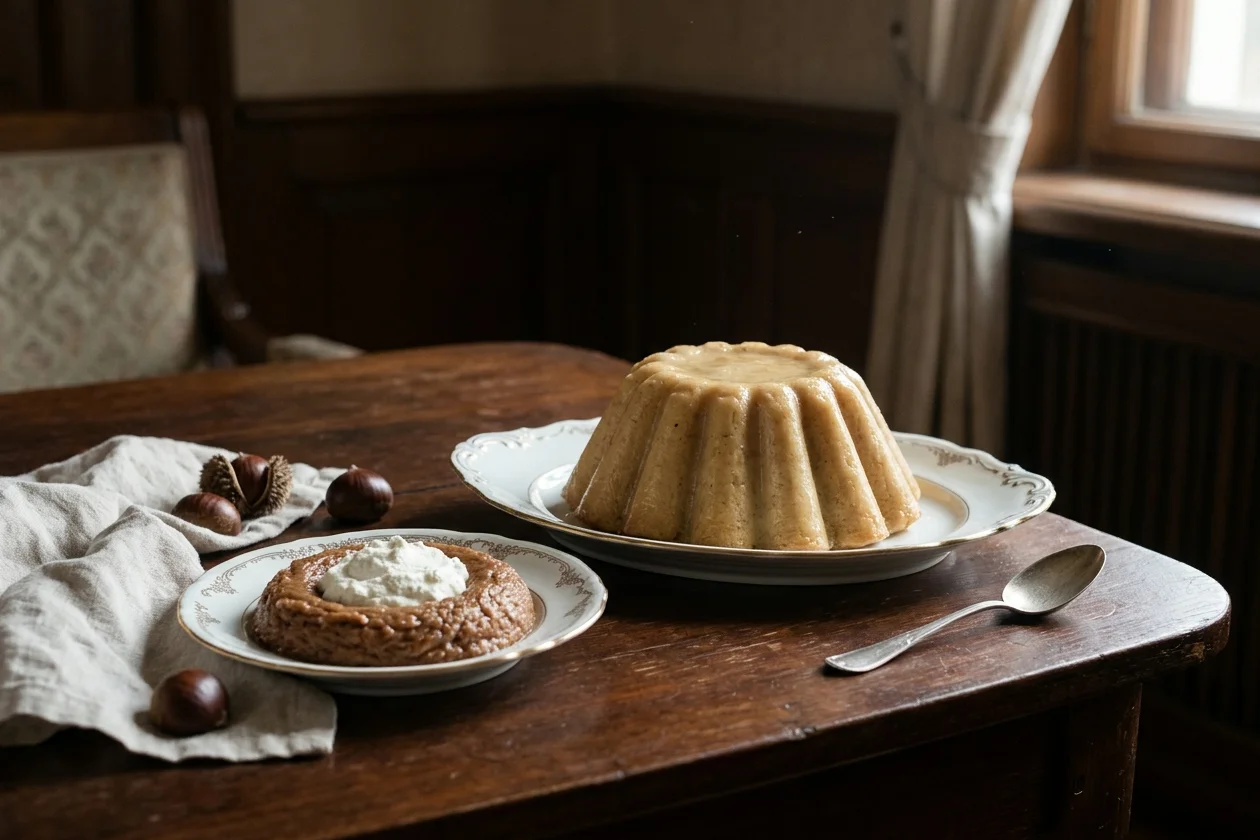
Chestnuts as the base of a sweet dish
In No. 567, Molokhovets suggests cooking peeled chestnuts in cream or milk until soft, rubbing them through a sieve and combining the purée with sugar, butter, flour and an egg mixture. This is not a dessert decorated with a few roasted chestnuts: they form its structural base. The mixture is placed in a mould and may be baked or steamed. A modern reconstruction must distinguish edible chestnuts of the genus Castanea from inedible horse chestnuts. The latter must not be used as food even if they resemble the ingredient described.
Different ways of making an airy pudding
No. 567 specifies adding yolks and egg-white foam, while No. 1514 describes a similar chestnut purée with separately beaten whites. The detailed instructions and ingredient lists in the digital text do not entirely agree about the number of eggs. We retain this discrepancy rather than selecting a supposedly correct proportion without checking the printed scan. Flour and sieved chestnuts help establish a firm base, while egg-white foam gives an airy texture. The precise rise of the finished pudding depends on purée moisture and cooking method.
A pudding without further baking
No. 568 is constructed quite differently. Cooked chestnuts are peeled, worked with sugar and passed through a sieve again so that the mixture falls onto the dish in fine elongated particles. The centre is left empty and filled before serving with whipped cream, sugar and vanilla. Here the author specifies no further baking of the assembled dessert and does not list eggs. This entry particularly clearly demonstrates the breadth of Molokhovets's concept of pudding: the name applies both to a moulded hot dish and to a sweet dessert assembled on a plate.
Chestnuts, rice and dried fruit
In No. 1515, chestnut purée is combined with candied fruit, raisins, rice cooked in cream and a large number of eggs. The text mentions liqueur or maraschino and rum. The author's dramatic presentation with flaming rum should be understood as historical evidence, not instructions to repeat at home. An open flame is unnecessary for a safe modern reconstruction. Nor should this dessert be considered alcohol-free: heating does not guarantee complete removal of alcohol, and some of the drink is intended for serving.
English pudding and sabayon
In No. 1516, the base is a dry chestnut purée prepared according to the preceding entry. Sweet almonds, butter, yolks worked with sugar and beaten whites are added. The finished pudding is steamed in a mould; some sabayon is then poured over it and the remainder served separately in a sauceboat. This link to the sweet egg-and-wine sauce explains the dish's place among elaborate moulded desserts. Modern adaptation requires attention to nut allergies, thorough treatment of the egg mixture and a safe version of the sauce.
Chestnut purée was not necessarily sweet
No. 109 shows another use of chestnuts: purée soup made with meat stock, cream and yolks. Sauternes and meat quenelles are optional additions. Unlike the puddings, the entry does not specify sugar. One ingredient could serve as the base of both sweet and savoury sieved mixtures. Its function in each recipe is more important to understanding the book than its novelty alone. A modern illustration of moulded chestnut pudding and a dessert with cream conveys two different serving methods without establishing their precise historical shade or consistency.
Original recipes and sources
Elena Molokhovets, A Gift to Young Housewives, 1901 edition. Links to scans are available on the original Russian recipe pages.
- No. 567 — Chestnut Pudding Russian original
- No. 568 — Chestnut Pudding, Another Method Russian original
- No. 1514 — Chestnut Pudding Russian original
- No. 1515 — Another Chestnut Pudding with Fruit and Rice Russian original
- No. 1516 — English Chestnut Purée Pudding Russian original
- No. 109 — Chestnut Purée Soup Russian original