Sabayon Soup: Egg Foam Served with Sponge Biscuits
Soup, sauce, cream and punch under one name: how Molokhovets's sabayon recipes differed in the 1901 edition.
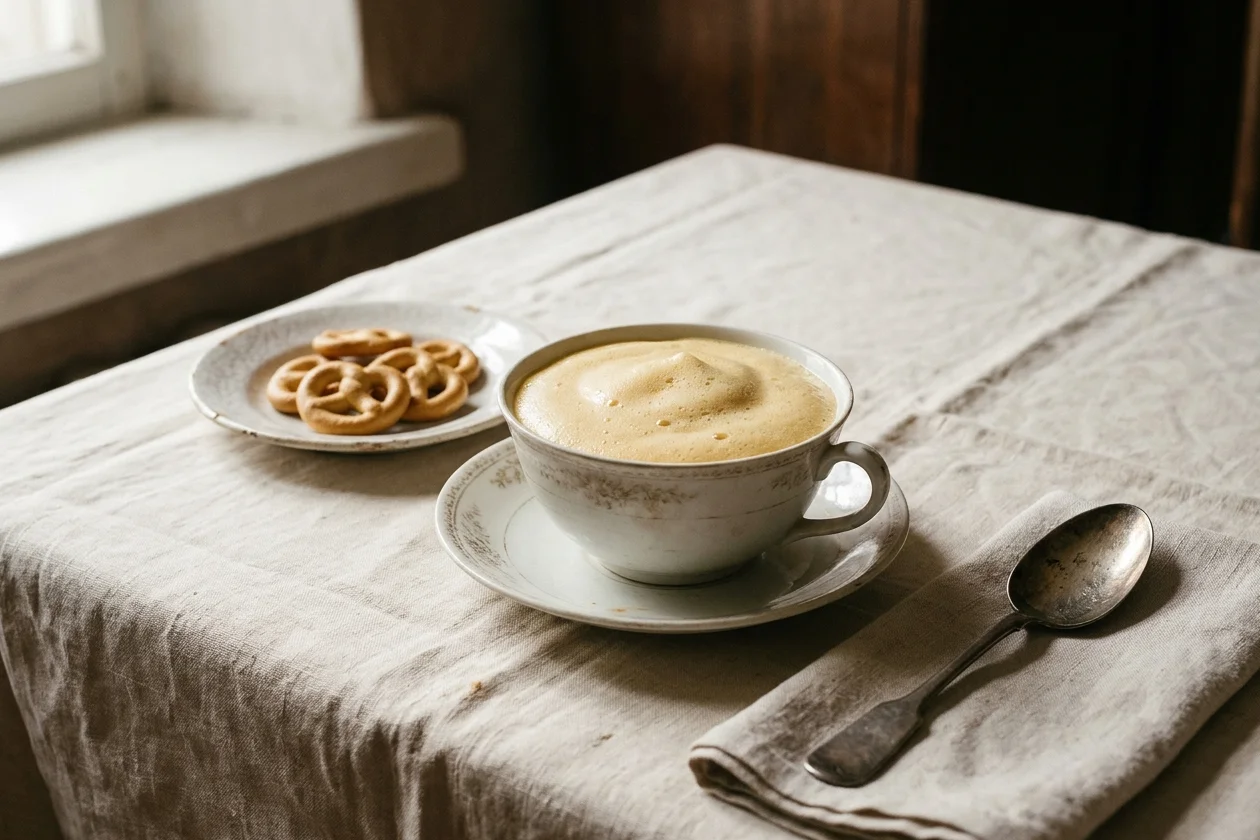
When soup resembles an airy cream
In the section on hot sweet soups, Molokhovets includes No. 186, sabayon soup. It contains neither vegetable stock, meat nor grain. Ten egg yolks, sugar, white table wine and water form the base. The mixture is whisked while heating until it thickens into a foam, then served immediately with sponge biscuits. Thus a name familiar from modern desserts denotes more than a sweet cream in the book: the author uses it for a dish served as soup. Comparison with other entries makes this especially clear.
Why the foam was whisked over heat
Egg yolks contain proteins and fats, and whisking incorporates air into the liquid. Heating alters the properties of the proteins and increases viscosity. Sugar and wine also affect the mixture, so foam stability depends on more than the number of yolks. Molokhovets repeatedly warns against boiling it. The text reveals the cook's aim of preserving a smooth, airy structure but supplies no exact stove temperature. Modern egg safety requires a validated method; avoiding boiling alone does not establish adequate heat treatment.
How sabayon soup differs from the sauce
No. 490 places sabayon in the sauce section. Six yolks are combined with less liquid than in the soup version, along with sugar, lemon zest, wine and water. The author describes continuous whisking and emphasizes immediate serving. Particularly interesting are the suggested accompaniments: puddings, cauliflower, asparagus and artichokes. The sweetish egg-and-wine sauce is therefore not restricted to desserts in this cookbook. This is a specific recommendation by the author, not proof that these combinations were everyday fare in every household.
Sponge biscuits made especially for the soup
No. 3170 is a separate entry for biscuits accompanying sabayon soup. A batter of eggs, sugar and flour is piped through a paper cone into small rings resembling pretzels. Coarsely crushed sugar and almonds are sprinkled on top. This makes the baked item a distinct accompaniment to the airy mixture. The link between the two recipes prevents a modern misconception: the soup need not be imagined with ordinary savoury bread croutons. The book specifies a small sweet pastry. Its dimensions and crispness are not measured.
Sabayon with apples and grain pudding
No. 1625 suggests filling prepared apples with preserves and covering them with sabayon or a milk-based sauce. In No. 1546, sabayon is among the accompaniments to Smolensk groats pudding, alongside rum or chocolate sauce, syrup or cream with cinnamon. These examples show how a single preparation connected different sections of the cookbook. A separate sauce recipe spared the cook from repeating its ingredients each time. Such cross-references are more important than similarities between recipe titles.
When sabayon became a chilled cream or drink
No. 1939, a cooked sabayon cream, calls for a gelling ingredient and cooling in a mould on ice. In No. 3491, entitled Sabayon Punch, yolks and sugar are combined with hot Malaga wine and whisked. The group of names consequently covers hot foam, sauce, a moulded chilled dessert and a drink. The source does not explain the name's origin; its history cannot be deduced from the Russian entry alone. A reconstruction of the soup need only show a bowl of golden foam with biscuits served separately.
What modern readers should know
Recipes containing wine or other alcoholic drinks cannot automatically be considered alcohol-free after heating. In No. 186, the author also suggests using the remaining whites for an airy pie or meringue: direct evidence of careful use of ingredients, not a reason to prepare eggs without safety controls. A modern version with validated egg treatment and, if desired, an alcohol-free base must be identified as an adaptation. The historical interest of sabayon lies chiefly in its variety of uses.
Original recipes and sources
Elena Molokhovets, A Gift to Young Housewives, 1901 edition. Links to scans are available on the original Russian recipe pages.
- No. 186 — Sabayon Soup Russian original
- No. 490 — Sabayon Russian original
- No. 3170 — Biscuits for Sabayon Soup Russian original
- No. 1625 — Apples with Jam, Sabayon or Milk Sauce Russian original
- No. 1546 — Smolensk Groat Pudding with Sabayon Russian original
- No. 1939 — Sabayon Custard Cream Russian original
- No. 3491 — Sabayon Punch Russian original