Pea Soup With or Without Turtle: An Unusual Molokhovets Recipe
Why does pea soup No. 156 have two alternatives and appear among soups without meat or fish? Reading the 1901 source and its unusual classification.
What lies behind the unusual title
In the section of oil-based soups, defined as soups without meat or fish, Elena Molokhovets includes No. 156, green pea soup with or without turtle. The title raises two questions today: why is an animal mentioned in a category without meat, and why is it optional? The text helps answer at least the second question. Peas are boiled until soft and rubbed through a sieve to form the base. The turtle version adds a particular broth and animal ingredient; the version without it calls for croutons served separately. The heading preserves both possibilities in a single entry.
Peas as the base, not a garnish
The recipe specifies four glasses of mature, freshly shelled peas. They are cooked until soft, sieved and diluted to the desired consistency. Root vegetables, onion, pepper and herbs provide aromatic components. The original also mentions fried slices of parsley root and leek. This composition explains why the soup can exist without the unusual ingredient: peas supply much of its volume and structure. This is an observation about the recipe, not a claim that both versions necessarily tasted alike.
What 'oil-based' meant in the section heading
The heading explicitly defines these soups as containing no meat or fish. No. 156 itself carries that label. Yet the inclusion of turtle in one alternative is inconsistent with the modern idea of a vegetarian dish. Historical categories should not automatically be equated with current dietary classifications. Domestic terminology may have differed, or the author may have grouped alternatives within an entry differently. The text does not explain the editorial reasoning. Broader conclusions about fasting and regional customs require separate evidence.
The turtle-free version and croutons
The book gives one concrete detail when turtle is omitted: croutons of white or peklevannyi bread, a finely milled rye bread, are served separately. The source does not repeat the entire preparation of the turtle-free version or explicitly say what should replace the turtle broth. Vegetable stock cannot therefore be presented as the author's literal instruction. A modern interpretation using vegetable stock and croutons is possible if identified as an adaptation. The existence of alternatives shows that the cookbook left room for ingredient choices.
The context of neighboring recipes
Before No. 156 comes fresh cabbage soup with milk (No. 155); afterward, mushroom noodles (No. 157). These entries show diverse soup bases within the same category: milk, peas and mushrooms. The unusual recipe should not be treated as evidence of everyday turtle consumption in Russia around 1900. Its appearance in a large cookbook establishes the author's familiarity with the recipe, not its popularity, trade volumes or place in ordinary domestic menus.
Why we do not recommend reproducing the turtle version
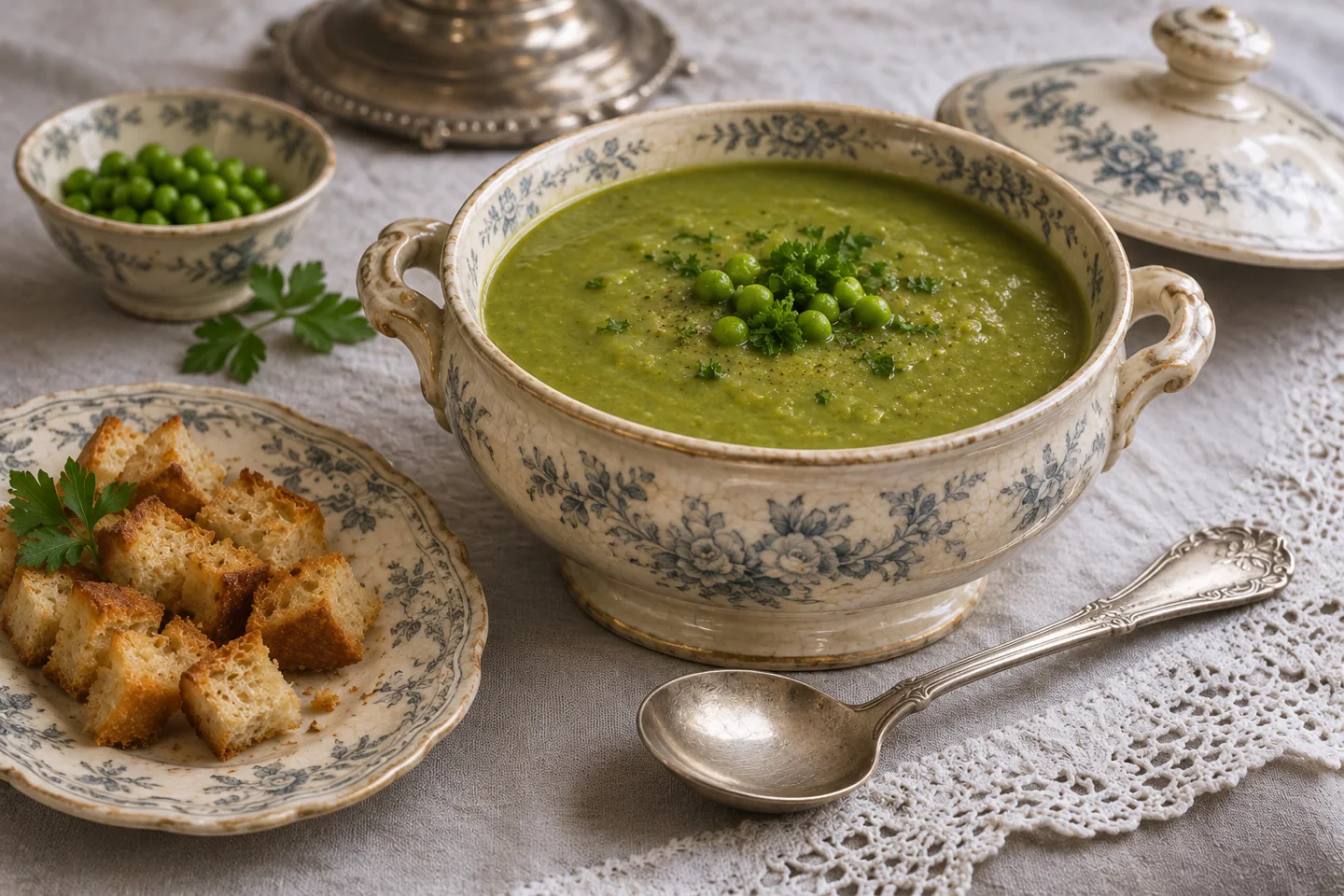
Publication serves an understanding of culinary history, not the search for an exotic animal. Many turtle species are protected, and their use entails legal, conservation and sanitary risks. We do not recommend acquiring or using turtles for the dish. The historical interest can be satisfied by reading the original and investigating the pea-based alternative. The illustration should show the safe pea soup with croutons, identified as a modern reconstruction of the turtle-free option.
Original recipes and sources
Elena Molokhovets, A Gift to Young Housewives, 1901 edition. Links to scans are available on the original Russian recipe pages.