Okroshka with Fermented Apples and Botvinya with Ice: Cold Soups in 1901
Molokhovets's meat, fish and fasting-day okroshka, Bavarian kvass, sour shchi and fish served separately with botvinya.
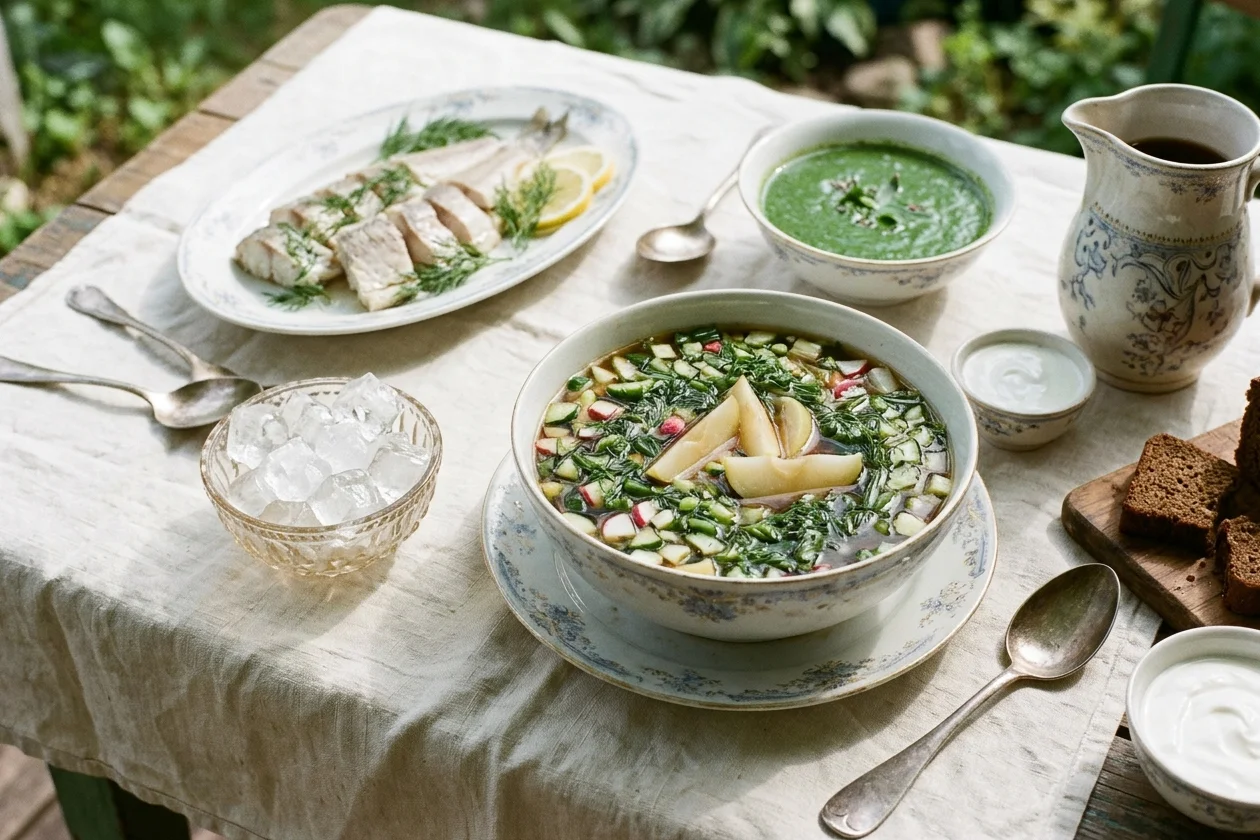
Okroshka made from assorted ingredients
In No. 204 and its repeated entry No. 2332, Molokhovets describes cold okroshka made from assorted plant products. Fresh and fermented apples are listed alongside cucumbers, mushrooms, potatoes, beetroot and green beans. Plums, cherries, peaches and soaked grapes are also permitted. This does not mean that all the listed fruits must be used at once. The author provides a broad selection of possible additions. The composition differs noticeably from the familiar modern okroshka with potatoes, cucumber and egg. The historical entry is interesting precisely because of the unexpected combination of vegetables, mushrooms and fruit.
Mustard dressing and two drinks
Before combining plant ingredients with the liquid, No. 204 specifies a thick mustard dressing with Provençal oil and salt. It is diluted with Bavarian kvass and sour shchi. Here sour shchi denotes a drink rather than cabbage soup: it is measured in bottles and combined with kvass. The author specifies two bottles of kvass to one bottle of sour shchi. Historical containers and the taste of these drinks do not necessarily match modern ones. Home-fermented products may contain alcohol, so this base cannot automatically be called alcohol-free.
Meat okroshka and the fish version
In No. 202, cooked game, beef, veal, mutton, ham and other meat products are cut into small cubes. Cucumbers, hard-boiled eggs and herbs are added, dressed with mustard and sour cream and diluted with kvass and sour shchi. Nos. 203 and 2331 use cooked fish with cucumbers, onion and aromatic herbs. Sour cream and eggs are not named in the fish entry. The entire dressing of the meat version should therefore not be transferred mechanically to the fish version. Both dishes are served cold, making safe storage of cooked ingredients particularly important.
Botvinya began with sorrel
In Nos. 205 and 2333, sorrel is first cooked in its own juice and rubbed through a sieve. Fresh cucumbers, spring onion worked with salt and sugar, mustard or horseradish and dill are then added. The base is diluted with Bavarian kvass, with sour shchi added if desired. Unlike okroshka, whose principal structural element is chopped ingredients, botvinya contains a sieved green mixture. The source also permits sherry or champagne. A modern reconstruction need not reproduce the alcoholic versions.
Fish and ice were served separately
A distinctive feature of botvinya in No. 205 is that boiled fish or crayfish tails are served separately from the soup base. Finely chopped ice is also specified in a separate vessel. Large fish slices need not therefore be depicted inside the soup tureen. No. 269 describes svekolnik for botvinya: prepared young beet stems placed in the tureen. This clarifies the role of plant additions without turning every botvinya in the book into a soup made exclusively from beet tops.
Completing the cold table
Comparison of the recipes reveals different ways of assembling a cold dish: combining chopped meat or plant products with drinks, using fish inside okroshka or serving it separately with a sieved green base. Modern readers especially need to preserve differences among names, ingredients and serving methods. Historical instructions about cooling with ice do not establish safe temperatures or storage times. An illustration of two cold soups with fish separately served can convey their presentation, but is identified as an artistic reconstruction rather than an archival image.
Original recipes and sources
Elena Molokhovets, A Gift to Young Housewives, 1901 edition. Links to scans are available on the original Russian recipe pages.
- No. 202 — Meat Okroshka Russian original
- No. 203 — Fish Okroshka Russian original
- No. 204 — Meatless Assorted Okroshka Russian original
- No. 205 — Botvinya Russian original
- No. 2331 — Fish Okroshka Russian original
- No. 2332 — Mixed-Ingredient Okroshka Russian original
- No. 2333 — Botvinya with Sorrel and Fish Russian original
- No. 269 — Young Beet Stalks for Botvinya Russian original