Drachena: A Forgotten Baked Dish of Eggs, Milk and Flour
Two neighboring drachena recipes reveal the difference between a yolk-based batter and an airy mixture containing beaten egg whites.
What drachena meant in the 1901 book
No. 1876, entitled Drachena, describes a mixture of butter, yolks, powdered sugar, salt, krupchatka flour and milk, poured into a frying pan and placed in the oven. The next entry, Another Way, proposes a different composition with many yolks and beaten whites. A modern reader may mistake drachena for an omelette or pancake, but these particular recipes contain a substantial amount of flour and are baked in an oven. It is more accurate to describe them as baked egg-and-dairy dishes rather than reduce all historical drachena varieties to one modern category.
The first version: butter, yolks and powdered sugar
In No. 1876, butter is worked separately from the yolks and powdered sugar. The author insists on powdered rather than granulated sugar. The two mixtures are then combined, with salt, flour and milk added. Fine sugar disperses more readily during mixing, and softened butter may retain some air. The book does not measure aeration, so no particular height can be guaranteed. Two glasses of milk and two glasses of krupchatka flour make a batter, but its actual thickness depends on the flour and the volume of the historical measure.
The second version: cream and beaten egg whites
No. 1877 uses ten yolks, a glass of cream, one and a half glasses of flour and five beaten whites. The batter is beaten for a long time before the egg-white foam is incorporated. This is a notable difference from No. 1876, which does not mention a separately beaten foam. Air bubbles expand during heating, while egg proteins and flour help establish the structure. The rise nevertheless depends on composition, temperature and mould. Not all the whites from the ten eggs are used in this entry; their subsequent purpose is not specified.
Why the flour was called krupchatka
Krupchatka is a historical designation for a grade of wheat flour. No. 1876 specifies it explicitly, whereas No. 1877 simply calls for flour. Flour grades mattered in the 1901 kitchen because milling characteristics affected processing and dough properties. Old krupchatka cannot automatically be equated with modern semolina or a particular flour grade under current standards. A more precise reconstruction requires comparison with contemporary trade and technical sources. A separate story in our library examines mills and krupchatka.
A skillet and an oven rather than ordinary frying
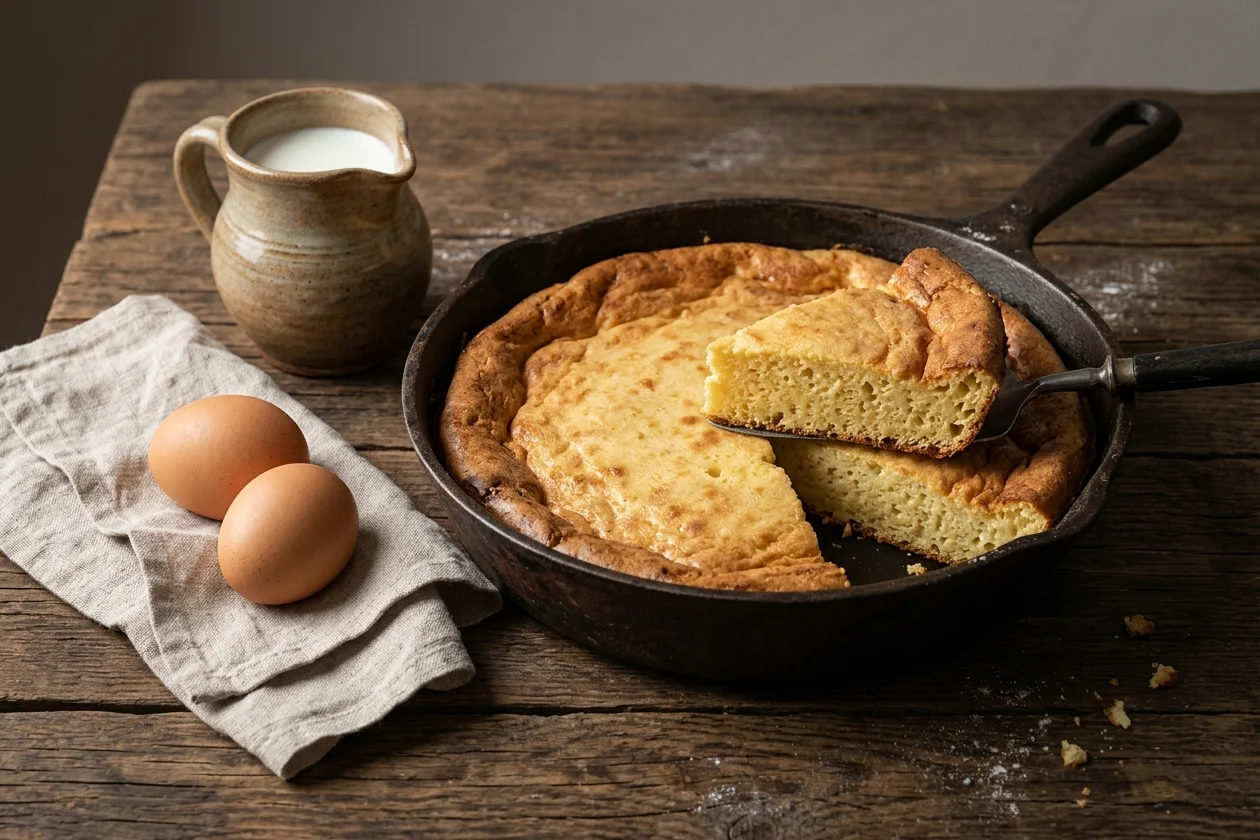
Both entries end with baking the mixture in a skillet with heated butter. The first specifies about half an hour, the second about twenty minutes. These times describe the author's method, not a universal timer: oven temperature, layer thickness and cookware were not standardized. Frying a thin pancake on a surface differs from cooking a thicker mixture in an oven. The egg-and-flour mixture receives heat from all sides and gradually sets. An illustration can therefore reasonably show a whole golden bake in a skillet with a wedge removed.
How to distinguish the two recipes
Both versions contain flour, eggs, a little sugar and a dairy ingredient, and are baked in a skillet. They differ in proportions and preliminary processing: the first works butter and yolks separately; the second uses cream and incorporates egg-white foam. The entries do not specify whether both versions were served with the same accompaniments. We should not attribute mandatory sour cream, preserves or a particular slicing pattern to Molokhovets. These are possible modern choices, distinct from the original.
Why the forgotten name matters
Drachena is interesting not merely as a forgotten word. It shows how the cookbook organizes related recipes: a principal heading identifies a dish, while the next entry varies the technique without repeating the name. A modern adaptation should use safe ordinary food ingredients and thoroughly cook the egg mixture. The artistic image suggests an appearance without establishing the exact historical height or texture.
Original recipes and sources
Elena Molokhovets, A Gift to Young Housewives, 1901 edition. Links to scans are available on the original Russian recipe pages.