Hazel Grouse Butter: A Breakfast and Evening Tea Appetizer
Two Molokhovets recipes for hazel grouse butter combine cooked game, butter, truffles and Parmesan. What did the name mean, and how do the texts differ?
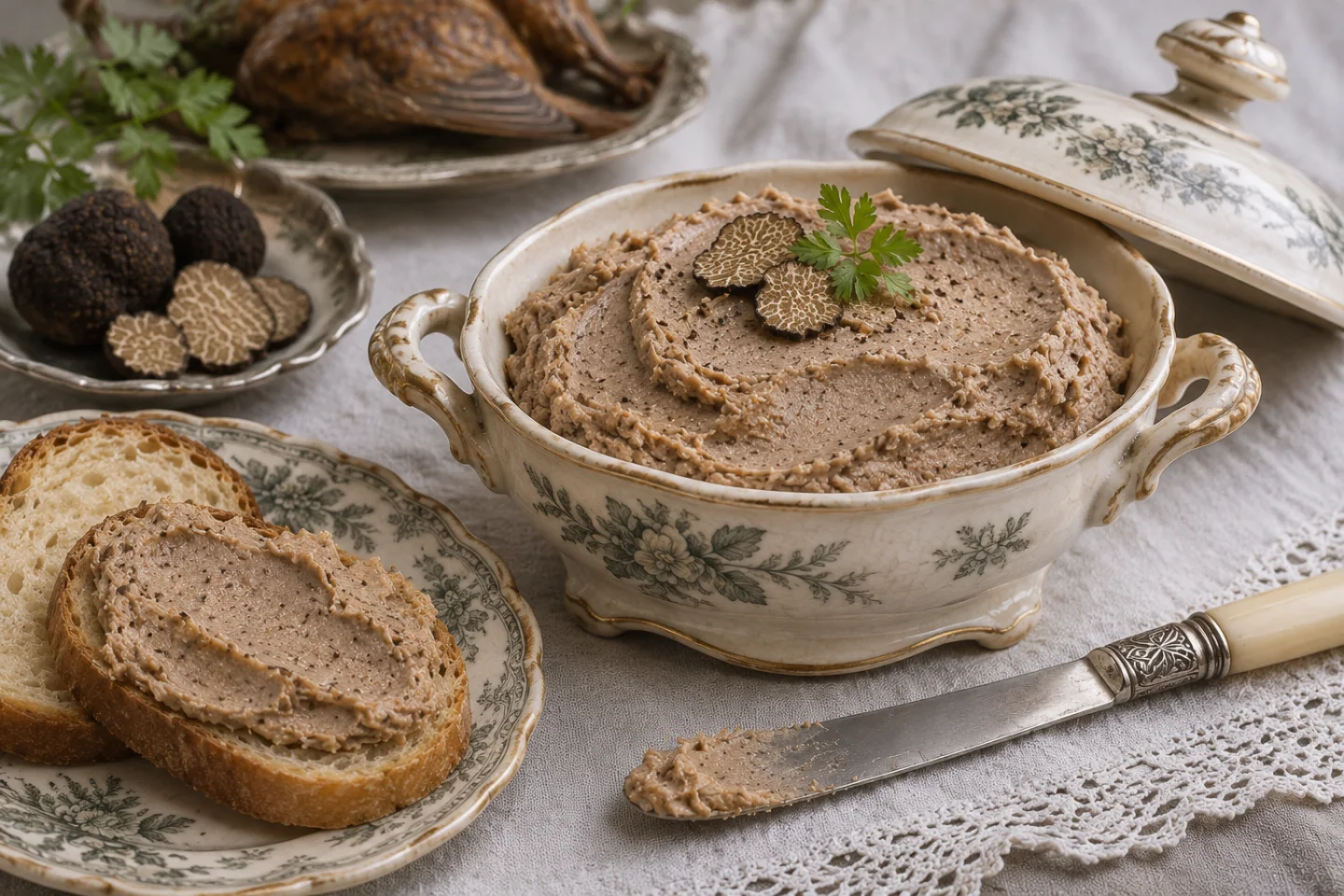
Butter that began with three birds
Molokhovets describes an unusual appetizer called hazel grouse butter. The name does not mean fat rendered from the birds. The author starts with three hazel grouse fried in butter. The meat is then removed from the bones, chopped, pounded and combined with spices, truffles and additional butter. This is more than flavoured butter: cooked meat forms part of the mixture. The author suggests transferring it to a small butter dish. This detail distinguishes its intended presentation from a dish in which a grouse remains a whole roasted bird.
Two numbers, not quite identical texts
No. 1117 belongs to the section on poultry and game, whereas No. 3633 is in the section on butter, cheese, milk and eggs. Both describe three birds, preliminary frying, boning, mincing and sieving. But the available texts differ in details. No. 1117 specifies seven-eighths of a Russian pound of butter for mixing; No. 3633 gives three-quarters. The ingredient lists both call for one pound of butter. The optional Parmesan quantity in the text and ingredient list of No. 3633 also differs. These discrepancies call for comparison with the printed pages rather than automatic correction or treating one entry as an exact copy of the other. Scan links are preserved in the library.
How the desired consistency was obtained
The cooked and cooled meat was first separated from the bones. Chopping shortened the fibres, while pounding and sieving helped produce a more uniform mixture. Butter bound it, and mixing continued until it thickened. It could then be transferred to a small butter dish. The entry does not specify the portion size or exact way of spreading it. We may therefore describe hazel grouse butter as a historical compound appetizer with a pâté-like texture, but cannot say the author prescribed serving it on a particular kind of bread.
Truffles, nutmeg and Parmesan
Both versions include nutmeg, truffles and optional grated Parmesan. Pepper is also listed. These additions suggest a deliberately composed appetizer rather than simply a way of using leftover dinner meat. The book measures truffles by spoonfuls and allows Parmesan to taste. Their presence in a particular recipe does not demonstrate that they were accessible every day to all families in the Russian Empire. The game supply and food prices require separate evidence. In the book itself, the breakfast and evening tea references show that this dish was not intended solely for the principal dinner.
Among other compound butters
Before No. 3633 comes butter made with herring or sardelki; after it, butter with liver. Hazel grouse butter belongs to a broader group of products in which butter is combined with a prepared ingredient. Comparison with No. 3663, cheese or butter made from game, reveals an overlap in old names. Differences should be sought in the specific composition and presentation rather than the title alone. This cold mixture must also be distinguished from a sauce or the butter used for frying.
Why the historical storage method should not be repeated
For extended storage, Molokhovets recommends putting the butter in a stoneware bowl and covering it with beef fat. This detail tells us about domestic storage before refrigerators became widespread; it does not establish a safe shelf life. A layer of fat does not by itself make cooked meat safe. Today the appetizer must be treated as perishable, kept in a modern cold chain, and not stored for a prolonged period under fat. A reconstruction need not use hazel grouse itself: substituting another bird changes the historical composition and should be stated explicitly.
Original recipes and sources
Elena Molokhovets, A Gift to Young Housewives, 1901 edition. Links to scans are available on the original Russian recipe pages.
- No. 1117 — Hazel Grouse Butter Spread for Breakfast Russian original
- No. 3633 — Hazel-Grouse Butter for Breakfast or Evening Tea Russian original
- No. 3632 — Herring or Sardine Butter Russian original
- No. 3634 — Liver Butter for Breakfast or Evening Tea Russian original
- No. 1116 — Sausages of Hazel Grouse or Hare Russian original
- No. 1118 — Hazel Grouse Roasted in Clay While Hunting Russian original
- No. 3663 — Game Cheese or Butter Russian original