Vereshchaka: Pork Belly in Beet Brine
Vereshchaka in the 1901 edition combines pork, beet brine, baked onion and rye bread rather than a conventional flour-thickened sauce.
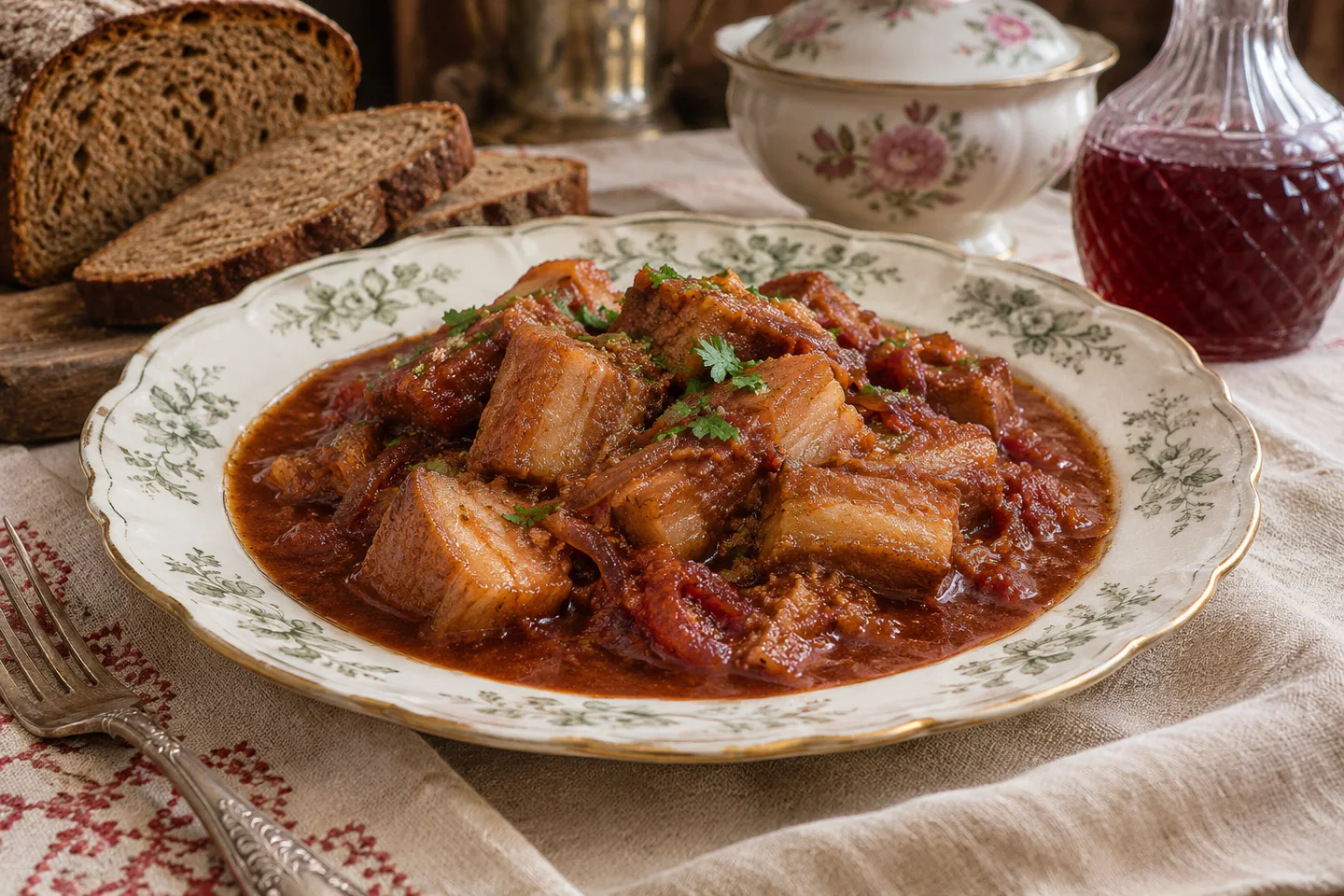
What Molokhovets called vereshchaka
In the meat section, No. 975 is a short entry entitled 'Vereshchaka'. Unlike neighboring cutlets and roasts, it centres on a slightly sour sauce. Its base is the liquid produced in preparing pork belly, water and beet brine. Rye bread supplies the thickness. In the 1901 book, vereshchaka is therefore not merely fried pork but a meat dish with a particular gravy. This definition applies to this recipe; dishes with the same name in other culinary traditions may have different ingredients.
Two cooking stages and their purpose
The original divides fresh pork belly into pieces, salts them and browns them on both sides using fresh pork fat. The meat is then transferred to another saucepan and liquid is added. The first stage develops the flavour of browned meat; the second combines the ingredients with an acidic medium and spices. The source specifies neither a precise cooking time nor temperature. It is typical of a recipe that describes results through actions and taste rather than minutes and degrees. Modern readers should distinguish the historical sequence from instructions for safe meat preparation.
Beet brine is not simply beetroot
Molokhovets specifically calls for brine and suggests adding enough to produce a slightly sour taste. Fresh beetroot, sweet beet juice and acidic liquid give different results. The book does not set the exact quantity or composition of the brine, so neither the acidity nor final colour can be stated with confidence. Here the brine is a flavouring component, not a separate garnish. The acid balances the richness of pork belly and fat; this explanation is based on the ingredients, although the author does not explain the choice.
Why rye bread thickened the sauce
After adding allspice, ordinary pepper and a finely chopped baked onion, the author adds about four spoonfuls of grated bread. She expressly warns against making the sauce too thick. The ingredient list specifies rye bread. Unlike flour, grated baked bread has an existing crumb structure and flavour. It absorbs liquid and gradually changes the consistency. The desired thickness is as important as the approximate measure. Different breads have different capacities to bind liquid.
Comparison with other pork dishes
Neighboring No. 974 offers several sauces for pork cutlets, including horseradish, gherkin and even cherry syrup. No. 966 braises buzhenina in dark beer and serves it with the resulting sauce. No. 977, a fresh sausage, also has a sweet-and-sour sauce in one serving option. These examples show that sour, sweet and rich sauces helped distinguish dishes made from the same meat. Their proximity does not establish a common origin.
What the name tells us, and what remains unknown
The book confirms that the name vereshchaka was present in the author's collection by 1901. The entry gives neither an etymology nor a particular place of origin. We therefore do not assign it exclusively to a regional cuisine or present one formula as the only authentic one. Tracing the name requires dated sources from different regions. To understand Molokhovets's version, its distinctive features are enough: pork belly, brine, baked onion, two kinds of pepper and grated rye bread.
Reading the recipe today
A modern reconstruction may show pieces of cooked pork in thick reddish-brown gravy without claiming an exact historical colour. A home adaptation requires food-grade brine of known origin, thoroughly cooked pork and refrigerator storage. Acidity is no guarantee of meat safety. This article investigates the historical record and its distinctive features rather than establishing a modern cooking temperature.
Original recipes and sources
Elena Molokhovets, A Gift to Young Housewives, 1901 edition. Links to scans are available on the original Russian recipe pages.