Section LIV-II: Kitchen Utensils — An Illustrated Historical Equipment Catalogue
Full English catalogue of historical kitchen equipment from the 1901 Molokhovets edition: descriptions, items 3–97, period prices and 55 original illustrations.
Kitchen Utensils and Cooking Vessels — Historical Catalogue
The first part compares equipment for the traditional Russian masonry oven with that of a cooking range. The numbered illustrated inventory begins with item 3 and continues through item 97; items 1 and 2 belong to the wider original chapter structure.
Cooking at the Russian Oven
A Russian masonry oven requires a baking peel, an oven fork (ukhvat) and a poker. Price: 45–75 kopecks.
For making soups, cooks use tinned or untinned cast-iron pots, glazed or ordinary earthenware pots and fireproof white pots.
For roasting meat there are cast-iron covered pots and roasting pans.
For pies there are iron baking sheets.
For Russian blini there are cast-iron frying pans.
For a cooking range, vessels of copper, stoneware, tin, enamelled iron, nickel-plated metal and silver are used. The author particularly advises avoiding copper cookware; if used regularly, it should be re-tinned every two months. She also warns against bare iron: even slight rust can give food an inky taste and an unattractive dark color. Iron and cast-iron vessels should therefore be enamelled inside. Do not put either kind empty on a hot range or in a hot oven, since the enamel may crack and expensive pans become unusable. Choose vessels with rounded bottoms, since dirt otherwise accumulates in the corners and is difficult to remove. These are historical material recommendations, not present-day cookware standards.
Avoid vessels with narrow necks and bulging sides, since it is difficult to keep them perfectly clean.
Some consider soup best cooked in stoneware pots, which the author recommends binding with wire beforehand so they last longer. Fireproof white soup pots and other such vessels are also sold. Prices are stated as from 60 kopecks to 1 ruble 30 kopecks per person.
Numbered Equipment and Illustrations
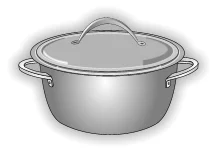
3) Example of an enamelled tin soup kettle. For six to eight people it should measure six vershoks across and four vershoks high. These kettles are sold by weight at eleven kopecks per pound, or approximately two rubles altogether.
4) Example of an enamelled cast-iron pot for pot roasts, five vershoks in diameter and two and a half vershoks high. Price: from 80 kopecks.
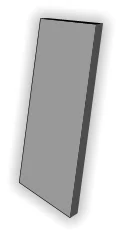
5) An iron baking sheet is essential in the kitchen for baking large and small pies, vatrushki, puddings and other things in the oven.
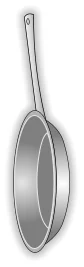
6) A tinned copper frying pan for beefsteak. Price: from 1 ruble to 1 ruble 20 kopecks.
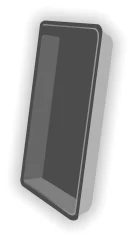
7) A deep tinned copper roasting pan, approximately ten vershoks long, seven vershoks wide and one and a half vershoks high. It is particularly convenient for roasting beef, veal, mutton, suckling pig, hare, chickens and the like in the oven. It can also be used for gently frying cutlets and fish on the range. Price: 70 kopecks per pound of weight, or six to seven rubles altogether.
8) Enamelled saucepans of various sizes for porridge, boiling milk, making sauces, gravies and similar preparations. Price: from 25 kopecks to 2 silver rubles.
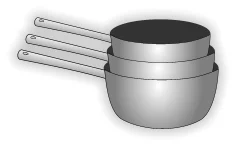
9) Small cast-iron frying pans for Russian blini. Price: 10 kopecks.
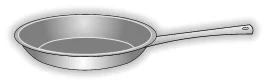
10) A large cast-iron frying pan four and a half to five vershoks across, with a long handle, for frying thin pancakes, potatoes and other foods. Price: 30 kopecks.
11) A hermetically sealed tin kettle for preparing bottled, or “American,” broth for invalids. One holding two pounds of beef costs three rubles.
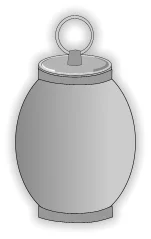
Broth from one pound of beef may also be cooked in champagne bottles. Either vessel is stood in a tall, narrow tin kettle costing 50 kopecks and filled with cold water; boiling water is then added continuously to keep the contents boiling without interruption for three to five hours.
12) Nickel-plated, tin or silver sauté pans, four and a quarter vershoks in diameter and one and a half vershoks high, with lids but without handles, for forshmak, fish solyanka, tripe, bigos, kidney sauce, ragouts and the like. Price: from 1 ruble 50 kopecks.
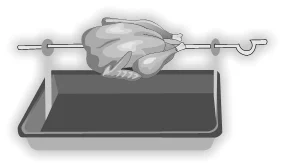
13) A roasting spit for beef, mutton and game, placed in front of the coals. Juices drain into a pan; baste the meat frequently while constantly turning the handle and the game or joint on the spit. Price: from two to six rubles.
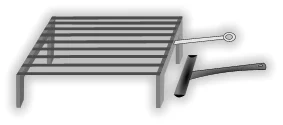
14) A gridiron of white tinplate for beefsteak, fillet, chops, cutlets and similar foods. It is set above the coals on the range, and food is grilled without added fat. A piece of butter is placed on the serving dish when the roast is transferred. Similar grates are used for smoking fish in an oven. Price: from 80 kopecks to 1 ruble 40 kopecks.
15) A waffle iron. Price: from 1 ruble 25 kopecks to 2 rubles 50 kopecks.
16) A mold for pastry tubes. Price: from 1 ruble 25 kopecks to 2 rubles 50 kopecks.

17) A flat tin skimmer for removing foam. Price: 15–35 kopecks.
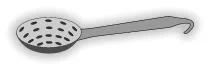
18) A kitchen soup ladle of forged tin. Price: 15–35 kopecks.
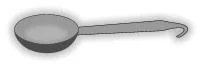
19) A large, shallow, round perforated tin spoon for lifting roots, kolduny, vareniki and similar foods out of boiling water. Price: from 60 kopecks.
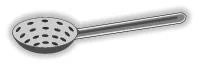
20) A hammered tin colander for draining macaroni or rice. Price: 40–60 kopecks.
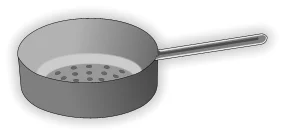
21) A tin sieve six vershoks across, with coarse wire mesh for straining pâté mixtures. Price: 35–60 kopecks.
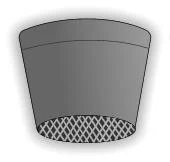
22) A yellow-copper basin for boiling preserves, juices and cranberry kissel. Price: from 1 ruble 30 kopecks to 3 rubles 50 kopecks.
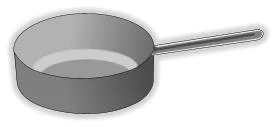
23) Three kitchen knives and a fork. Price: from 1 ruble 50 kopecks to 3 rubles.
24) A small tin strainer with fine wire mesh for filtering soup and gravy. Price: 40 kopecks.
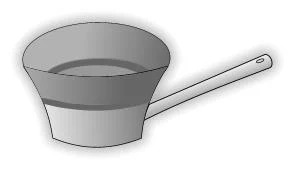
25) A wooden, tin or copper scoop for flour, cereals and similar dry goods. Price: from 20 kopecks.

26) A fish kettle, of tin or preferably copper. Bring a stock of roots and spices to a boil and cool it. Without removing the roots, lower the fish into this stock on the kettle's removable grate. Bring to a boil and cook until the fish is ready, about half an hour. Lift out the grate, allow the liquid to drain and carefully slide the fish onto a platter. Price: from 1 ruble 30 kopecks.
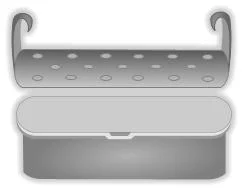
27) A large jelly mold with a tube in the middle. Price: from 40 kopecks.
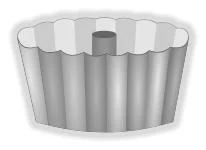
28) Six or twelve small molds for jelly or pastries. Price: 30 kopecks per six.
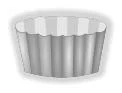
29) Oblong molds for small aspics and pastries. Price: five to ten kopecks each.
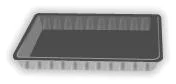
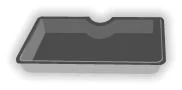
30) A hammered tin mold with a central tube and a tightly closing lid, for steaming puddings in continuously boiling water. Price: 60 kopecks to 1 ruble.
31) A tin mold without a central tube for puddings baked in the oven. Price: 30–50 kopecks.
32) A pâté mold.

33) An adjustable pâté mold. Price: 60 kopecks to 5 rubles.
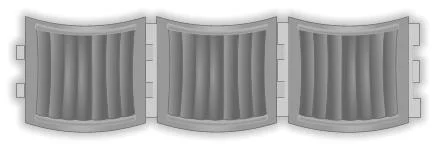
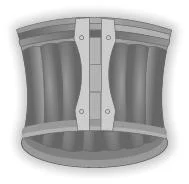
34) A small knife for peeling potatoes and apples. Price: from 15 kopecks.
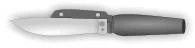
35) A tin device for coring apples and hollowing potatoes. Price: 25 kopecks.
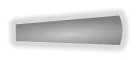
36) Tin cutters for shaping root vegetables. A box costs from 75 kopecks to 1 ruble 25 kopecks.




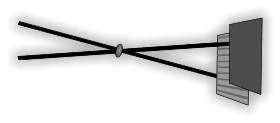
37) A wire device for retrieving a cork that has fallen into a bottle. It consists of three hooked rods with a ring at one end and another ring joining them in the middle. To put the rods through the bottle neck, squeeze them together and slide the ring downward. Then raise the ring to spread the rods apart and invert the bottle. The cork falls between the rods; catch it with the hooks, squeeze the rods by lowering the ring further and draw out the cork. Price: 20 kopecks.
38) A large wooden sieve of horsehair mesh for sifting flour. Price: 25 kopecks.
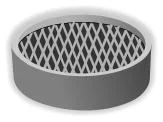
39) A small wooden horsehair sieve for sifting sugar. Price: 10 kopecks.
40) A large wooden sieve for rye flour or for passing curds, apples and similar foods through with a wooden pestle. Price: 25 kopecks.

41) A tin spatula for turning fried cutlets, fritters, croquettes and the like in a pan. Price: 30 kopecks.
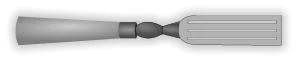
42) A kitchen fork for lowering food into boiling deep-frying fat. Price: 30–80 kopecks.

43) A pastry wheel for trimming dough for khvorost, vareniki and other pastries.
44) A bottomless tin mold for cutting dough for pâtés, round pies and vol-au-vents, and a similar mold with a bottom for baking cakes and buns. Price: 30 kopecks.
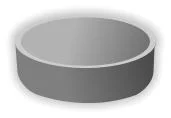
45) A metal whisk for beating egg whites, cream, mousse and similar mixtures. Price: 15 kopecks.
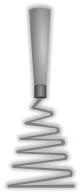
46) Another style of whisk for egg whites, cream or mousse. Price: 25 kopecks. Without one, the cook may use twigs, a knife or fork, but better still a large wooden fork.
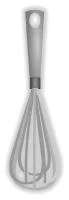
47) A filter of various sizes for straining juices, jellies, liqueurs and similar liquids. It is made as a bag sewn from linen, flannel, woollen cloth or even heavy felt. The bag is attached to a sturdy metal hoop a quarter-arshin across, with three tapes by which it can be hung on a long hook fixed high in a kitchen or room corner where it does not get in the way. A bowl on a corner shelf below collects the liquid as it slowly drips through. Aspic stock may be filtered in this way too.
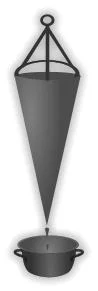
48) A pepper mill. Price: from 40 kopecks.

49) A coffee roaster and grinder. The author recommends grinding coffee every day immediately before use. Price: 1 ruble 20 kopecks.
Mechanized and Specialist Kitchen Tools
50) A machine for minced cutlets and meat forcemeat. The best is said to be the “Ordinary American” model, with two rows of nine knives each. The knives must be removable for sharpening and for washing in warm, never hot, water after every use.
To use it, take, for example, a pound of cutlet meat, first cut into small pieces. Feed it into the funnel-shaped opening, press down and turn the handle until the minced meat comes out onto a plate. Then add an eighth of a pound of chopped kidney fat, mix and pass it through the machine again. Add the crumb of a French roll soaked in milk or water, one egg and a grated raw onion; mix and put the mixture through the grinder a third time. Shape into cutlets, coat with breadcrumbs and fry over low heat.
To prolong the life of such machines, cut the meat finely beforehand to avoid unnecessarily dulling the blades. Thoroughly wash the grinder after each use, frequently removing the knives themselves.
Never place the machine on a hot range and never use it to mince boiled beef, which the author says rapidly blunts the knives.
The price of these grinders, which fasten to a table and have eighteen knives, is 4 rubles 25 kopecks.
51) Models with only one knife are also available for 3 rubles 50 kopecks. They mince less finely, but are sturdier and easier to keep suitably clean.
52) A simple ice-cream maker placed in a bucket of ice sprinkled with salt. Turn it for three-quarters of an hour to one hour.

53) A small wooden spoon for scraping ice cream from the sides of the simple ice-cream maker illustrated on the next page.
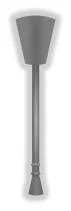
54) A newer ice-cream maker consists of a bucket holding a container of ice-cream mixture surrounded by ice and salt. A metal rod with several vanes is inserted in the container and turned through the mixture, scraping the sides so that a separate spatula is no longer needed. Price: from 3 rubles 50 kopecks upward.
Once the container is covered, leave the lid in place until the ice cream is ready, as indicated by increasing resistance to turning, generally after twenty to thirty minutes. Open the lid carefully so that no salt falls into the ice cream. Remove the metal rod, scraping off the ice cream with a knife. Replace the lid, cover it with ice and salt, and leave it until serving. Then lift out and wipe the mold, invert it onto a napkin on a round platter, wrap it in a towel dipped in hot water and wrung out, and remove the mold.
55) A grater for horseradish, chocolate and similar ingredients. Price: seven to thirty kopecks.
56) A grinding and grating machine of hammered tin for squeezing berries for kissel and syrups, passing potato purée, curds, cheese, roasted game or forcemeat, and cooked cereals for puréed soups. Do not use it for grinding coffee or raw meat, which will blunt the grater. Fasten it to a table; press the wooden stopper from above with the left hand and turn the handle with the right. Price: 2 rubles. The author considers it especially useful. Rinse with warm water and finish cleaning by passing two or three dry rusks through it.
57) A wire strainer for cooking a portion of rice in broth. Price: from 45 kopecks.
58) A wire basket for lowering cauliflower, sago, rice and other foods into boiling water. Price: 60 kopecks.
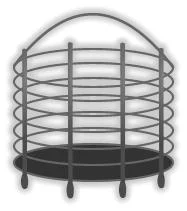
59) An almond mill. Price: 1 ruble.
60) A fish-scaling machine. Price: 30 kopecks.
61) A wooden salad fork and spoon. Price: 35 kopecks.
62) A deep wooden bowl for chopping cabbage, meat and other foods.
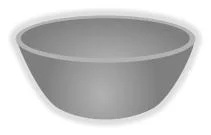
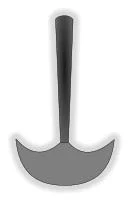
63) A chopping blade for cutting cabbage, meat and other ingredients in the wooden bowl No. 62.
64) A wooden board for cleaning herring. After use, wash it and hang it on the wall. Price: from 10 kopecks.
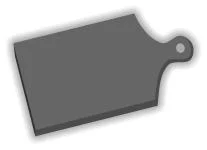
65) A somewhat larger wooden board for pounding cutlets, rolling croquettes and similar tasks. Price: from 20 kopecks.
66) A roller or rolling pin for rolling out dough and crushing rusks. Earthenware and wooden varieties are sold. The first costs 1 ruble; the second, from 20 kopecks.
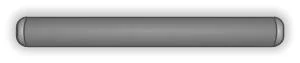
67) A large wooden board for rolling out dough for large and small pies, noodles and similar foods. Price: 60 kopecks to 1 ruble 20 kopecks.
68) A round wooden pestle for pounding meat. The most convenient shape is illustrated here: one end is one vershok across, the wider end one and a half vershoks, with an overall length of ten vershoks.
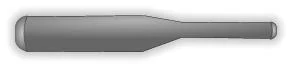
69) A wooden pestle or beater for mixing puddings, beating yolks with sugar, rubbing butter until white and similar tasks. Its lower, wider end is one vershok across and its overall length is ten vershoks.
70) A spatula for stirring gravies.
71) Wooden or tin molds for paskha (Easter curd cheese), in various sizes. Wooden ones cost from 15 kopecks and tin ones from 50 kopecks.
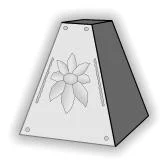
72) A brush for glazing pies and buns with egg, made from a wooden handle and several feathers.
73) A metal larding needle for inserting fat into roasts. Price: 10 kopecks.
74) A copper mortar. Price: from 1 ruble 50 kopecks.
75) A tin or glass funnel. Price: from 10 kopecks.
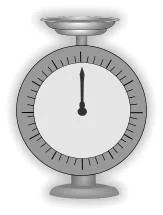
76) Kitchen scales. Price: 5 rubles.
Storage, Heating, Cleaning and Field Equipment
77) A tiny cupboard for pepper, cinnamon, cardamom and other spices. The plainest model costs 1 ruble 50 kopecks in crockery shops; an elegant one costs from 2 rubles 80 kopecks in specialist tableware shops.
78) A covered wall-mounted salt box. Price: from 15 kopecks.
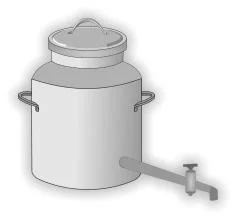
79) A large hot-water urn or kettle with a tap. Price: from 6 rubles.
80) A small cupboard with drawers for storing cereals, macaroni, sugar and similar supplies, since buying several pounds at a time is cheaper than buying one-eighth, one-quarter, one-half or a single pound.
81) Glass bowls of various sizes for soured milk. Price: from 20 kopecks.
82) Paper frills (papillotes) for wrapping the exposed bones of cutlets. The same decorations are used on the bone of a ham.
83) Paper papillotes for Pozharsky cutlets. Cut a piece of good white writing paper, place an uncooked cutlet on it and fold the paper around it in papillote form.
84) A rack for warming plates that will be brought to the table. Place the rack in front of the fire; several plates can be heated at once.
85) A wall-mounted rack for drying plates.

86) Small ladles or scoops. Price: from 15 kopecks.
87) A cast-iron extinguisher pot for gathering embers. Price: from 50 kopecks.
88) Tongs and an iron shovel for removing coals. Price: from 15 kopecks.
89) A chimney pipe for the samovar. Price: from 20 kopecks.
90) A bast-fiber brush for washing dishes, the insides of samovars and similar vessels.
91) Bellows for blowing air onto charcoal. Price: from 60 kopecks.
92) A standing rack for drying kitchen towels.
93) A simple kitchen wall clock. Price: 1 ruble 50 kopecks.
94) A tin bucket for throwing away all kinds of scraps. Price: from 50 kopecks.
95) A mop for washing the floor. Price: 10 kopecks.
96) An iron scraper with two handles for removing dirt from the kitchen table, wooden boards and similar surfaces. Price: from 50 kopecks.
97) A combined samovar and field kitchen. It is made of copper, tinned inside, and has a curved handle and an elbow-shaped smoke pipe. A partition inside allows tea water to boil while soup or shchi cooks at the same time. It is described as particularly useful on expeditions, while hunting or on long journeys through uninhabited country. It can be tied to a saddle or carried on the shoulders in place of a knapsack. A small model for two people even fits into a knapsack when not being used for cooking, with only raw provisions inside. Even the four-person samovar is said to weigh half as much as a knapsack. It can be used while travelling just as when stationary, provided water is available and washed beef or another ingredient has already been put inside. The author suggests collecting fuel along the way, dropping it into the stove pipe, lighting it and diverting the smoke with an auxiliary pipe. If a fire cannot be lit outdoors at night, the combined kitchen is presented as invaluable for warmth or food. In wartime, even during an alarm, the contents allegedly need not be poured out: the unit can be closed and carried along. It was sold by F. Zolotov’s shop at 25–1 Nevsky Prospekt, in the building of the Kazan Cathedral in St Petersburg. Prices: the three-glass model for one person, 7 rubles 50 kopecks; the five-glass model for two people, 8 rubles 50 kopecks; the seven-glass model for three, 9 rubles 50 kopecks; and the nine-glass model for four, 10 rubles 50 kopecks.
Special knapsack-shaped carrying cases for these samovars are also sold, convenient for carrying over the shoulder like bags. They cost from 3 rubles 25 kopecks to 4 rubles, depending on the samovar’s size.